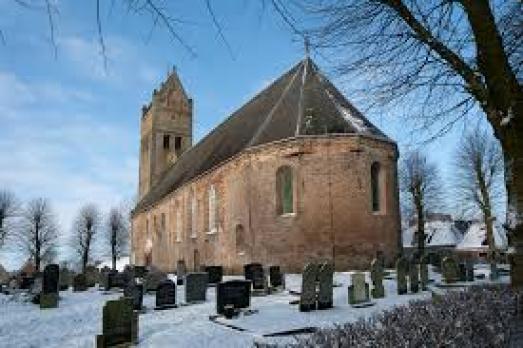
Redbadtsjerke
Jorwert, NL
With a beautiful tower and sober interior, the Redbadcherke in Jorwert is a fine example of a Romanesque church. The front church has recently been renovated. The church is also used as a base for Stifting Nijkleaster.

Here you can search for a building to visit. You can use the map find destinations, or you can use the filters to search for a building based upon what different criteria.
Jorwert, NL
With a beautiful tower and sober interior, the Redbadcherke in Jorwert is a fine example of a Romanesque church. The front church has recently been renovated. The church is also used as a base for Stifting Nijkleaster.
Balkbrug, NL
In the facade stone dated 1852 building on T-shaped foundation; roof turret above the front facade, round arch windows and simple entrance frame. Originally a single manual organ made in 1866 by J. van Loo. In 1903 extended with a top work by J. Proper. Bell tower with clock probably by P. Vermaten?, 1698, diam. 77.8 cm. A new wooden sundial was placed on the wall of the church in 1981. Made by GJ Sasbrink. To replace one that disappeared during the war.
Groningen, NL
In the Corpus den Hoorn district, in the south-west of the city of Groningen. Inaugurated in 1964 as the Reformed Church (liberated), after the merger in 2023 as the NGK
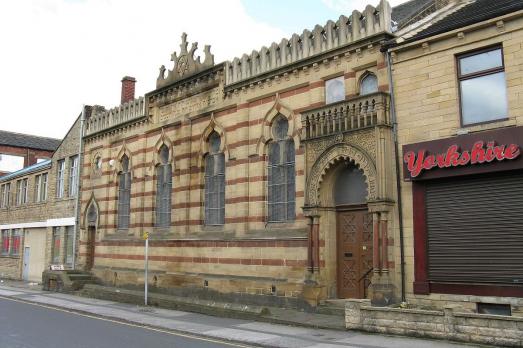
Bradford, GB
The Reform Synagogue in Bradford is an Ashkenazi synagogue built in 1880-81 by architects T.H. and F. Healey. The synagogue was rebuilt in 1956 and 2013. This stone building in the Neo-Moorish and Victorian style still serves as a synagogue.
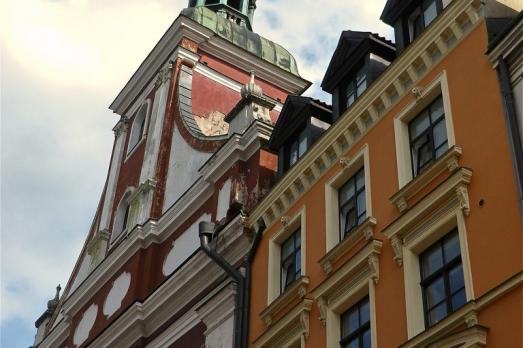
Rīga, LV
The Church of the Reformation, which dates back to 1721-1733, is one of the few Calvinist churches in Latvia. The church is richly decorated with pilasters and surmounted by a small tower. After a fire, it was rebuilt in 1805 and the ground floor was converted into a warehouse. During the Soviet occupation, the building was converted into a recording studio.
Heesbeen, NL
Single-nave, straight-closed church with round-arched windows, 18th century, with remains of a medieval church in tufa stone in the western half; flat tower from the 14th century in brick. Oak pulpit and pew from the 18th century; funeral board from 1764 for Sophia Amalia Maria van Gent, lady of Heesbeen sculpted gravestone for Willem Torck, lord of Heesbeen (died 1557) and his wife Bartha Pieck. The front of an organ by C. van Oeckelen from 1823. The instrument is no longer present. Around the churchyard a brick wall with a gatehouse on the north side, with a saddle roof between gables. Bell frame with chime consisting of a bell by J. van Haer, 1393, diam. 90 cm. and a bell by an anonymous founder, 1393, diam. 85 cm.
Lobith, NL
Dutch Reformed Church. Hall church with three-sided closure (1660) and high roof, on the west side against a pointed gable and with a six-sided dome tower. Baroque natural stone gate in the long facade on the street with heavy cornice on volute consoles and on the imposts under the arch: Anno 1660. Pulpit, baptismal fence and Communion table (17th century); lectern at the pulpit 1742. Bell tower with the sound of two bells by P. van Trier, 1661, respectively diam. 73 cm. and 64 cm. Mechanical wrought iron tower clock, later fitted with electric winding.
Rotterdam, NL
Built as a Reformed Church of the former village of Kralingen. Nice hall church with roof turret on the front facade.
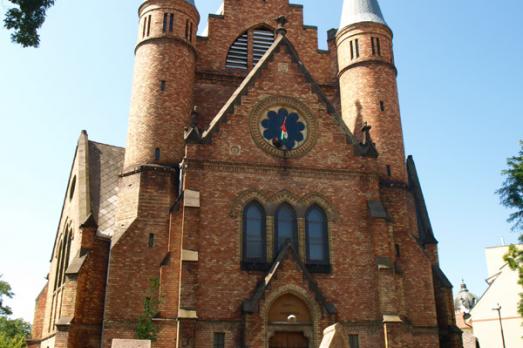
Szolnok, HU
The reformed church was built in 1893-1894 and designed by the architect Sztehlo Otto in the neo-gothic style. It is the first Reformed church in the town.
Stad aan 't Haringvliet, NL
Dutch Reformed Church. Single-nave, late Gothic village church with a three-sided closed choir, probably second quarter 16th century. Restored after a fire in 1898, when the original roof turret was omitted and a tower was built on the west side. Restored again in 1925-1926 and in 1980. The inventory includes: two copper crowns, 18th century, several tombstones from the 17th and 18th centuries and a copper baptismal font holder on the pulpit, 17th century. Organ case from 1901 by J. Proper.
new
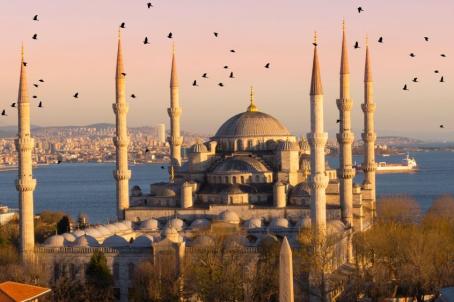
For a long time, Europe was ruled by powerful monarchies. Monarchy and religion have been connected since time immemorial. Here are 7 sites across Europe where royalty historically bent the knee to a higher power and received their crown.
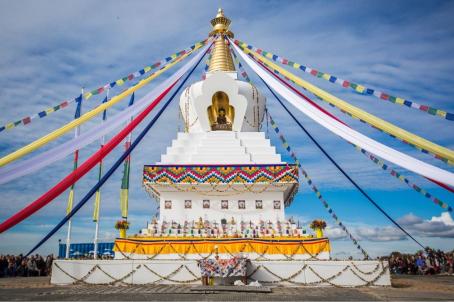
Stupas are symbols of enlightenment and peace that commemorate different stages of Buddha's life. Since the mid-20th century, thousands of stupas have begun to populate Europe. We have compiled some of the most impressive ones in this list.
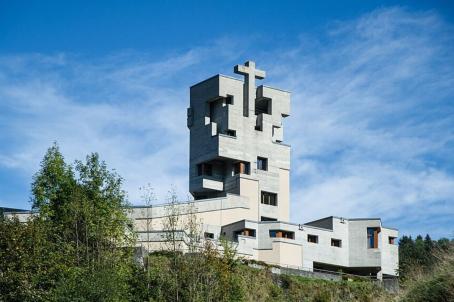
Walter Maria Förderer (1928–2006) was a Swiss architect and sculptor renowned for his neo-expressionist church designs in the 1960s. In this list we have compiled 6 of his church designs that seamlessly integrate religious and secular elements.

How is Religiana helping to conserve and promote Religious Heritage in Europe and why should you get involved?
Find out about Religiana
Are you a tourism organisation or religious heritage sites manager? Discover the advantages of becoming a partner.
See current partners
We can keep you up to date with the latest news from Religiana and religious heritage conservation across Europe.
Sign up to the FRH newsletter