Christelijke Gereformeerde Kerk
Huizen, NL
Nice modern church without tower. Built to replace a church building on Kortenaerstraat that had become too small.

Here you can search for a building to visit. You can use the map find destinations, or you can use the filters to search for a building based upon what different criteria.
Huizen, NL
Nice modern church without tower. Built to replace a church building on Kortenaerstraat that had become too small.
Broek op Langedijk, NL
Modern church built in 1963.
Doesburg, NL
Former Reformed Church (1813-1897). As such no longer in use. Now Christian Reformed (since 1897).
Nieuwe Pekela, NL
Enlarged in 1912, damaged by fire in 2003. In the night of 20/21 June 2003 there was a fire in the CGK. A short circuit is probably the cause. Renovation of the church building was already underway. Unfortunately, they can now start all over again. A year later, on 18 June 2004, the rebuilt and renovated church building was put back into use in a festive service. Using old photographs, the interior has been restored to its original state of construction in 1911, whereby a later renovation has also been undone. A "Johannus organ" has been placed behind an organ front purchased in Urk. This church is listed as a Municipal Monument of the Netherlands.
Sint Jansklooster, NL
Hall church with roof turret.
Onstwedde, NL
Hall church without tower in neo-Gothic forms. Extensions in 1966 and 1982.
Opperdoes, NL
Built in 1980
Nieuwkoop, NL
New church hall, with small roof turret, next to the former Chr. Geref. Church. The organ was built by Hendriksen & Reitsma in 1977. The organ was moved to the new church in 1986.
Broeksterwâld, NL
Petrus community. In the 90s the community split. Until 2010 two Christian Reformed groups. In 2010 the Andreas community moved to Damwâld.
Kornhorn, NL
The Christian Reformed Church of Kornhorn emerged from the Christian Separated Church in Grootegast, a neighbouring village, which church in turn, apart from the work of De Cock et al., was the fruit of a number of revival movements in the Groningen Westerkwartier, which took place there in the second half of the nineteenth century. From 1875 onwards, every Sunday evening, there was a revivalist sermon in a barn in Kornhorn. This barn was located at the (current) Provincialeweg 49. A separate Christian Separated Church was founded in Kornhorn on 23 May 1880. The first minister was Reverend J. Buikema (1882-1887), the second Reverend H. Huis (1887-1890). In 1892, when Rev. J. Veenbaas (1890-1920) was a minister, the Christian Reformed Church of Kornhorn joined the unification of the Seceders and the Dolerenden into the Reformed Church. Initially, this did not result in many changes in Kornhorn, but gradually objections grew to certain Reformed doctrines such as baptism, and to the contemplative way of preaching, where a more experiential approach was desired. The first manifestation of these objections occurred in 1902/1903 when a number of people gathered at someone's home to read a sermon. A minister was also sometimes invited, Rev. G. Oosterhuis from Groningen. This led to the creation of a Christian Reformed Church in Kornhorn, which was instituted on 18 November 1903. Initially, people attended church at the farm of J. van der Velde, which is diagonally opposite the current church. A few years later the first own minister, Rev. WF van de Kodde (1905-1911), arrived. The first church building was built shortly after the establishment of the Christian Reformed Church by the contractor J. Notenbomer. A piece of land was purchased for this purpose from one of the parishioners. The total costs for land and construction amounted to f. 2,712.30. In 1907 the same contractor also built the first parsonage, costing f. 460.84. In 1925 the church building had become too small and a new church was built on the same site. This still stands today. The building was put into use in February 1926. The architect was Glastra from Marum. It is a simple hall church in art deco style with 500 seats and windows of colored glass. Externally it has the silhouette of a traditional village church with a tower above the front facade and a three-sided choir closure. However, this does not correspond with the internal disposition. The liturgical centre with the pulpit is located on one of the long sides on the east side, while galleries have been placed against the short sides (front facade and 'choir closure'). The main reason for this was that space was to be kept free for the expansion of the church to the west. This expansion was never necessary, mainly because of a wave of emigration that took place after the Second World War,as well as because of the foundation of a Christian Reformed Church in Lutjegast, a neighboring village. In 1935, a youth building was built at the back (north side) of the church, called 'De Schakel', and in 1967-1968 a new parsonage was built, southwest of the church on the street. In 1979, a small renovation was carried out on the church: new stained glass windows and smooth tiles were installed on the church.
new
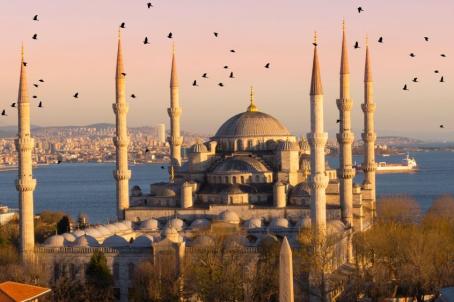
For a long time, Europe was ruled by powerful monarchies. Monarchy and religion have been connected since time immemorial. Here are 7 sites across Europe where royalty historically bent the knee to a higher power and received their crown.
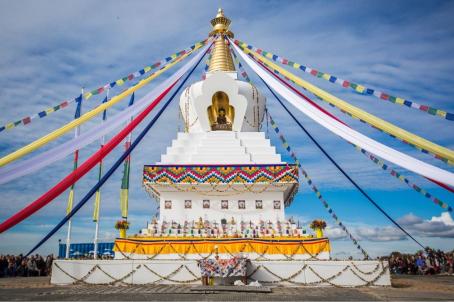
Stupas are symbols of enlightenment and peace that commemorate different stages of Buddha's life. Since the mid-20th century, thousands of stupas have begun to populate Europe. We have compiled some of the most impressive ones in this list.
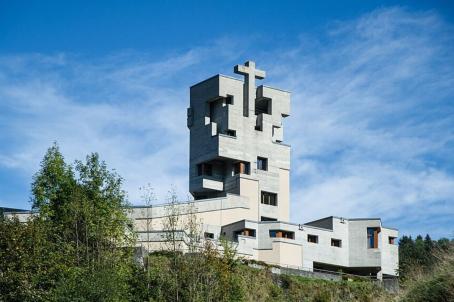
Walter Maria Förderer (1928–2006) was a Swiss architect and sculptor renowned for his neo-expressionist church designs in the 1960s. In this list we have compiled 6 of his church designs that seamlessly integrate religious and secular elements.

How is Religiana helping to conserve and promote Religious Heritage in Europe and why should you get involved?
Find out about Religiana
Are you a tourism organisation or religious heritage sites manager? Discover the advantages of becoming a partner.
See current partners
We can keep you up to date with the latest news from Religiana and religious heritage conservation across Europe.
Sign up to the FRH newsletter