Explore Religious Heritage Across Europe

Here you can search for a building to visit. You can use the map find destinations, or you can use the filters to search for a building based upon what different criteria.

Refine search

Heilige Antonius van Padua

Blerick, NL

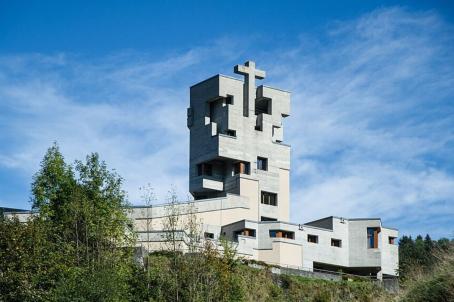
Iconic modern church with high tower, height approx. 60 m. Built to replace the neo-Gothic predecessor destroyed in the Second World War . Hall church with free-standing openwork concrete bell tower. Important (still existing) work from the oeuvre of JJ Fanchamps (1912-1982). Modern glazing by W. Peeters from the year 2000. Stations of the Cross from the former church of Our Lady of the Carmel Mountain in Schaesberg-Leenhof.

Heilige Antonius van Padua

Kortenhoef, NL

The history of the current St. Antonius Church in Kortenhoef begins on March 28, 1879, the date of the letter in which the Archbishop of Utrecht, Mgr. Schaepman, authorized the church board to tender the construction of a new church and parsonage. The church had to be built according to the drawing and specifications that architect Alfred Tepe in Utrecht had presented to the Archbishop. The church had to replace a barn church from 1810 (formerly a coach house). It became a neo-Gothic hall church with a tower, which would be provided with diagonal buttresses and four niches in each facade surface of the bell floor.

Heilige Antonius van Padua

Millingen aan de Rijn, NL

Late, large neo-Gothic church with a large tower placed on the side. Nicknamed "Cathedral of the Low". This church is listed as a National Monument of the Netherlands.

Heilige Antonius van Padua

Nijverdal, NL

Three-aisled cruciform basilica with multi-faceted closed pseudotransept (transept) in late neo-Gothic style. Typical in the oeuvre of H. Kroes, in which an attempt was made to connect the neo-Gothic style with the renewed Roman Catholic liturgical wishes and spatial concepts of the early twentieth century. The main naves are covered by net vaults. Front tower with balustrade, corner turrets and spire. The inventory and glazing date largely from the construction period and shortly thereafter. This church is listed as a Municipal Monument of the Netherlands.

Heilige Antonius van Padua

Loosbroek, NL

Characteristic small neo-Romanesque hall church with tower next to the choir, designed by Jos. Margry (1888-1982). Church, parish and the development village were founded at the beginning of the twentieth century. The church was restored in 2005. Until the arrival of a church, residents of Loosbroek were dependent on the church in Heeswijk. In 1898, chaplain De Groot was commissioned by Bishop Wilhelmus van de Ven to establish a parish and a church. After acquiring land from residents of Heeswijk Castle, a temporary church was built in the village that same year, which had to be rebuilt again in 1902 due to its poor condition. In the same year, construction began on a full-fledged church designed by architect Jos Margry. To finance the construction, the parish received a donation from the Antoniusfonds, whereby the church had to be dedicated to Antonius van Padua. The church was consecrated in 1912. The church is built as a hall church and has neo-Romanesque elements. The church tower, with an octagonal spire between four gables, stands next to the nave of the church. In the side gable are placed round windows with bifora underneath. Behind the church is the parsonage. In the church is a relic of Saint Donatus and an attempt was made to make the church a small place of pilgrimage. Donatus also appears in statues and candles in the church.

Heilige Antonius van Padua

Lepelstraat, NL

The neo-Romanesque St. Antonius Church, as we know it today, was built in 1873-1875 as a replacement for the former barn church. The church was consecrated on 12 September 1875. At the end of the Second World War, the 63 m tower was blown up by the Germans, a large part of the church was destroyed. The church was then rebuilt in 1948 in neo-Romanesque style, without a tower. In the church there is a model of the church in all its glory, with the tower as it was the landmark of Lepelstraat until October 1944.

Heilige Antonius van Padua

Best, NL

Built in the Wilhelminadorp district, in the south of Best. Architecturally important reconstruction church in traditionalist forms, derived from Romanesque. Three-aisled design with wide central nave, based on the concept of the people's church. Low, squat tower with tent roof above the choir. Many interesting details, including a series of stained glass windows. At the end of 2012, unrest and resistance arose within this parish against the plans to form a merger parish with Oirschot. After intensive consultation, this merger parish was realized and bears the name Sint-Odulphus van Brabant.

Heilige Antonius van Padua

Oud-Beijerland, NL

This Roman Catholic Church is dedicated to Saint Anthony of Padua. The church building is a tall building with a short tower and a three-sided choir closure. The building was put into use in 1866. In the chancel there are two stained glass windows: one depicts Saint Anthony, the other Andreas Woutersz. van Heinenoord, one of the 19 Martyrs of Gorcum. In 2016, attention was paid to the 150th anniversary of this church. In the context of this anniversary, the stained glass windows were restored. The necessary money for this was donated in the course of 2016. This church is listed as a Municipal Monument of the Netherlands.

Heilige Antonius van Padua / Cenakelkerk

Heilig Landstichting, NL

Extremely important, unique, fantastic church with dome and double tower front. Church building, dedicated to St. Anthony of Padua, built in the 1910s in close connection with buildings and grounds of the Biblical Open Air Museum, now Museum Orientalis, on the Holy Land Foundation. The church is considered one of the main works from the oeuvre of architect Jan Stuyt (1868-1934).

Heilige Antonius van Padua / Mozes en Aäron

Heilige Antonius van Padua / Mozes en Aäron

Amsterdam, NL

The church originated from a clandestine church . This was served by Franciscan fathers and was located from 1641 at the back of the current church in the house "Moyses" on the Jodenbreestraat , where a statue of Moses hung on the facade. In 1682, the adjacent house "Aäron" ( Aäron ) was also purchased by Dr. Johannes de Vroom, a physician from Breda.

Be inspired

Stupkalnis.lt

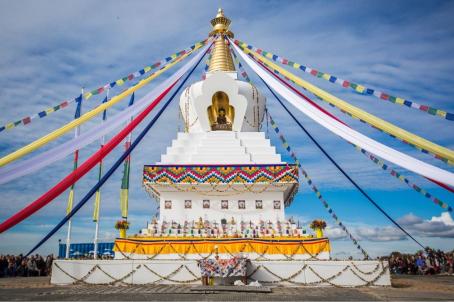
10 Buddhist stupas to discover in Europe

Stupas are symbols of enlightenment and peace that commemorate different stages of Buddha's life. Since the mid-20th century, thousands of stupas have begun to populate Europe. We have compiled some of the most impressive ones in this list.