Holy Trinity
Cookham, GB
Ancient village church with a thriving local congregation and community.

Here you can search for a building to visit. You can use the map find destinations, or you can use the filters to search for a building based upon what different criteria.
Cookham, GB
Ancient village church with a thriving local congregation and community.

Ruse, BG
The Orthodox Cathedral of Ruse was built in 1632. Although the exterior of the church is rather sober, the iconostasis of the temple is very original. Probably built at the very beginning of the 19th century, it was restored between 1989 and 2000. The cathedral church "Holy Trinity" was declared a cultural monument of national importance in 1983.

Liepāja, LV
The Holy Trinity Cathedral is the Lutheran Cathedral of Liepāja. The cathedral was built between 1742 and 1758. From 1865 to 1866, the first major reconstruction of the building took place according to Otto Dietze's design. The interior and exterior architecture of the church is in the late Baroque style with elements of Classicism. The interior of the cathedral is characterised by the luxury and saturation characteristic of the Rococo style.

Waterford, IE
The Holy Trinity Cathedral or simply Ballaghaderreen Cathedral is Waterford's Catholic Cathedral. The Cathedral was designed by a local architect, John Roberts, in 1793 and is one of the oldest cathedrals of the Catholic Church in Ireland. A chapel previously stood on the same site, having been built on the basis of a petition from Waterford's Catholic community, despite restrictions.

Trnava, SK
The Holy Trinity Church was consecrated in 1729, seventeen years after the Trinitarian Order settled in Trnava and decided to build a church. The church and monastery ten fell into the hands of the Jesuits who repaired it in 1875. The single-nave building has a lunette vault resting on massive pilasters creating shallow side chapels. The decoration is dominated by the image of the founders of the Trinitarian Order on the high altar.

Sombor, RS
The parish church of the Holy Trinity was built between 1751 to 1771. It underwent 18 restorations, most notably in 1888, 1939 and 2007. The church is 50.5 m long; 15.25m wide; the tower is 56 m high. The large bell weighs 2188kg and at least 48kg. The church still contains a registry list that dates back to 1895.

Łopuszna, PL
The Holy Trinity Church in Łopuszna was built in the second half of the 15th century and is one of the oldest surviving Wooden Churches of Southern Małopolska.

Pleven, BG
The Holy Trinity is the Orthodox Cathedral of Pleven. Built from 1893 to 1912, the iconostasis was realized in 1899, designed by Danail Nestorov of the village of Galichnik. The church was not painted until the 1940s.

Ixelles, BE
The Church of the Holy Trinity is a 19th-century religious building, whose 17th-century baroque facade is that of the former church of the Augustinians, demolished in 1893 to allow the creation of the Place de Brouckère. In the 19th century, as part of the development of the Avenue Louise, Léopold I wanted to develop and urbanise the Dix Bosch district in Ixelles. He had a temporary chapel built there (between 1847 and 1857) on land donated by the banker Georges Brugmann, who also contributed to its financing. The new church was built between 1893 and 1907, the architects being J. J. Van Ysendijck and Jacques Franquart.

Gerviaty, BY
The Church of the Holy Trinity was built in 1899-1903 in neo-Gothic style. The building replaces an old wooden church from the 16th century. The current church is a classified architectural monument.
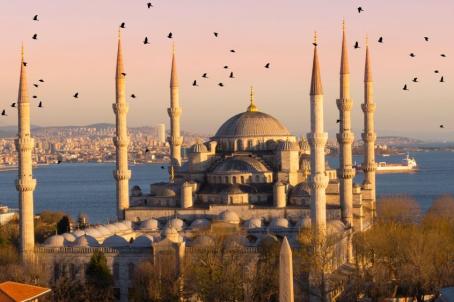
new
For a long time, Europe was ruled by powerful monarchies. Monarchy and religion have been connected since time immemorial. Here are 7 sites across Europe where royalty historically bent the knee to a higher power and received their crown.
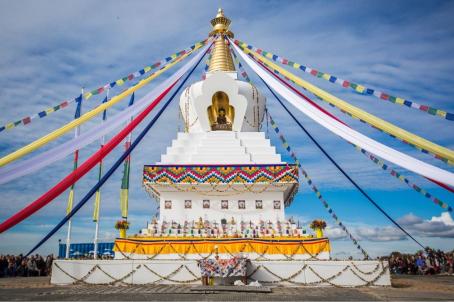
Stupas are symbols of enlightenment and peace that commemorate different stages of Buddha's life. Since the mid-20th century, thousands of stupas have begun to populate Europe. We have compiled some of the most impressive ones in this list.
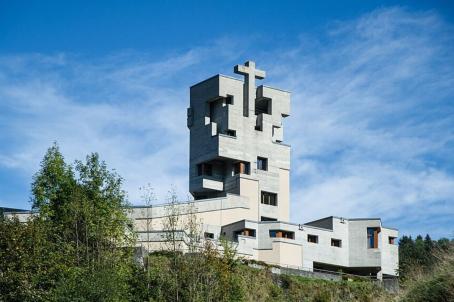
Walter Maria Förderer (1928–2006) was a Swiss architect and sculptor renowned for his neo-expressionist church designs in the 1960s. In this list we have compiled 6 of his church designs that seamlessly integrate religious and secular elements.

How is Religiana helping to conserve and promote Religious Heritage in Europe and why should you get involved?
Find out about Religiana
Are you a tourism organisation or religious heritage sites manager? Discover the advantages of becoming a partner.
See current partners
We can keep you up to date with the latest news from Religiana and religious heritage conservation across Europe.
Sign up to the FRH newsletter