Mevlana Moskee
Amersfoort, NL
Van Galenstraat 37-A is located in the city of Amersfoort, the municipality of Amersfoort and the province of Utrecht. The surface area of the accommodation is on the large side at 486 m².

Here you can search for a building to visit. You can use the map find destinations, or you can use the filters to search for a building based upon what different criteria.
Amersfoort, NL
Van Galenstraat 37-A is located in the city of Amersfoort, the municipality of Amersfoort and the province of Utrecht. The surface area of the accommodation is on the large side at 486 m².
Rotterdam, NL
Built as a Turkish mosque in a distinct style, strongly influenced by sixteenth-century Ottoman mosque construction in Turkey. Dome section, and two minarets on the front facade. Replaced a Turkish mosque on the Aelbrechtskade.
Hilversum, NL
Turkish mosque. Inaugurated in 2003 on the site of its demolished predecessor. Nice building with one minaret and dome.

Augstkalne, LV
The Mežmuiža Church is an Evangelical Lutheran church built in 1648. The first wooden prayer house was built here around 1490-1530 by monks, calling for the adoption of Catholicism. In 1590 a stone church replaced it. In 1648, the church was given a tiled roof, a tower was built and consecrated on 14th August. In 1699 the church was renovated, a new pulpit and a baroque altar were installed. In 1880 the church was rebuilt. In 1983, the congregation left the church, it was destroyed, part of the interior was transferred to the castle museum Rundāle.

Granada, ES
This mosque was completed in 2003 and is the first mosque constructed in spain since the Reconquista, over 500 years ago. The mosque is located in the historic arab quarter and is meant to represent the cultural influence that Islam has had on mankind. The mosque contains 3 parts, a garden overlooking the Sierra Nevada mountains, a prayer room, and a library of Islamic texts in multiple languages.

Mia Milia, CY
The parish church of the village with the ekklesionym Agios Ioannis (Άγιος Ιωάννης) is located almost in the centre of the old village. It was built in 1894 as a single aisled basilica, but it nevertheless shows some Gothic style elements. The northern portal seems to be influenced by the architecture of the Bedestan in the walled city of Nicosia. According to an inscription, the bell tower was only added in 1956. After 1974, the church was converted into a mosque.

Vienna, AT
The Michaelerkirche (St Michael's Church) is one of the oldest churches in Vienna. It was built in the 13th century. It is a rare example of a Romanesque church in Vienna, although with baroque and classical additions.

Leipzig, DE
The Michaelis Church in Leipzig was built in 1901-1904 in the newly developed Nordvorstadt district of Leipzig. The architecture does not correspond to any style, but combines neo-Gothic, neo-Baroque and Art Nouveau elements.

Bautzen, DE
St Michael's Church is a 15th-century church. In 1495 the tower was built on the south side and the nave on the west side. The vault and roof were completed around 1520. During the remodelling of 1892, the galleries were built, the south windows were blocked up and stairs were built outside. At the end of the Second World War, during the Battle of Bautzen, the tower dome was burnt down, but a bell from 1929 was preserved and was the only one in the whole city to ring on New Year's Day 1946. During the renovation work from 1964 to 1976, most of the 1892 alterations were reversed, the extensions were removed and the windows were exposed again.
Spijkenisse, NL
Built as Dutch Reformed Church. Important modern church building with tower.
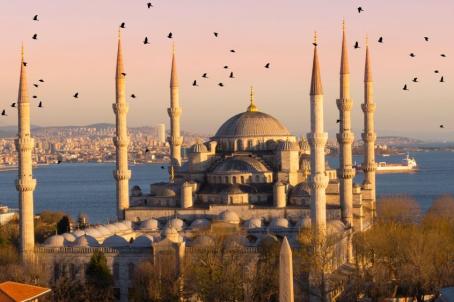
new
For a long time, Europe was ruled by powerful monarchies. Monarchy and religion have been connected since time immemorial. Here are 7 sites across Europe where royalty historically bent the knee to a higher power and received their crown.
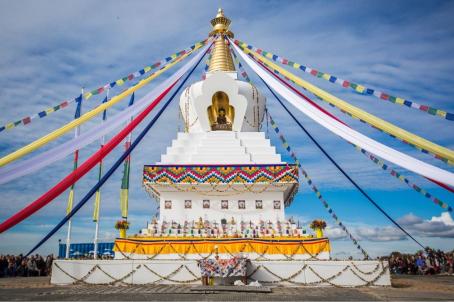
Stupas are symbols of enlightenment and peace that commemorate different stages of Buddha's life. Since the mid-20th century, thousands of stupas have begun to populate Europe. We have compiled some of the most impressive ones in this list.
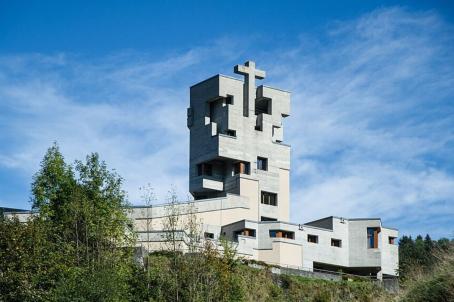
Walter Maria Förderer (1928–2006) was a Swiss architect and sculptor renowned for his neo-expressionist church designs in the 1960s. In this list we have compiled 6 of his church designs that seamlessly integrate religious and secular elements.

How is Religiana helping to conserve and promote Religious Heritage in Europe and why should you get involved?
Find out about Religiana
Are you a tourism organisation or religious heritage sites manager? Discover the advantages of becoming a partner.
See current partners
We can keep you up to date with the latest news from Religiana and religious heritage conservation across Europe.
Sign up to the FRH newsletter