Noeroel Islam Moskee
s-Gravenhage, NL
Replaces former school. Noeroel Islam Mosque.

Here you can search for a building to visit. You can use the map find destinations, or you can use the filters to search for a building based upon what different criteria.
s-Gravenhage, NL
Replaces former school. Noeroel Islam Mosque.
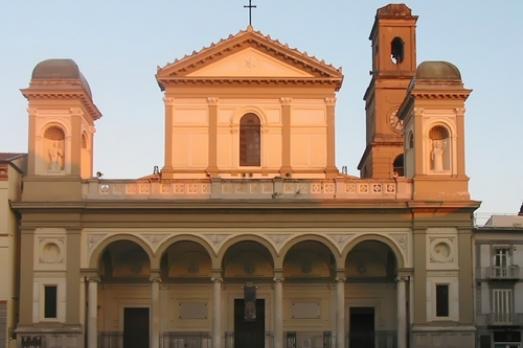
Nola, IT
The present Nola Cathedral was built between 1869 and the beginning of the 20th century according to a project by the architect Nicola Breglia in neo-Renaissance style: it was inaugurated in May 1909 with the placing of the relics of Saint Paulinus. The new construction was necessary due to the devastating arson attack that completely destroyed the old Gothic church on the night of 13th February 1861.
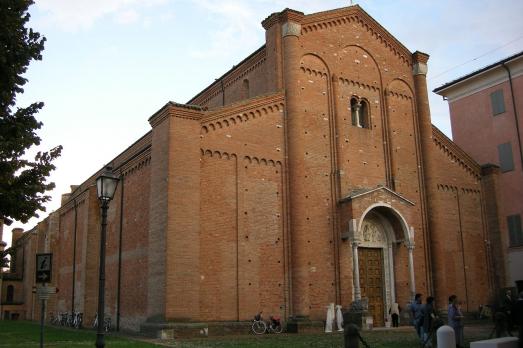
Nonantola, IT
Nonantola Abbey is an important Benedictine abbey founded in 752 by Abbot Anselm of Friuli. In 899 the abbey was plundered by the Magyars and then by the earthquake of 1117. It continued to play an important role; it was the seat of the meeting between Pope Marin I and Emperor Charles the Great and the burial place of Pope Adrian III.
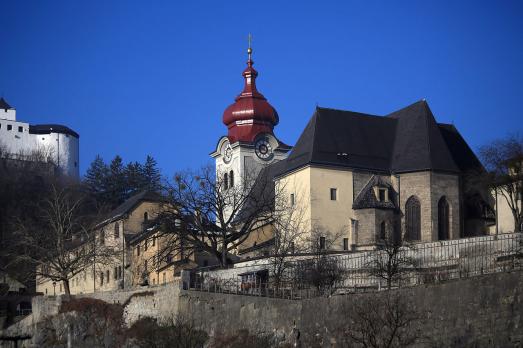
Salzburg, AT
Nonnberg Abbey is an abbey of Benedictine sisters in Salzburg. Founded in the 8th century, it is today one of the Christian convents with the longest continuous activity. Dating mostly from the 16th century, the current monastic complex, with its surrounding walls and archaeological sites, is part of the UNESCO World Heritage Site of the city of Salzburg.
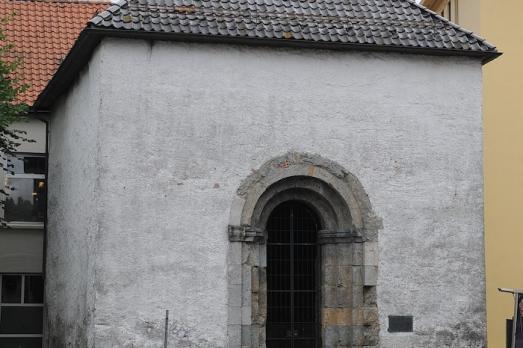
Bergen, NO
The monastery of Nonneseter may have been built around 1150 and is dedicated to the Virgin Mary. Today, only the base of the church and the chapel of the south choir, built in the second half of the 13th century, remain of the establishment.
Houtigehage, NL
Hall church without tower. Replaced an earlier wooden church.
s-Gravenzande, NL
Built as a Reformed Church. Interesting church building with tower. Renovated in 1924 and 1938, and extensively renovated in 1966. Despite, or perhaps because of, all the renovations, this is an interesting church with tower.
Nieuw-Amsterdam, NL
This church is listed as a National Monument of the Netherlands.
Bunschoten-Spakenburg, NL
Large church with tower in neo-Romanesque forms. Built as a Reformed Church, in use 1878, architect A. Jurling. This church was assigned to the Reformed Church (Liberated) in 1945. Early 2007 this church was restored and the interior was given a more modern and light appearance. On the liturgical center there is a new pulpit, a new baptismal font and a table with communion set. The pews have been renewed and now stand on a natural stone floor. (58-07)
Dordrecht, NL
Sober reconstruction church with roof turret, built as Dutch Reformed Church. Later, in 1974, Samen op Weg church. Decommissioned as Reformed Church in 2002. Since 2004 in use as Pentecostal Church Het Keerpunt.
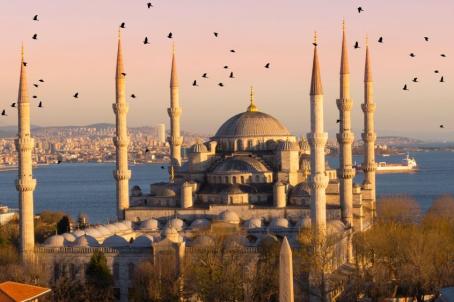
new
For a long time, Europe was ruled by powerful monarchies. Monarchy and religion have been connected since time immemorial. Here are 7 sites across Europe where royalty historically bent the knee to a higher power and received their crown.
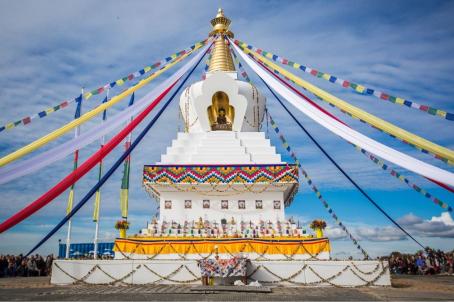
Stupas are symbols of enlightenment and peace that commemorate different stages of Buddha's life. Since the mid-20th century, thousands of stupas have begun to populate Europe. We have compiled some of the most impressive ones in this list.
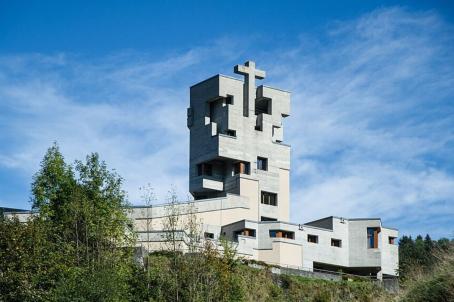
Walter Maria Förderer (1928–2006) was a Swiss architect and sculptor renowned for his neo-expressionist church designs in the 1960s. In this list we have compiled 6 of his church designs that seamlessly integrate religious and secular elements.

How is Religiana helping to conserve and promote Religious Heritage in Europe and why should you get involved?
Find out about Religiana
Are you a tourism organisation or religious heritage sites manager? Discover the advantages of becoming a partner.
See current partners
We can keep you up to date with the latest news from Religiana and religious heritage conservation across Europe.
Sign up to the FRH newsletter