Onze Lieve Vrouw Geboorte
Schermerhorn, NL
Interesting modern church with tower, built to replace an earlier temporary "hidden church".

Here you can search for a building to visit. You can use the map find destinations, or you can use the filters to search for a building based upon what different criteria.
Schermerhorn, NL
Interesting modern church with tower, built to replace an earlier temporary "hidden church".
Kessel, NL
Damaged by war 1944, restored. Tower destroyed by war, rebuilt 1954.
Burgerbrug, NL
After the Reformation, Catholicism still had many followers in West Friesland. Catholicism also appeared to be very much alive in the new Zijpe polder, which was drained in 1597, although Protestantism was the official religion. The Catholics went to church in a clandestine church on the Ruigeweg, not far from the small village of Burgerbrug. In 1863, this church building burned down and it was decided to build a new, "real" church on the Grote Sloot.
Meije, NL
Single-nave neo-Gothic church without transept, but with tower. Many of such early neo-Gothic churches have disappeared in the meantime. That is also why the preservation of this church building is of great importance.
Blitterswijck, NL
Historic village church with tower. Tower 1455. Destroyed by war in 1944, rebuilt in 1951. (During this restoration the St. Anna chapel served as an emergency parish church).
Handel, NL
The rectory Roman Catholic Church (H. Maria Hemelvaart, already mentioned in 1434, consists of a nave, the western part of which was renovated in 1747 and the eastern part of which (probably the original choir) was renovated in 1696-1708. Side aisles along the eastern part, choir with extensions and tower (1902 and later by Dr. Pierre Cuypers (1827 - 1921) and the architect Joseph Cuypers (1861 - 1949)), the latter replacing a tower (XV). The western nave bays have bears, the eastern flat pilasters; simple windows closed with a segmental arch. In the eastern nave bay on the south side a support 1708. Above the closed entrances in the second bay stones with the coats of arms of the German Order: on the south side two with the coats of arms - Belderbusch (or -de Loe), -von Schonborn (?) and German Order Cross and on the north side a stone with the coat of arms of Hendrik van Wassenaar tot Warmond (around 1709). Internally, the western nave section has a slightly lower (stucco) vault than the eastern section. The church has: Wooden side altar (18th century) with altarpiece: Holy Family. Organ with 18th and 19th century components by an unknown maker. The Rugpositief was added in 1950 and is not protected. A carved oak organ counter (18th century), on which the coat of arms of Belderbusch (or -de Loe), with order cross. Two painted confessionals (18th century), one of which with carving and coat of arms of Belderbusch (or -de Loe) with order cross. Bell tower with chime consisting of three bells, of which two bells by A. Jullien, 1689, respectively diam. 59.5 cm and 51.5 cm and a modern clock. Mechanical tower clock, has been decommissioned.
Stein, NL
Third Roman Catholic church in Stein, in the post-war southern district and parish of Nieuwdorp.
Amsterdam, NL
The Parish Church of Our Lady Queen of Peace or Peace Church is a Roman Catholic church between the Pijnackerstraat and the Van Hilligaertstraat in the southwestern corner of the Pijp in Amsterdam-Zuid . The church has been the namesake of the Peace Church Square since 2004.
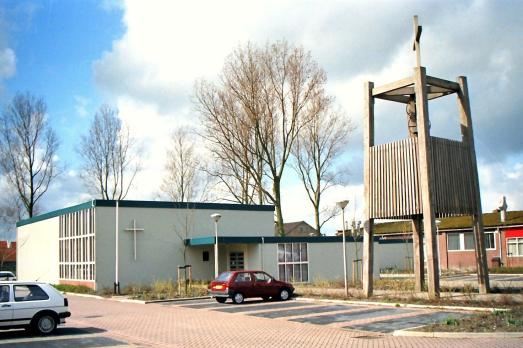
Andijk, NL
The Church of Our Lady of Seven Sorrows is a former Roman Catholic church building at Aalbersestraat 224 in the Geuzenveld district of Amsterdam .
Maria Hoop, NL
The Church of Our Lady Mother of Holy Hope is the parish church of Maria Hoop in the Dutch province of Limburg. It was built when the Passionist Fathers moved into the Passionist Monastery in 1925.
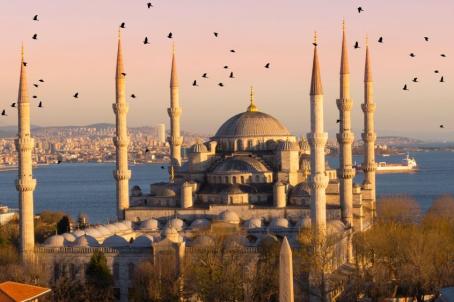
new
For a long time, Europe was ruled by powerful monarchies. Monarchy and religion have been connected since time immemorial. Here are 7 sites across Europe where royalty historically bent the knee to a higher power and received their crown.
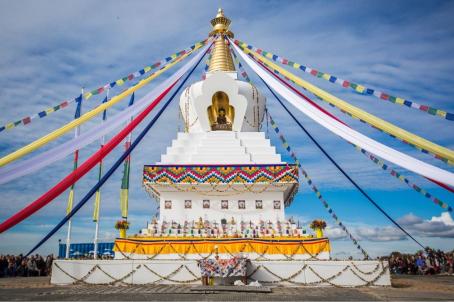
Stupas are symbols of enlightenment and peace that commemorate different stages of Buddha's life. Since the mid-20th century, thousands of stupas have begun to populate Europe. We have compiled some of the most impressive ones in this list.
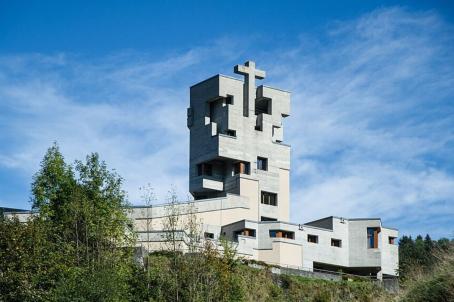
Walter Maria Förderer (1928–2006) was a Swiss architect and sculptor renowned for his neo-expressionist church designs in the 1960s. In this list we have compiled 6 of his church designs that seamlessly integrate religious and secular elements.

How is Religiana helping to conserve and promote Religious Heritage in Europe and why should you get involved?
Find out about Religiana
Are you a tourism organisation or religious heritage sites manager? Discover the advantages of becoming a partner.
See current partners
We can keep you up to date with the latest news from Religiana and religious heritage conservation across Europe.
Sign up to the FRH newsletter