Oud Gereformeerde Gemeente In Nederland
Krimpen aan den IJssel, NL
Architecturally interesting modern church without tower. Extension in 2005.

Here you can search for a building to visit. You can use the map find destinations, or you can use the filters to search for a building based upon what different criteria.
Krimpen aan den IJssel, NL
Architecturally interesting modern church without tower. Extension in 2005.
Barneveld, NL
The current church was built in 1982 and replaced an older building. Due to the growth of the congregation, the church was expanded in 1994. In the spring of 2009, a gallery with 125 seats was put into use. (62-09)
Lienden, NL
Hall church without tower. Former name of the street was Molenpad.
Klundert, NL
Hall church without tower from 1932 in the hamlet of Noordschans, north of Klundert.
Overberg, NL
Simple hall church with saddle roof.
Rijssen, NL
The origins of the congregation lie in 1838, when a Christian separated congregation was instituted. Via the Reformed Churches under the Cross (1846) and the Christian Reformed Church (1869), it became a free congregation in 1883 with the name Independent Christian Congregation. In 1922, it joined the Federation of Old Reformed Congregations. Eleven years later, in 1933, the congregation joined the Reformed Congregations. A minority remained with Rev. J. van Wier as a free congregation. In 1946, it joined the federation again, which merged with the Old Reformed Congregations in the Netherlands in 1948.
Nieuw-Beijerland, NL
Built to replace a building destroyed by storm damage. Decommissioned in 1930. Replaced by new church building.
Rouveen, NL
On site of old church. With new extension. The old church was demolished after this new construction.
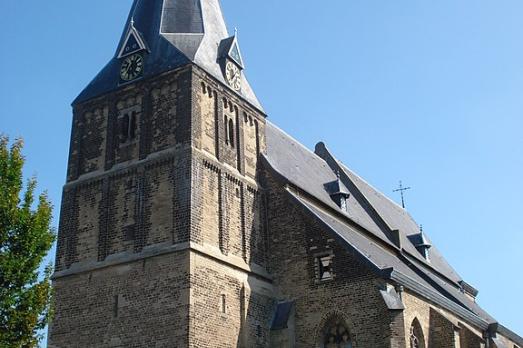
Aalten, NL
The Oude Helenakerk (Old Helen's Church) is a church building from the 15th century (although the tower dates from the 12th century). It has a beautiful vault and wall paintings from the 14th century. The pulpit dates from 1784.
Scheveningen, NL
Reformed church from the second half of the 15th century, tower added in the 16th century, internally the pulpit and choir screen are of particular interest. a. Main organ: two-manual organ, made in 1843 by GW and HB Lohman. A free pedal was added during the reconstruction of 1971. b. Choir organ: one-manual organ, made in 1791 by J.M.Gerstenhauer for the Herv. Church in Wervershoof. Placed in Scheveningen in 1961 and provided with a lower case. Bell tower with bell by C. Antonisz. 1597, diam. 118.9 cm.
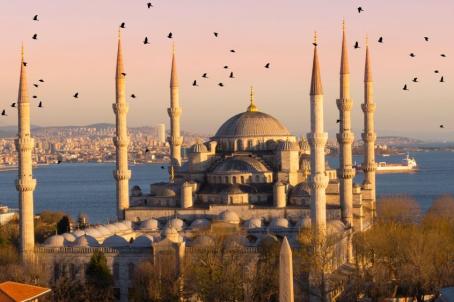
new
For a long time, Europe was ruled by powerful monarchies. Monarchy and religion have been connected since time immemorial. Here are 7 sites across Europe where royalty historically bent the knee to a higher power and received their crown.
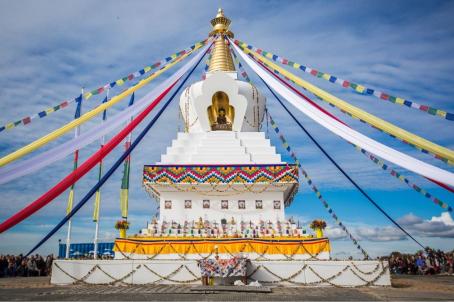
Stupas are symbols of enlightenment and peace that commemorate different stages of Buddha's life. Since the mid-20th century, thousands of stupas have begun to populate Europe. We have compiled some of the most impressive ones in this list.
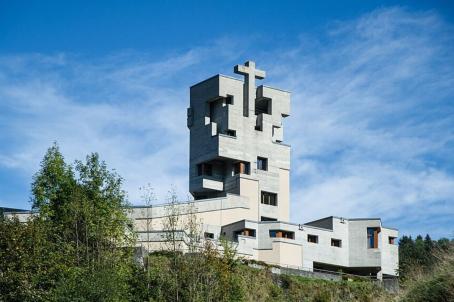
Walter Maria Förderer (1928–2006) was a Swiss architect and sculptor renowned for his neo-expressionist church designs in the 1960s. In this list we have compiled 6 of his church designs that seamlessly integrate religious and secular elements.

How is Religiana helping to conserve and promote Religious Heritage in Europe and why should you get involved?
Find out about Religiana
Are you a tourism organisation or religious heritage sites manager? Discover the advantages of becoming a partner.
See current partners
We can keep you up to date with the latest news from Religiana and religious heritage conservation across Europe.
Sign up to the FRH newsletter