Explore Religious Heritage Across Europe

Here you can search for a building to visit. You can use the map find destinations, or you can use the filters to search for a building based upon what different criteria.

Refine search

Sant Miquel de Campanet

Illes Balears, ES

This temple, which for eight centuries has not lost its cult, was converted into a Christian church, after the conquest of Mallorca by King James I (1229), of the Crown of Aragon, and is oriented to the east by where the sun rises, as the Arabs used to do when building a mosque. It is very likely that the Arabs found in this sacred place a Paleo-Christian temple from the earlier Byzantine period. The church was in the 13th century the first parish of Campanet (a large municipality that also consisted of Sa Pobla i B??ger and the entire scattered rural population). In front of the church is the old cemetery that was used, until the new parish was inaugurated in the town of Campanet, in the 15th century. Later, when it was forbidden to bury in urban centers in the 17th century, this medieval cemetery was used again for a few more centuries, until the new municipal cemetery of Campanet was built in 1927. It has been obsolete for more than a century, but this feeling of a time that has stopped is endowed with great beauty and it is the obligation of our society to preserve this medieval heritage with dignity.
Sant Miquel del Fai

Sant Miquel del Fai

Riells del fai, ES

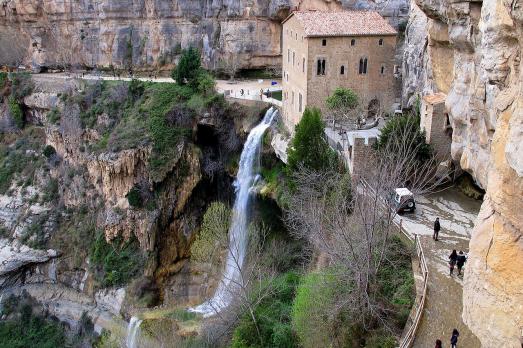
The Romanesque church of Sant Miquel del Fai belongs to a cenobitic Benedictine monastery. The building was constructed during the 11th century. It is hidden by nature, surrounded by rocks and waterfalls. Inside the building, a few tombs of monks can be found. The old priory house from the 15th century has a Gothic style.

Sant'Alessandro in Zebedia

Sant'Alessandro in Zebedia

Milan, IT

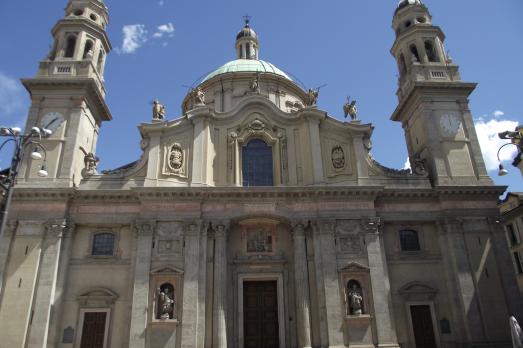
The church of Sant'Alessandro in Zebedia is a parish church in Milan. Built from 1601, the church is a distinctive example of the early Lombard Baroque.

Sant'Anna dei Lombardi

Sant'Anna dei Lombardi

Naples, IT

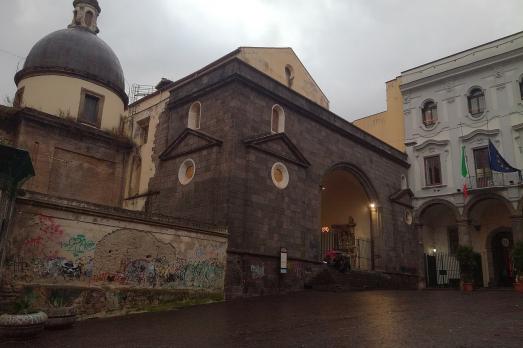
The church of Sant'Anna dei Lombardi was inaugurated in 1411 under the name of Santa Maria di Monteoliveto. It was in 1801 that the name of the church changed when it left the fold of the Benedictine order of the Olivetan Fathers.

Sant'Antonio Nuovo

Sant'Antonio Nuovo

Trieste, IT

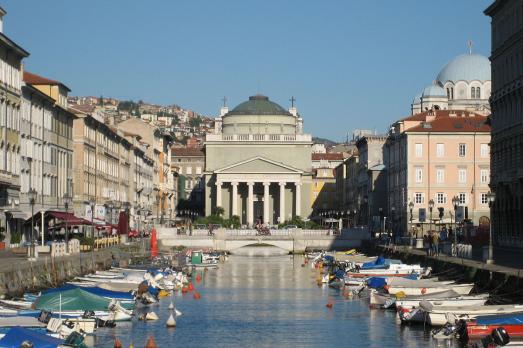
The church of Sant'Antonio Taumaturgo or Sant'Antonio Nuovo was built between 1825 and 1849 on a former 18th century chapel. The famous neoclassical architect Pietro Nobile (1774-1854) was in charge of the construction of the building. On the main façade there are six statues sculpted by Francesco Bosa in 1842, representing St Just, St Sergius, St Servolo, St Maurus, St Euphemia and St Thecla.

Sant'Ignazio di Loyola in Campo Marzio

Sant'Ignazio di Loyola in Campo Marzio

Rome, IT

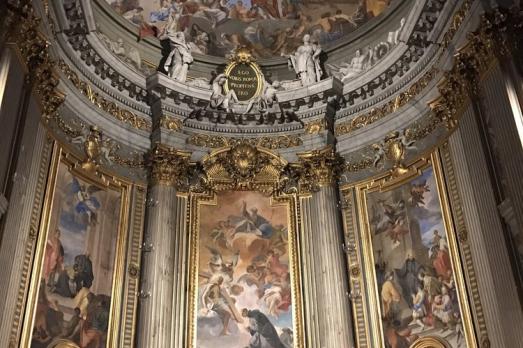
The Baroque church of St. Ignatius stands on the square of the same name and was built by Cardinal Ludovisi in 1626 in honor of St. Ignatius Loyola, founder of the Society of Jesus. The church was built next to the Collegio Romano Palace and replaced the church of S. Maria Annunziata from the 16th century. The church houses the tomb of Pope Gregory XV.

Sant'Ivo alla Sapienza

Sant'Ivo alla Sapienza

Roma, IT

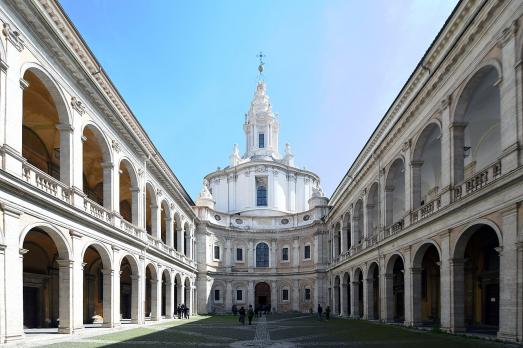
Sant'Ivo alla Sapienza is a church built between 1642 and 1660 by Francesco Borromini, the architect of La Sapienza University. For its artistic, technical and symbolic values, the building is considered one of the masterpieces of the architect, of the Baroque and of the history of architecture in general. The works were conditioned by the pre-existence of the already built palace and courtyard, which left a very limited quadrangular space for the construction of the church. But the result is of extreme purity and apparent simplicity.

Santa Anna de Barcelona

Santa Anna de Barcelona

Barcelona, ES

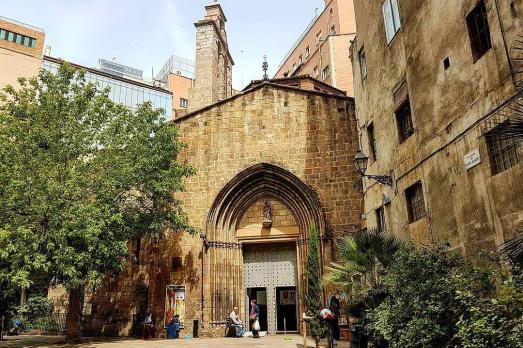
Santa Anna de Barcelona is a church and an ancient monastery. As a monastery it belonged to the Order of the Holy Sepulchre. The Romanesque church was declared a national monument in 1881 and has been declared a Cultural Heritage of National Interest.

Santa Bárbara

Santa Bárbara

Madrid, ES

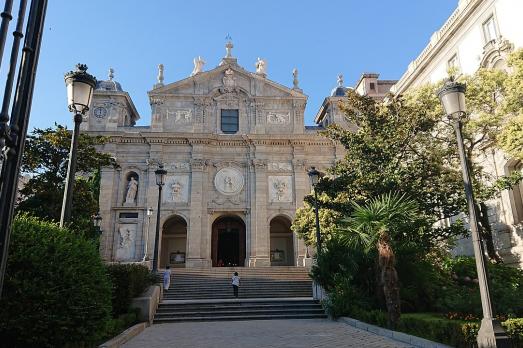
The Santa Barbara church was built in 1757 for the Salesas Reales convent, founded in 1748 by Queen Barbara of Braganza, wife of Ferdinand VI of Spain (1746-1759). The church was designed by Francisco Carlier in collaboration with Francisco Moradillo. In 1870, the monastery was closed and the government used it as the Palace of Justice, now the Supreme Court. In 1891, the church became a parish church.

Santa Cecilia in Trastevere

Santa Cecilia in Trastevere

Rome, IT

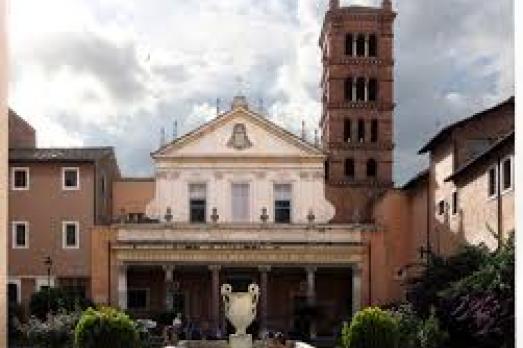
The church and convent of Santa Cecilia in Trastavere in Rome was built on the site of the home of St. Cecilia, a martyr of the 3rd century. Her mutilated body was found incorrupt in 1599; a statue under the altar depicts the way it was found. Excavations of Cecilia's Roman house can be explored underneath the church.

Be inspired

Stupkalnis.lt

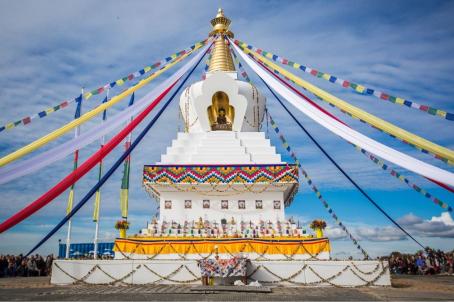
10 Buddhist stupas to discover in Europe

Stupas are symbols of enlightenment and peace that commemorate different stages of Buddha's life. Since the mid-20th century, thousands of stupas have begun to populate Europe. We have compiled some of the most impressive ones in this list.