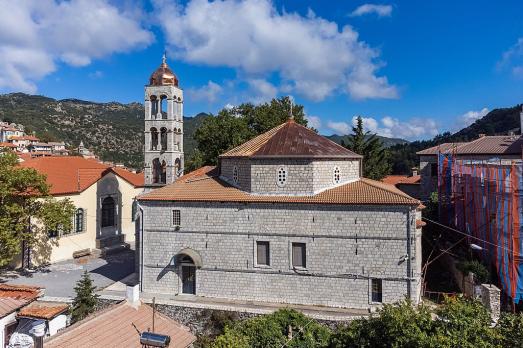
Church of Saint Kyriake, Dimitsana
Dimitsana, GR
.

Here you can search for a building to visit. You can use the map find destinations, or you can use the filters to search for a building based upon what different criteria.
Dimitsana, GR
.
Spissku Stvrtok, SK
In 1668, Father Reggiani acquired the Chapel of the Assumption of the Virgin Mary in Spissku Stvrtok for his order and the house in the village, which belonged to the robe, for the brothers' residence. According to a document written in the Spis Chapter on March 10, 1668, the nobles donated two plots of land to the monks: one between the cemetery of the church in Spissku Stvrtek and the house of his subject Vavrinec Filek, suitable for building a monastery, the other farmland together with Juraj Sofranek , watercourses, etc.
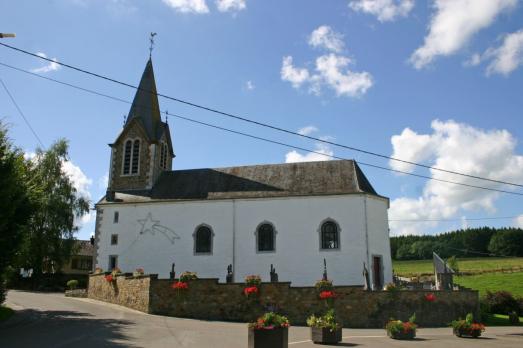
La Roche-en-Ardenne, BE
In a charming village full of character, the Church of Saint Lambert is welcoming, and very often open throughout the year. Inside are the statues of Sainte Anne and Saint Lambert. In the entry porch two long bell cords hang ready for action. Note also the contemporary Way of the Cross where the men arresting Jesus carry guns.
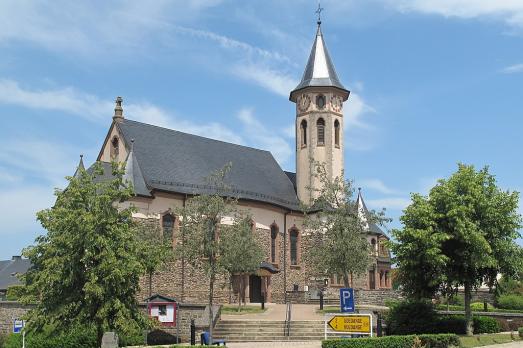
Wilwerdange (Troisvierges), LU
The church was built in 1927 according to plans by the architect Joseph Jentgen in Art Deco style. It is an atypical, very rare architecture for Luxembourg.
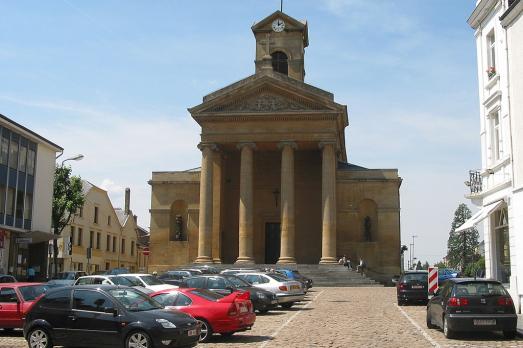
Virton, LU
The Neo-Classical Church of Saint Laurent was opened to the public in 1834 and is the work of the contractor Jacques-Modeste Guillemard of Longwy. Its imposing portal of four colossal columns with Ionic capitals supports a triangular pediment decorated with a bas-relief. At the end of the 1950s, the interior of the church was redesigned by architect Alexis Bodson from Virton. Four stained glass windows by Louis-Marie Londot also date from this period.
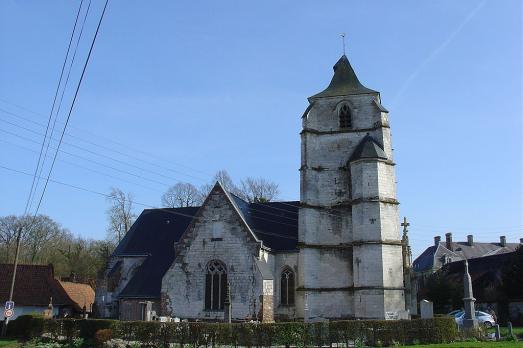
Tramecourt, FR
The church of Saint Leonard follows the Latin cross plan and is in the flamboyant gothic style. Entering through a sculptured porch over which can be seen the statue of St. Leonard and the arms and motto of the Tramecourt family 'Virtus et Antiquitas'.
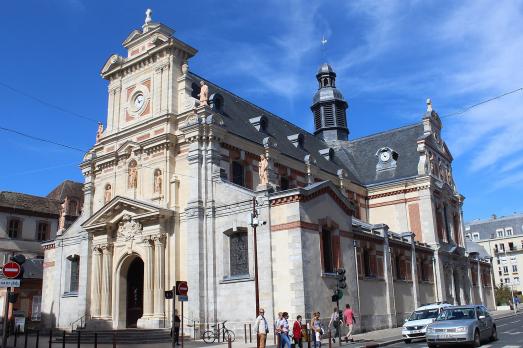
Fontainebleau, FR
This impressive church was built in 1611, is relatively recent, and its architectural style makes you feel it. Indeed, the façade was redesigned during the Second Empire. It was Marie de Medici who asked Claude Martin to build the church.
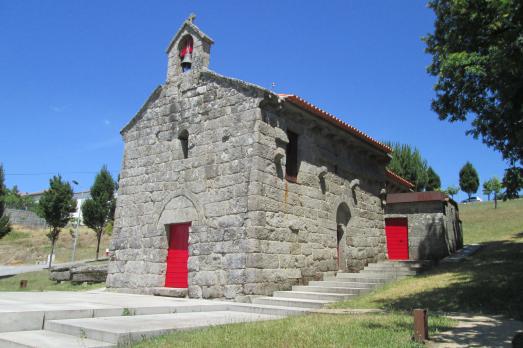
Felgueiras, PT
The oldest document ever to mention the Church of Saint Mammes of Vila Verde dates back to 1220, by which time it had already integrated the patronage of the Monastery of Saint Mary of Pombeiro. Renovations of the Church probably carried out in the 14th century, are attributed to the brother and sister Martim and Ana Anes, whose tombs may be found inside the Church. The Church was built in the Romanesque style, as can be seen in the plant and the façades. However, the arrangement of the portals and the resort to the clean modillions link this monument to a period in which the Gothic style was already dominant. The chancel exhibits traces of mural painting, dated from the 16th century, featuring botanic and geometric motifs. It is also possible to identify the images of Saint Benedict and Saint Bernard. This painting would have been done by the artisan Arnaus, under the patronage of the abbots of Pombeiro connected to the Melo family, whose coat of arms is still visible today. The construction of a new parish Church in Vila Verde in the second half of the 19th century contributed towards the continuing abandonment and decay of the Church of Saint Mammes. This monument was fully renovated as part of the project Route of the Romanesque.
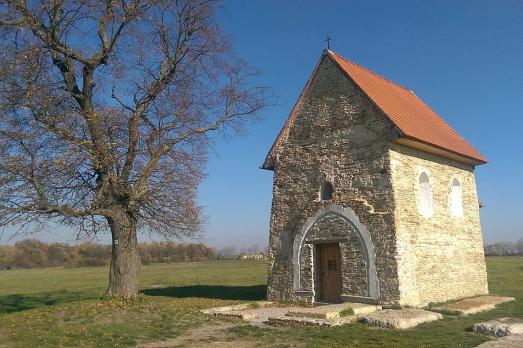
Kopčany, SK
The Church of St. Margaret of Antioch in Kopčany is the only authentic, almost completely preserved Great Moravian church with its original use and function. The building was originally part of the Slavic hillfort in nearby Mikulčice, where the remains of the foundations of several churches from this period have been found.
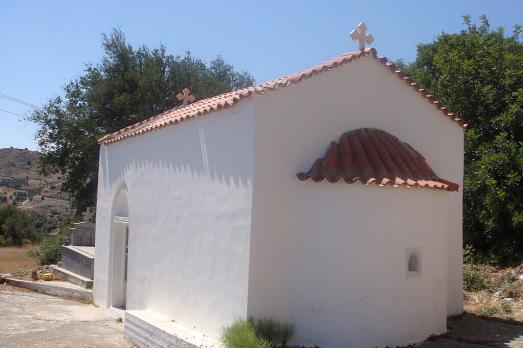
Vahos, GR
.
new
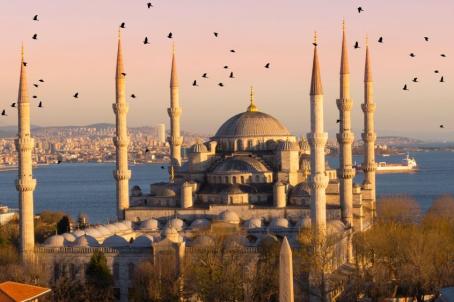
For a long time, Europe was ruled by powerful monarchies. Monarchy and religion have been connected since time immemorial. Here are 7 sites across Europe where royalty historically bent the knee to a higher power and received their crown.
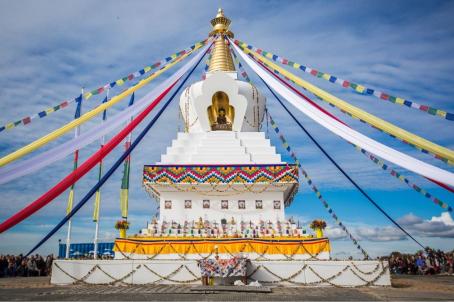
Stupas are symbols of enlightenment and peace that commemorate different stages of Buddha's life. Since the mid-20th century, thousands of stupas have begun to populate Europe. We have compiled some of the most impressive ones in this list.
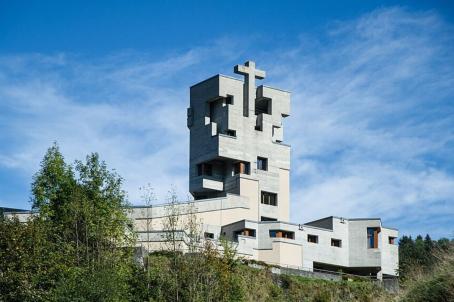
Walter Maria Förderer (1928–2006) was a Swiss architect and sculptor renowned for his neo-expressionist church designs in the 1960s. In this list we have compiled 6 of his church designs that seamlessly integrate religious and secular elements.

How is Religiana helping to conserve and promote Religious Heritage in Europe and why should you get involved?
Find out about Religiana
Are you a tourism organisation or religious heritage sites manager? Discover the advantages of becoming a partner.
See current partners
We can keep you up to date with the latest news from Religiana and religious heritage conservation across Europe.
Sign up to the FRH newsletter