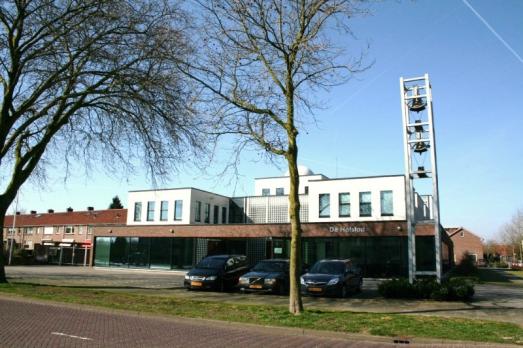
De Hof
Barneveld, NL
In 2006, the reformed community center in De Burgt on Parmentierstraat was completed. During the winter season, a church service is held here once a month on Wednesday evenings.

Here you can search for a building to visit. You can use the map find destinations, or you can use the filters to search for a building based upon what different criteria.
Barneveld, NL
In 2006, the reformed community center in De Burgt on Parmentierstraat was completed. During the winter season, a church service is held here once a month on Wednesday evenings.
Apeldoorn, NL
Nice modern church, built as a Protestant Church for Apeldoorn-South. On the site of the former Dutch Reformed Paulus Church.
Sibculo, NL
Modern church with small tower.
Burgum, NL
The Christian Separated Community was established on 24 April 1850. On 8 December of the same year, a separate church could be put into use. It was located on Tuskendiken , north of Bergum, because the church members also lived in Veenwoudsterwal, Veenwouden and Noordbergum. In 1872, a new church was put into use in the centre of Bergum. (The old church was demolished and rebuilt in Veenwoudsterwal.) Unfortunately, the tower of the new church started to subside, so it was demolished in 1896. The church was restored in 1952, but was finally replaced in 1976 by a new Reformed church, now called De Ikker. On New Year's Eve 2006, the merger deed for the formation of a Protestant church was signed. The new Protestant Community of Burgum continues to use both buildings, the Kruiskerk and De Ikker.
Damwâld, NL
Reformed church of the former village of Akkerwoude. The church was built in 1849 to replace a medieval church.
Hoogland, NL
Early neo-Gothic church with tower. Extension with side rooms 1998.
Arnhem, NL
Modern Protestant church without a tower in the large expansion district of Elderveld in Arnhem South.
Stadskanaal, NL
Built to replace an earlier church that had become too small. Built as the Reformed Church (Liberated). Nice modern church with a low tower. The church community has entered into a partnership with the Christian Reformed Church. The community is now called: NCGK Stadskanaal – de Lichtbron.
Nijkerk, NL
Well-maintained modern church with tower. Replacing a former church building.
Nieuw-Beijerland, NL
Church building from 2017 with a beautiful dome.
new
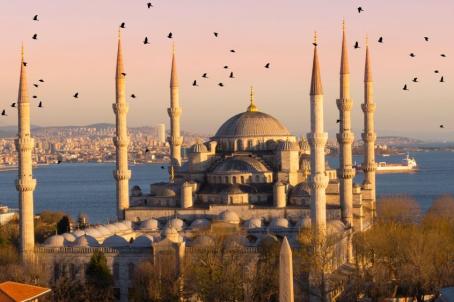
For a long time, Europe was ruled by powerful monarchies. Monarchy and religion have been connected since time immemorial. Here are 7 sites across Europe where royalty historically bent the knee to a higher power and received their crown.
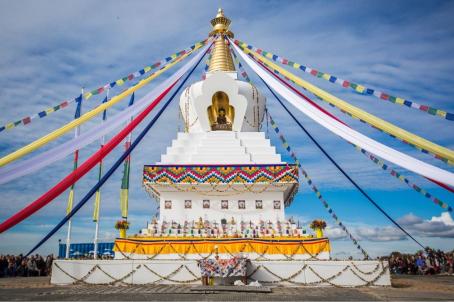
Stupas are symbols of enlightenment and peace that commemorate different stages of Buddha's life. Since the mid-20th century, thousands of stupas have begun to populate Europe. We have compiled some of the most impressive ones in this list.
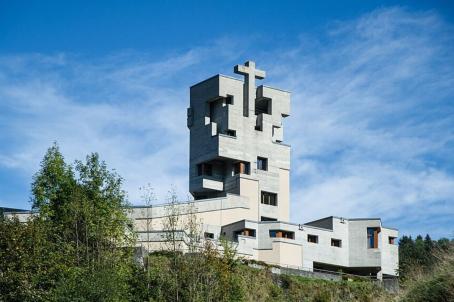
Walter Maria Förderer (1928–2006) was a Swiss architect and sculptor renowned for his neo-expressionist church designs in the 1960s. In this list we have compiled 6 of his church designs that seamlessly integrate religious and secular elements.

How is Religiana helping to conserve and promote Religious Heritage in Europe and why should you get involved?
Find out about Religiana
Are you a tourism organisation or religious heritage sites manager? Discover the advantages of becoming a partner.
See current partners
We can keep you up to date with the latest news from Religiana and religious heritage conservation across Europe.
Sign up to the FRH newsletter