Heilige Maria Zuivering
Putten, NL
Putten only got its own parish church (again) in 1939; the first since the Reformation. Previously, the small Roman Catholic population of Putten had to rely on a nearby monastery chapel from 1858.

Here you can search for a building to visit. You can use the map find destinations, or you can use the filters to search for a building based upon what different criteria.
Putten, NL
Putten only got its own parish church (again) in 1939; the first since the Reformation. Previously, the small Roman Catholic population of Putten had to rely on a nearby monastery chapel from 1858.
s-Gravenhage, NL
Three-aisled, neo-Gothic hall church under a saddle roof, with a 5/8 closed choir, three transepts, straight closed side chapels on either side of the choir, and a saddle roof tower next to the front facade. On the slate-covered roof there is a narrow lantern. The cornice is decorated with a pointed arch frieze. In the front facade there is a rose window under which a series of seven pointed arch windows. The entrance portal is provided with brick archivolts and has a double door with heavy decorative fittings. On either side of this there are two pointed arch windows. In the gable top there are five pointed arch niches, partly with windows and a hatch. The saddle roof tower on the left is also provided with pointed arch windows. To the left and right of the front facade there are entrance portals under a lean-to roof. The three transepts are externally marked by gables. The brickwork is decorated with bands and figures of yellow brick, and a pointed arch frieze under the eaves. Three-light pointed arch windows are placed in the gables. The choir has pointed arch windows with brick tracery and a pointed arch frieze under the eaves. On either side of the choir is a service building; on the side of the Stortenbekerstraat, closed off by gables and covered by a saddle roof. A decorative brick border is placed under the eaves. Both service buildings have a staircase tower with a spire. The building on the north side serves as a sacristy. Between this building and the transept is the parish hall, which is closed off at the top by an open balustrade. The interior of the church, inspired by the nave of the Grote of Sint Jacobskerk in The Hague, contains spacious side chapels with transverse wooden barrel vaults that connect to the central nave under a barrel vault in the lengthwise direction of the church. The barrel vaults are decorated with decorative paintings. The church has articulated brick piers, covered with yellow facing bricks alternating with red bands. In the spandrels on either side of the arches are round niches with six-passes. The side chapels on either side of the choir have brick cross-ribbed vaults; the choir has a radiating vault. The profiled brick triumphal arch to the choir rests on two short columns of polished black granite with hardstone leaf capitals. The church has polychrome tiled floors. One-manual organ made by JW Walker for St. Mary's Church Stoke d' Abernon in 1860, purchased in 2003 and installed in St. Martha's Church. The inventory includes a carved limestone pulpit tub; two neo-Gothic statues of the Sacred Heart and Mary, as well as a small communion rail with rich carvings in neo-Baroque style from the first half of the 19th century. The parsonage garden to the south of the church is enclosed by a brick garden wall.
Bovenkarspel, NL
Large, rectangular, modern church with a large tower. Facade on the east side; choir on the west.
Maartensdijk, NL
The area in which Maartensdijk is located was given to Willebrord, the first bishop of Utrecht, by the Frankish state authorities at the beginning of the 8th century. It was part of an extensive peat landscape. In order to make the area productive, the bishops gave plots of land in fief to vassals to develop. These vassals included not only citizens, but also religious institutions such as the Utrecht chapter of St. Maarten (The Cathedral Chapter).
Beek (Mo), NL
Historic village church with tower. Due to various extensions, this church has a neo-Gothic appearance. Medieval church with tower from 1339, which was raised in 1884. Extension with side aisles in 1868, designed by HJ Wennekers. Partially (choir) demolished in 1914, and replaced in 1914-1915 by a new choir designed by W. te Riele. The restoration of the church began in early 2002. The restoration was completed on 19 January 2003. (49-03)
Breda, NL
Large (neo)Gothic village church with a high tower, the second highest church tower in Breda, after the tower of the Grote Kerk in the centre of Breda.
Heerlen, NL
The church is mentioned in the 11th century as part of the then parish of St. Laurentius in Voerendaal.
Maastricht, NL
The Sint-Janskerk is a Gothic Protestant temple in the centre of Maastricht, next to the Catholic Basilica of Sint-Servaas. The church was founded at the beginning of the 13th century to serve as a baptismal church for the St. Servatius parish. It is listed as a National Monument of the Netherlands.
Neer, NL
The St. Martinus Church from 1909 because of, among other things, a Renaissance communion bench, a late Gothic Marianum and a crucifix from 1539. This church is listed as a National Monument of the Netherlands.
Kloosterzande, NL
Roman Catholic church with front tower, built in 1869-1870 in neo-Gothic style to a design by architect P. Soffers. The interior was completed in 1871 and the church was consecrated on 2 May 1871. The bricks for the construction came from the nearby former brickworks in the Burgpolder.
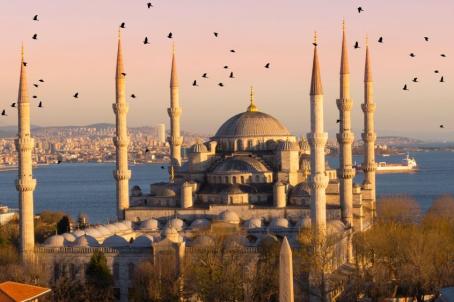
new
For a long time, Europe was ruled by powerful monarchies. Monarchy and religion have been connected since time immemorial. Here are 7 sites across Europe where royalty historically bent the knee to a higher power and received their crown.
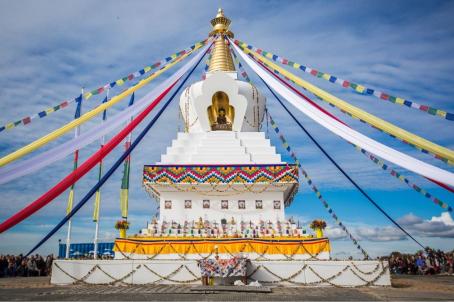
Stupas are symbols of enlightenment and peace that commemorate different stages of Buddha's life. Since the mid-20th century, thousands of stupas have begun to populate Europe. We have compiled some of the most impressive ones in this list.
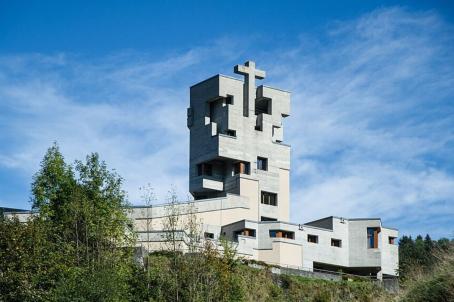
Walter Maria Förderer (1928–2006) was a Swiss architect and sculptor renowned for his neo-expressionist church designs in the 1960s. In this list we have compiled 6 of his church designs that seamlessly integrate religious and secular elements.

How is Religiana helping to conserve and promote Religious Heritage in Europe and why should you get involved?
Find out about Religiana
Are you a tourism organisation or religious heritage sites manager? Discover the advantages of becoming a partner.
See current partners
We can keep you up to date with the latest news from Religiana and religious heritage conservation across Europe.
Sign up to the FRH newsletter