Explore Religious Heritage Across Europe

Here you can search for a building to visit. You can use the map find destinations, or you can use the filters to search for a building based upon what different criteria.

Refine search

Mariakerk

Gapinge, NL

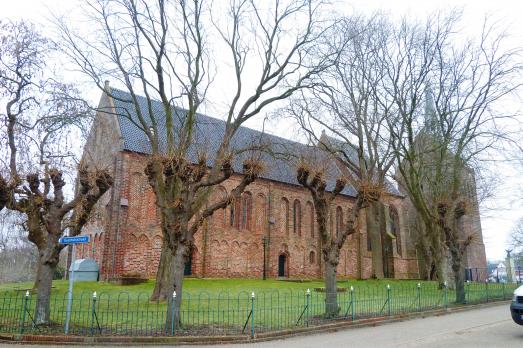
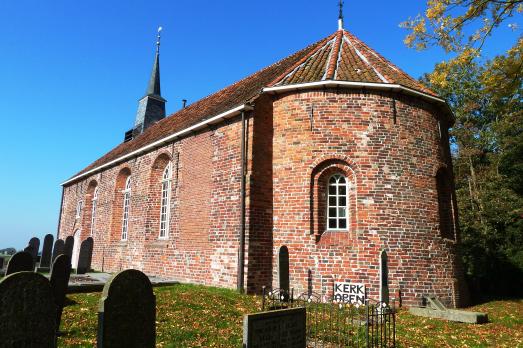
The Dutch Reformed Church is a brick, late Gothic cruciform church, the nave of which was brought to the same height as the mid-15th century choir around 1500. Attached sacristy with rose window from around 1500. Interior: the choir separated from the nave by a narrow triumphal arch on wall columns. Oak pulpit with arched panels. XVII A. Tower probably from the first half of the 15th century, half built into the nave around 1500. The flat tower with high entrance niche, consisting of an entrance with a basket-handle arch and two pointed arch niches above it, merges into an octagon. Octagonal staircase tower. On the south side traces of a vaulted baptismal chapel. Single-manual organ, probably made by L. de Backer around 1760. Placed in Gapinge in 1903.

Mariakerk

Sommelsdijk, NL

Remnant of a three-aisled cruciform church completed in 1499. Restored after a fire in 1632, in which the crossing tower collapsed, which was replaced by a new one against the west facade. After the second fire in 1799, only the nave was restored and by demolishing the arches and pillars it was combined into one space. Restoration completed in 1807; tower restored in 1817. Of the Gothic choir only the north facade with part of the closure remains. On the north side of the nave a hard stone portal with pediment, in which coat of arms and attachment, crowned by ornamental vases in Louis XVI style. 1794. Next to this portal in the church wall a stone with Gothic inscription, which shows that the church was completed in 1409. Mechanical tower clock, B. Eijsbouts, 1912, has been decommissioned.

Mariakerk

Buitenpost, NL

The Van Dam company built an organ for the Reformed Church in Buitenpost in 1877. At the beginning of the twentieth century, the Viola di Gamba 8' from the Bovenwerk was placed on the Hoofdwerk under the name Cello 8' instead of the Quintprestant 3'. A new Aeoline 8' was placed on the Bovenwerk. The organ was restored in 1973/1974 by Fama & Raadgever, under the advice of Bas Wijnands. The Viola di Gamba was put back, and a new Quintprestant was made. The originally attached pedal was replaced by a free pedal with four voices. The Van Dam pedal from Anjum served as a model for this pedal. On Friday 25 January 1974, the organ was put back into use with a performance by Arnold Feddema and Mr. A. Sterk.
Mariakerk

Oentsjerk, NL

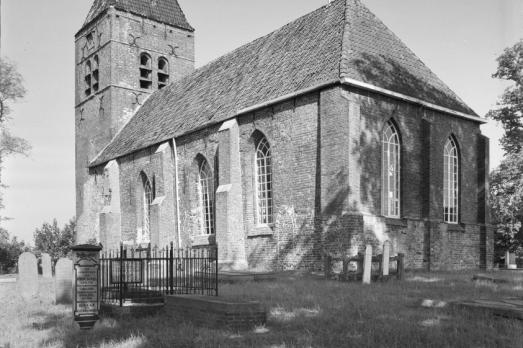
The Van Oeckelen organ in the Protestant church, donated in 1871 by Mr. SP Baron Van Heemstra, resident of the Heemstra State, was restored by Bakker & Timmenga and put back into use on Sunday 13 March 2005. This church is listed as a National Monument of the Netherlands.

Maria Church

Maria Church

Oosterwijtwerd, NL

The St. Mary's Church is one of the oldest Romanesque churches in Groningen. According to dendrochronological (dating of tree rings) research of the oak wood, the church dates back to around 1237. The monastic mounds and remnants of a Norman gate are witnesses of this age.

Maria Church

Maria Church

Westerwijtwerd, NL

In a list of monasteries from the beginning of the 10th century, Westerwijtwerd is mentioned under the name "Widuvurd." The name is later written as Wietwerd and finally Westerwijtwerd, where the distinguished family of Ewsum built a church dedicated to Mary.

Maria Church

Maria Church

Zandt, NL

The St. Mary's Church is a fine example of a late Romanesque building. The oldest part dates from the second half of the 13th century.

Mariakyrkans Forsamling

Katrineholm, SE

Mariakyrkan is the oldest building in Sigtuna of those still in use. It holds memories and treasures from the history of the city and its inhabitants for more than 750 years. The, or rather the choir and the associated monastery was inaugurated on 15 August (Virgin Mary's Ascension Day) 1247/48 and in the middle of the 1250s the nave was also completed. In what was then Sweden, it was the first time the technology was used to burn bricks.

Marianów Monastery

Marianów Monastery

Marianowo, PL

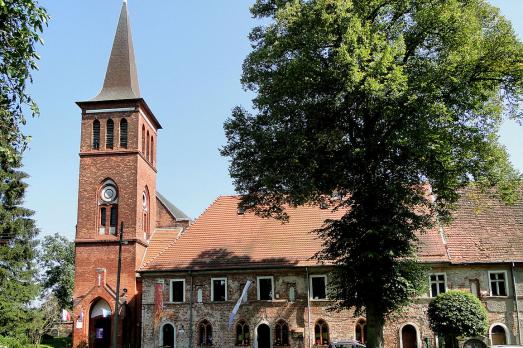
Marianów Monastery is a former Cistercian monastery, later transformed into a residence for Pomeranian noblemen. Built in the second half of the 13th century, the original buildings of the monastery were probably made of wood and were later rebuilt in brick. In 1549 and 1637, fires damaged the monastery and it was left as it was. In the 19th century, the west wing of the former monastery was rebuilt, the west span of the church nave was also dismantled and a tower was built there.

Mariastern Abbey, Banja Luka

Mariastern Abbey, Banja Luka

Banja Luka, BA

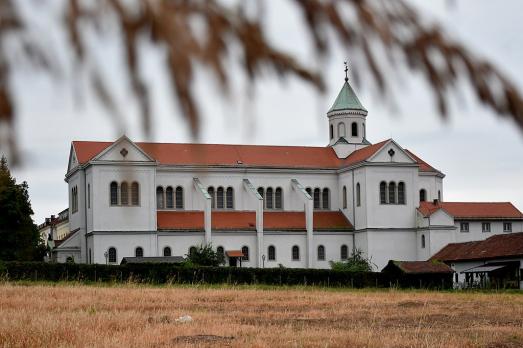
Mariastern Abbey is a Trappist Abbey founded in the 19th century in Banja Luka. It is the only abbey with Trappist monks in Southeastern Europe. The ensemble consists of the Church of the Assumption of the Blessed Virgin Mary and the monastery buildings.

Be inspired

Stupkalnis.lt

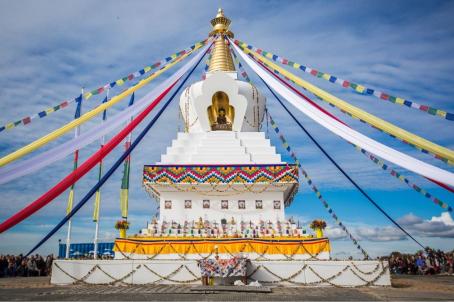
10 Buddhist stupas to discover in Europe

Stupas are symbols of enlightenment and peace that commemorate different stages of Buddha's life. Since the mid-20th century, thousands of stupas have begun to populate Europe. We have compiled some of the most impressive ones in this list.