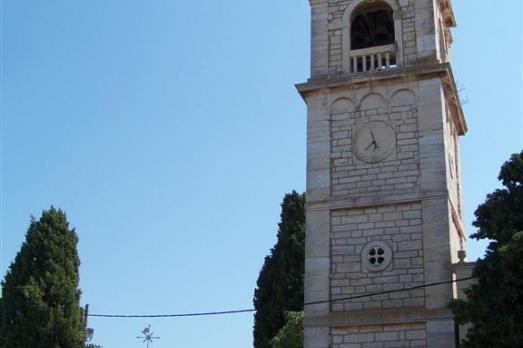
St. Spyridon Church
Peroj, HR
The Serbian Orthodox community got permission to build an Eastern Orthodox church in 1788. The Church of St. Spyridon got its current form in 1834.

Here you can search for a building to visit. You can use the map find destinations, or you can use the filters to search for a building based upon what different criteria.
Peroj, HR
The Serbian Orthodox community got permission to build an Eastern Orthodox church in 1788. The Church of St. Spyridon got its current form in 1834.
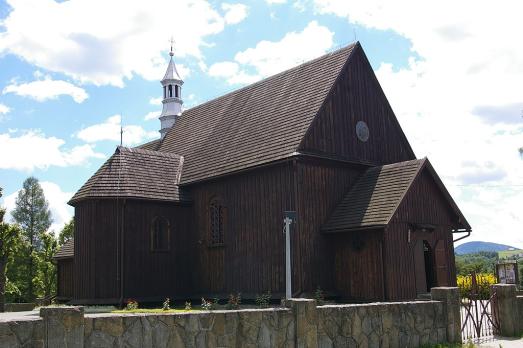
Wilczyska, PL
St. Stanisław’s Parish Church in Wilczyska was built in the 17th century (1605 is cited as the exact date).
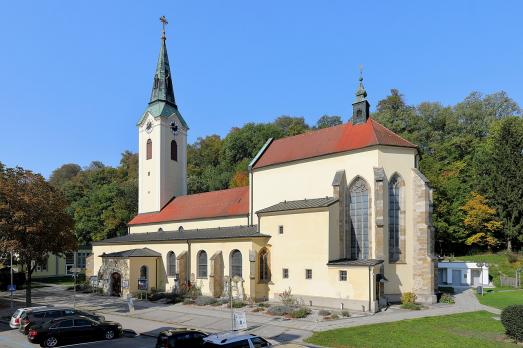
Amstetten, AT
The St. Stephan Church is a Gothic church built from the 13th century onwards above the foundations of an older church. From 1787 to 1789, the chapel was built with a baroque roof.
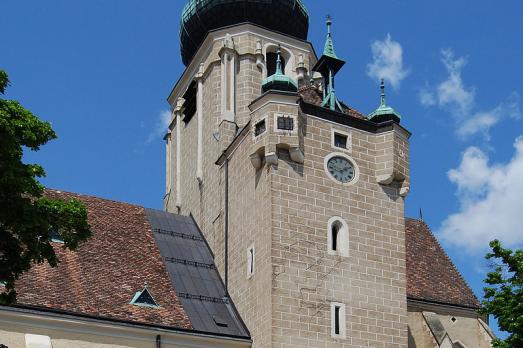
Baden, AT
St. Stephan's Church was built in the 15th century on the site of an old church. The characteristic Baroque onion dome was added in the 17th century.
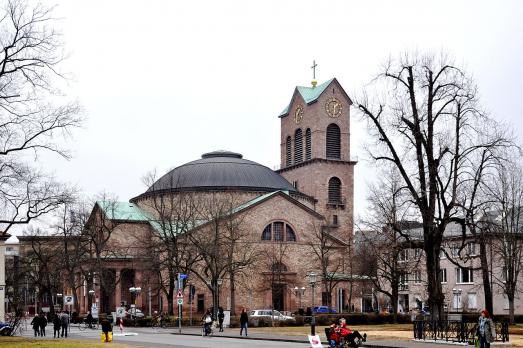
Karlsruhe, DE
The parish church of St. Stephan is a Roman Catholic church building in the classical style built between 1808 and 1814 and designed by Friedrich Weinbrenner. Since 1882, the unplastered exterior has been a characteristic feature of the neoclassical church building, which is one of Weinbrenner's most important works and one of the most important neoclassical domed churches in southwest Germany. During the Second World War, the church was partially destroyed by air raids in 1944. The church was rebuilt between 1951 and 1955. The new dome built during the reconstruction consists of prefabricated concrete elements.
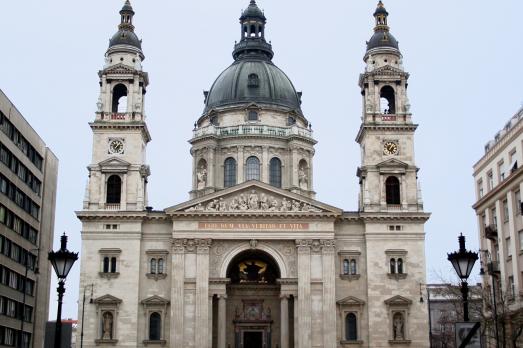
Budapest, HU
St. Stephen's Basilica, the largest Catholic church in Budapest, was built between 1851 and 1901 in a neoclassical style. It is a listed national monument.
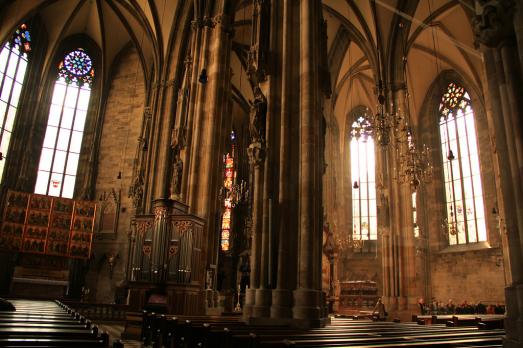
Vienna, AT
You can not think of Vienna without thinking of the St. Stephen Cathedral. This notorious religious building is well recognizable for its four towers, the tallest of which - south tower- measures 136.44 meters. 343 steps bring visitors to the tower room, from which there is a breathtaking view across Vienna. Besides the beautiful altars and side chapels, the cathedral is also home to a vast treasury, which includes relics decorated with gold and precious stones, liturgical books and vestments.
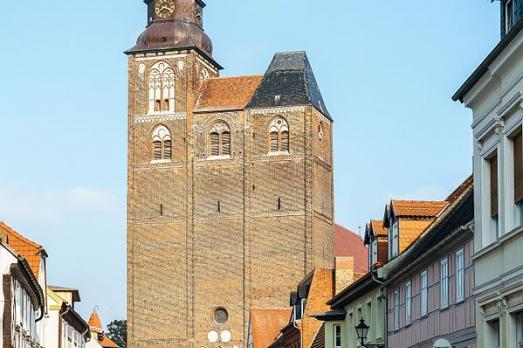
Tangermünde, DE
The present building of St. Stephen's Church was built after 1380 on a former pre-1188 church. It was not until 1714 that the north tower was given a baroque dome after the original roof had been destroyed in a city fire some 100 years earlier. Remains of a 14th century painting can be seen around a large hole in the nave vault. They depict four angels with the instruments of Christ's suffering as well as scriptures.
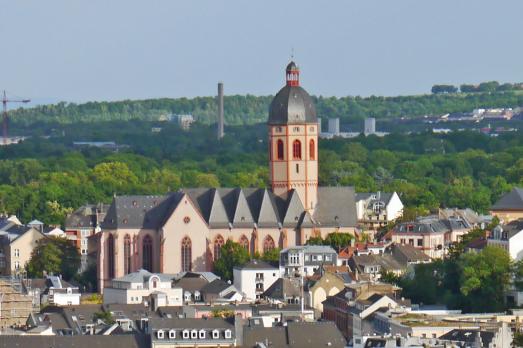
Mainz, DE
St. Stephen's Church in Mainz was founded in 990 by Archbishop Willigis. The present church was built later, from 1267 to 1340, but has retained the plan of the Willigis building. From 1462 to 1499, the cloister was added to the south side. During the Baroque period, the interior of St. Stephen's Church was decorated accordingly, but in 1857 a nearby powder magazine tower exploded, causing the church to lose its Baroque furnishings.
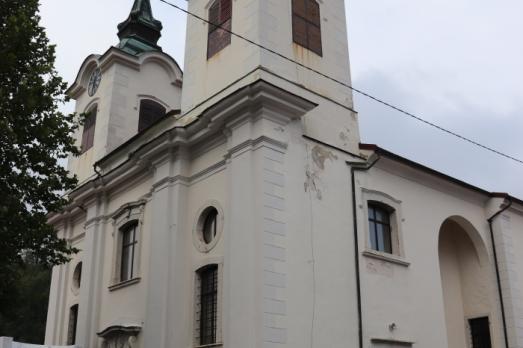
Postojna, SI
St. Stephen's Church was built in 1777 in the Baroque style. It was built and probably also designed by Master Hoffer. The church became a parish in 1793. Between 1876 and 1879, and in 1881-82, the ceiling was painted by the painter Dominik Fabris. As the frescoes faded with time, Dean Erzar had them renovated in 1910.
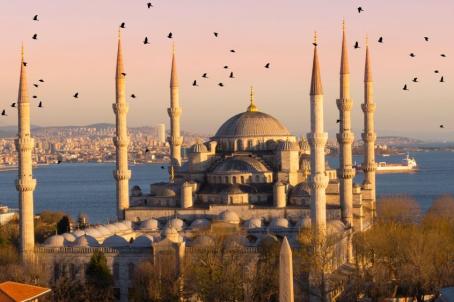
new
For a long time, Europe was ruled by powerful monarchies. Monarchy and religion have been connected since time immemorial. Here are 7 sites across Europe where royalty historically bent the knee to a higher power and received their crown.
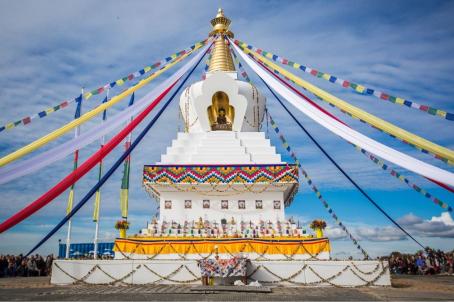
Stupas are symbols of enlightenment and peace that commemorate different stages of Buddha's life. Since the mid-20th century, thousands of stupas have begun to populate Europe. We have compiled some of the most impressive ones in this list.
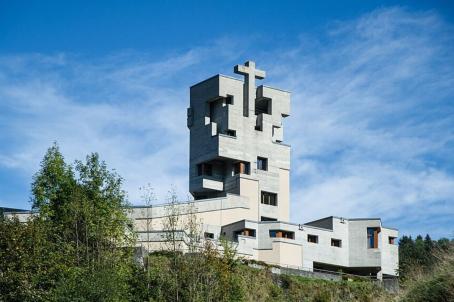
Walter Maria Förderer (1928–2006) was a Swiss architect and sculptor renowned for his neo-expressionist church designs in the 1960s. In this list we have compiled 6 of his church designs that seamlessly integrate religious and secular elements.

How is Religiana helping to conserve and promote Religious Heritage in Europe and why should you get involved?
Find out about Religiana
Are you a tourism organisation or religious heritage sites manager? Discover the advantages of becoming a partner.
See current partners
We can keep you up to date with the latest news from Religiana and religious heritage conservation across Europe.
Sign up to the FRH newsletter