Explore Religious Heritage Across Europe

Here you can search for a building to visit. You can use the map find destinations, or you can use the filters to search for a building based upon what different criteria.

Refine search

Dorpskerk

Blokker, NL

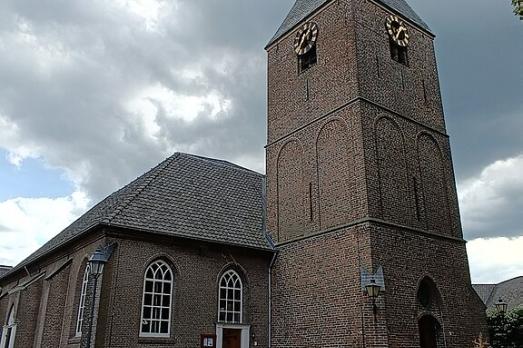
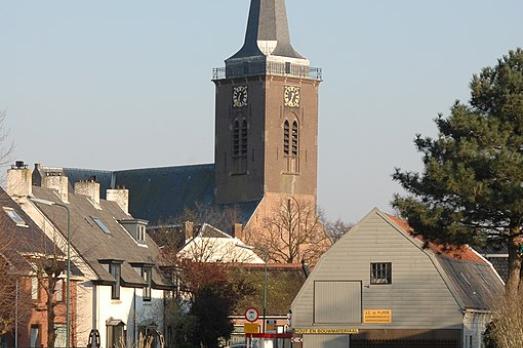
It is not known when a church first stood on this site, but it is known that there was a parish in Westerblokker around 1513. It is not possible to say with 100% certainty what style the church had, but on the basis of several drawings and engravings it can be stated that the church at least has stylistic features of a late Gothic church from the first quarter of the 16th century. This church, more precisely the nave, was demolished in 1830 due to dilapidation. The new nave was widened in 1864 at the height of the two easternmost bays and the choir enclosure. The current cast iron windows also date from that renovation. In 1883 the, also, cast iron entrance and ornamental gates were added. The pillars of the gate on the Westerblokker show the year 1883.
Dorpskerk

Dorpskerk

Almen, NL

Brick church from the 14th century. The tower was originally separate from the church and is somewhat older. The church has a Romanesque Bentheimer stone baptismal font. Under the choir lie several mummies. Enlarged in 1849, choir built in 1915.

Dorpskerk

Dorpskerk

Abcoude, NL

The Dorpskerk in Abcoude is a historic village church dating from the 14th century. It is listed as a National Monument of the Netherlands. It is currently used as a place of worship by the Protestant Church.

Dorpskerk

Bunnik, NL

Dutch Reformed Church. Neoclassical facade decorated with natural stone pilasters, low plastered tower. Bell tower with clock by J. Dop, 1651, diam. 86.5 cm.

Dorpskerk

Markelo, NL

The Martinuskerk in Markelo , is a Protestant church built in 1840 after the demolition of the older church.

Dorpskerk

Numansdorp, NL

Beautiful village church with charming, iconic tower. Characteristic Protestant interior, almost completely filled with pews. The "attention wall" with pulpit and baptismal font is located in the right (= southern) side of the interior. In that wall are also two colorful modern stained glass windows, on either side of the pulpit. This church is listed as a Municipal Monument of the Netherlands.

Dorpskerk

Poortugaal, NL

Dutch Reformed Church. Late Gothic building, substructure tower (14th century), raised 15th B; choir mid 15th; transept and chapels against the tower 15th B; nave replacing an older one, 16th. Restored ca. 1920-1934. Rectangular choir, three-aisled nave, of which the side aisles have gables with hipped roofs on each bay. Simple brick columns, barrel vaults with tie beams. Inventory: partly late Gothic choir screen, pulpit 1774, lords' pews and text boards (17th), many tombstones. In the southern transept fresco, depicting the Last Judgement, ca. 1500. Organ with main work, upper work and free pedal, made in 1860 by WH Kam (Dordrecht) for the Poor Church (Bethlehemskerk) in The Hague. Purchased in 1977, restored by Fama & Raadgever and placed in Poortugaal. In the church a bell of an anonymous founder, 1525, diam. 116.5 cm.

Dorpskerk

Nieuwer ter Aa, NL

Extremely important historical village church with tower. Particularly important for the English organ, and the series of stained glass windows. This church is listed as a National Monument of the Netherlands.

Dorpskerk

Ouddorp, NL

This church is listed as a National Monument of the Netherlands.

Dorpskerk

Biggekerke, NL

The church of Biggekerke is known to have been founded before 1247 as a daughter church of the Westmonster church in Middelburg. Until 1453, there were even two pastors' positions attached to it. During the Reformation, it also caused quite a stir here. The pastor at the time, Bernard Donder, was a convinced Calvinist and renounced the Roman Catholic church in 1566. Since then, he has also preached the Reformation in Biggekerke, something for which he had to pay with imprisonment. After being released and imprisoned several times, he fled to England or Germany. After this, a period began in which people could only meet secretly and in small numbers, in someone's house. But then, when Middelburg declared itself loyal to Orange, the Reformation could develop. At that time, there was still the problem that there were too few pastors, but in 1583, the classis of Walcheren assigned the first pastor to Biggekerke, the Rev. J. van Aecken.

Be inspired

Stupkalnis.lt

10 Buddhist stupas to discover in Europe

Stupas are symbols of enlightenment and peace that commemorate different stages of Buddha's life. Since the mid-20th century, thousands of stupas have begun to populate Europe. We have compiled some of the most impressive ones in this list.