Gereformeerde Gemeente
Scherpenisse, NL
Well-maintained modern church with roof turret. To the left of this is the older church building.

Here you can search for a building to visit. You can use the map find destinations, or you can use the filters to search for a building based upon what different criteria.
Scherpenisse, NL
Well-maintained modern church with roof turret. To the left of this is the older church building.
Kamperland, NL
Hall church without tower. Replaced the former church building. The church building was put into use on 19 April 1960. At that time, the church building had 80 seats. In 1975, it was expanded to 120 seats.
Nijkerk, NL
Modern church without tower. Replaced a former church building . Inaugurated on 20 August 1980 with 230 seats.
Nieuwe-Tonge, NL
Amsterdam, NL
On 3 March, the foundation stone of the church building on the Melkpad was laid. On 26 September 1951, the church building was put into use. The number of seats is around 225, while a hall can also be added to the church hall with room for 150 people.
Naaldwijk, NL
Church built in 1959 and expanded for the last time in 2000. n 1974 the organ was replaced by a Johannus organ
Nieuwaal, NL
Church reconstructed in 1968.
Haamstede, NL
Community founded around 1900, by members who withdrew from the Reformed Church. In 1903, a church building on the Noordstraat was occupied. This church building was expanded with a gallery in 1947. Because the growth of the church community continued, it was decided in 1952 to build a new building. On Friday 4 September 1953, the church building with 212 seats was put into use. Rev. W. de Wit led a special church service. He preached based on 2 Chronicles 7 verse 5b: "Thus the king and all the people have dedicated the house of God." Due to the growth in the number of tourists attending church services, the church building was expanded with a hall in 1972. 300 seats. In 1984, the organ was restored. Parts from the organ of the 'Vredekerk' in Katwijk aan Zee were used for this purpose.
Elspeet, NL
At the beginning of the twentieth century, several people from Elspeet and the surrounding area left the Dutch Reformed Church. In 1914, these people formed a branch of the Reformed Church in Barneveld. On 10 September 1919, this branch became independent. In the same year, a simple church was put into use on the Nachtegaalweg. In 1938, a new church building was built on the same site. Due to the growth of the community and the many holidaymakers in the summer months, the number of seats was significantly expanded in both 1976 and 1993.
Berkenwoude, NL
Community founded in 1912. Approximately 270 seats. After the church split in 1953, the church building was lost. On March 1, 1959, a temporary wooden church was put into use. The church building at Prinses Beatrixstraat 3 was put into use on October 22, 1969. This building became too small, and an extension took place in the 1980s. The building became too small again in the early 2000s. It was rebuilt again, and extended with a hundred seats, and put back into use on September 12, 2005.
new
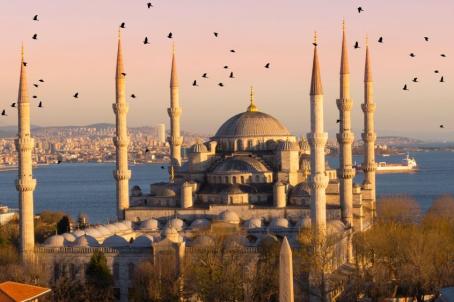
For a long time, Europe was ruled by powerful monarchies. Monarchy and religion have been connected since time immemorial. Here are 7 sites across Europe where royalty historically bent the knee to a higher power and received their crown.
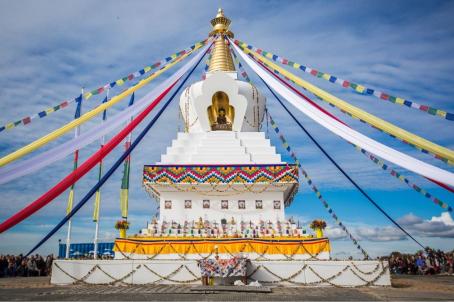
Stupas are symbols of enlightenment and peace that commemorate different stages of Buddha's life. Since the mid-20th century, thousands of stupas have begun to populate Europe. We have compiled some of the most impressive ones in this list.
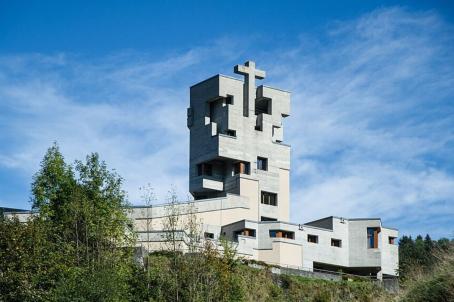
Walter Maria Förderer (1928–2006) was a Swiss architect and sculptor renowned for his neo-expressionist church designs in the 1960s. In this list we have compiled 6 of his church designs that seamlessly integrate religious and secular elements.

How is Religiana helping to conserve and promote Religious Heritage in Europe and why should you get involved?
Find out about Religiana
Are you a tourism organisation or religious heritage sites manager? Discover the advantages of becoming a partner.
See current partners
We can keep you up to date with the latest news from Religiana and religious heritage conservation across Europe.
Sign up to the FRH newsletter