Grote Kerk
Allingawier, NL
The church of Allingawier dates from the 17th century. The building is sober, both outside and inside. The church is part of the tourist route "Aldfaers Erf" and houses a special sound representation.
Here you can search for a building to visit. You can use the map find destinations, or you can use the filters to search for a building based upon what different criteria.
Allingawier, NL
The church of Allingawier dates from the 17th century. The building is sober, both outside and inside. The church is part of the tourist route "Aldfaers Erf" and houses a special sound representation.
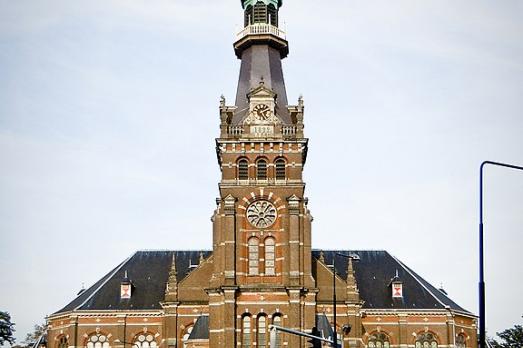
Apeldoorn, NL
On the site of a former burnt down church from 1842. Large church with tower. One of the largest and most monumental still existing Reformed church buildings from the period 1850 - 1950. Now PKN.
Marken, NL
Three-aisled pseudo-basilica with a three-sided choir under a slate-covered saddle roof and with a tower at the entrance, built in 1903 -1904 and designed by AHLKups.
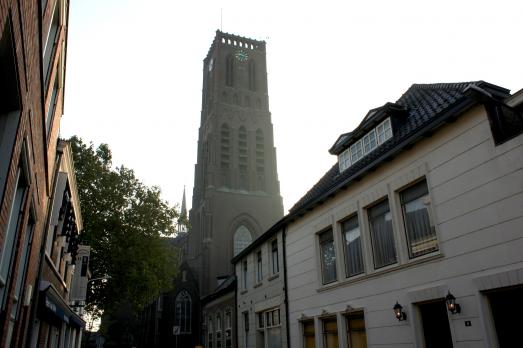
Oss, NL
It is a church built in neo-Gothic style, which was designed by H.J. from Tulder. The church, with a striking spireless tower, was built in 1857-1859. The ground pattern is a cruciform basilica with a three-aisled transept and ambulatory. The church replaced the medieval Willibrordus Church, which was located on the same site. Near the church is the Triumphal Maria flanked by two angels memorial, which was founded in 1894 by pastor-dean Arnoldus van de Laar. In 1976 the church was included in the Monuments Register as a national monument.
Almelo, NL
The Grote Kerk in Almelo is a historic church which dates from 1493.The church was originally founded in 1236 by the Lord of Almelo as a castle chapel. The choir was rebuilt in 1493, and the transept and the nave in 1738. It has been in use by Protestant worship since 1619. In 1873, the church was largely renovated and immediately enlarged. It currently belongs to the Protestant Church in the Netherlands (PKN). It is listed as a National Monument of the Netherlands.
Papendrecht, NL
Replaced a church from 1745. Renovated in 1929, when a new tower was also built.
Sliedrecht, NL
Dutch Reformed Church. Simple building of late 18th century character, with three-sided closures on the east and west sides, an extension with pediment on the north side and a heavy brick tower on the west side, the lower part of which gives the impression of being late medieval, but which otherwise dates from the 19th century. Inventory: beautifully carved pulpit with baptismal fence and decorated psalm boards in Lod. XV shapes. Richly carved organ case in transition Lod. XIV-Lod. XV. In it an organ with main work, upper work and free pedal, built in 1852 by CFA Naber (Deventer). Bell tower with bell by H. Meurs, 1604, diam. 91 cm.
Hengelo, NL
Designed and built in 1848 in neo-classical style by Rijkswaterstaat. During the restoration and modernization in 1990-1991, new construction was carried out at the rear that was not protected and the entrance was moved from the front to the rear. The church is currently used as an auditorium and concert hall of the Music School.
Harlingen, NL
Reformed Church. The Reformed Church was built in 1772-1776 on a cruciform plan, replacing a Romanesque church, of which the tall tuff stone tower was preserved. Three natural stone entrance frames. Interior completely plastered to a design by JOHusley; in one of the walls at the top a clock face framed by stucco. Circulating gallery on marble columns; on the corners groups of benches. Organ with Hoofdwerk, Rugwerk and free Pedal, made in 1776 by AA Hinsz on gallery with associated pulpit below, all with carvings by JG Hempel. Many gravestones.
Maassluis, NL
Groote or Nieuwe Kerk (Protestant church - Reformed Church). Renaissance city church with tower. One of the most monumental Protestant church buildings in the Netherlands from the 17th century, with a world-famous organ. The land of the former redoubt was purchased on 24 June 1612 for the construction of a cemetery. In that same year, on 10 November, the reverend Johannes Fenacolius (1577-1645) bought the construction drawings of the Noorderkerk to be built in Amsterdam. The design for that church was by Hendrick de Keyser, Cornelis Dankersz. van Seevenhoven and Hendrick Jacobsz. Staets. As Hendrick de Keyser had died, the plans were purchased from his son Pieter. The Nieuwe Kerk (1665) in Groningen was also built according to this design.
new
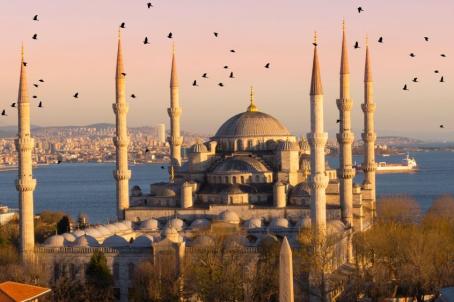
For a long time, Europe was ruled by powerful monarchies. Monarchy and religion have been connected since time immemorial. Here are 7 sites across Europe where royalty historically bent the knee to a higher power and received their crown.
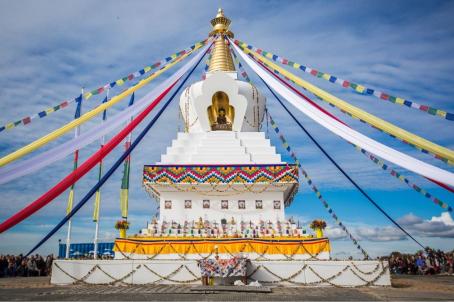
Stupas are symbols of enlightenment and peace that commemorate different stages of Buddha's life. Since the mid-20th century, thousands of stupas have begun to populate Europe. We have compiled some of the most impressive ones in this list.
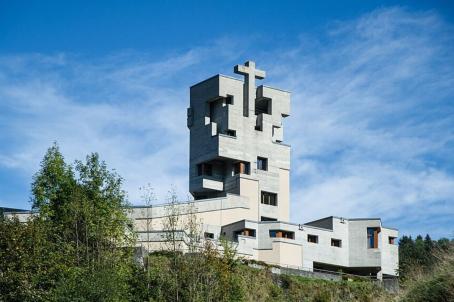
Walter Maria Förderer (1928–2006) was a Swiss architect and sculptor renowned for his neo-expressionist church designs in the 1960s. In this list we have compiled 6 of his church designs that seamlessly integrate religious and secular elements.