Heilige Antonius Abt
Chaam, NL
Late neo-Gothic church with tower and roof turret,

Here you can search for a building to visit. You can use the map find destinations, or you can use the filters to search for a building based upon what different criteria.
Chaam, NL
Late neo-Gothic church with tower and roof turret,
Nederasselt, NL
Roman Catholic parish church of St. Antonius Abt from 1891. Three-aisled, neo-Gothic basilica without transept. Front tower with incurved spire. Interior with brick cross-ribbed vaults. Characteristic work in the oeuvre of architect Caspar Franssen (1860-1932), a pupil of Pierre Cuypers. Inventory from the construction period is still partly present. This church is listed as a Municipal Monument of the Netherlands.
Overlangel, NL
Important early neo-Gothic church with tower, which is crowned by a unique iron spire. In 1854, the St. Anthony's Church in Overlangel was built, designed by architect Wilhelmus Jacobus van Vogelpoel. This church replaced the St. Anthony's Chapel in Overlangel. Van Vogelpoel used a neo-Gothic architectural style. In September 1854, the church was consecrated by Bishop Joannes Zwijsen.
Malden, NL
Modern church built in 1960.
Nijmegen, NL
Sober neo-Gothic church with tower. Restored in the 1990s. This church is listed as a National Monument of the Netherlands.
De Mortel, NL
In 1904, the Waterstaat church was demolished to make way for a new neo-Gothic church that had been built just north of the Waterstaat church. This church was designed by Caspar Franssen. It is a neo-Gothic cruciform basilica with a crossing tower and a high entrance tower with four sections. Its colourful neo-Gothic interior has been particularly well preserved. The church contains a Pieta by the Den Bosch artist Van de Ven, who died suddenly when it was installed. When swine fever broke out in 1997, a special mass was celebrated in this church, after which various pig farmers maintained a devotion to St. Anthony Abbot.
Mook, NL
St. Anthony's Church (formerly dedicated to St. Adelbert); three-sided closed marlstone choir, ca. 1400, flanked by two brick chapels, 15th century; brick tower with niche section, 16th century, the other parts were created during an extension of the church in 1910. The inventory includes: communion rail with carved reliefs, 18th century; two hardstone holy water fonts, 18th century; wooden statues of crucifix, ca. 1700; two Madonnas, respectively from ca. 1700 and 17th century; St. Anthony Abbot, 18th century; St. Peter, 18th century; St. John the Baptist, 18th century; St. Roch, 18th century; alabaster panel with relief representation of the Adoration of the Shepherds; alabaster top piece with representation of the Trinity. Mechanical tower clock, B. Eijsbouts, 1918. This church is listed as a National Monument of the Netherlands.
Reek, NL
Roman Catholic Church from 1925, dedicated to St. Anthony Abbot, designed by architect ir. F. Franssen. The church is located on the corner with the Heytmorgen. The Traditionalist architecture with Neo-Romanesque elements is partly based on early Christian architecture.
Loenen, NL
Interesting neoclassical church with historic tower. After the Reformation, the committee that was set up to prepare the construction of the Catholic church in Loenen received permission from King Willem II on 13 February 1846 to start construction. The king gave a subsidy of 6,000 guilders on condition that the church would be built by Waterstaat. The total cost of the church amounted to fl. 13,332.--. The Hackfort family (Kasteel ter Horst) donated a newly built parsonage as well as the land for the church, garden and cemetery, but on condition that they would have the first two pews of the new church at their disposal and that they would have the right to make their own family burial vault in the cemetery. The “Horsten benches” are still in the church. The coats of arms of the Hackfort family and the Van Wijnbergen family are on the doors.
Schaijk, NL
Roman Catholic church of St. Anthony Abbot because of the two-manual organ with attached pedal, made by M. van Deventer in 1754, expanded by FC Smits in 1854, originally for the Roman Catholic church in Velp (N.-B.), placed in the Roman Catholic church in Schaijk in 1971.
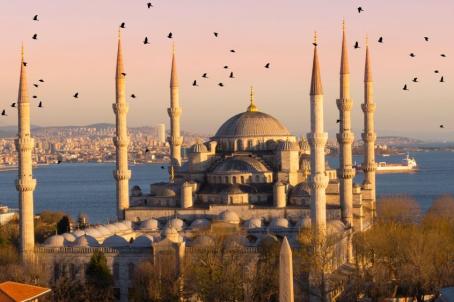
new
For a long time, Europe was ruled by powerful monarchies. Monarchy and religion have been connected since time immemorial. Here are 7 sites across Europe where royalty historically bent the knee to a higher power and received their crown.
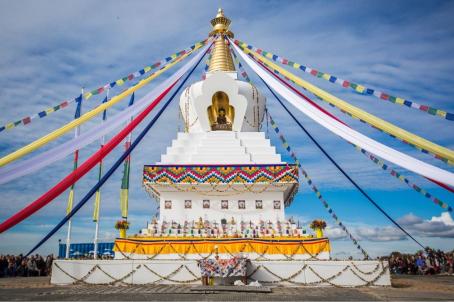
Stupas are symbols of enlightenment and peace that commemorate different stages of Buddha's life. Since the mid-20th century, thousands of stupas have begun to populate Europe. We have compiled some of the most impressive ones in this list.
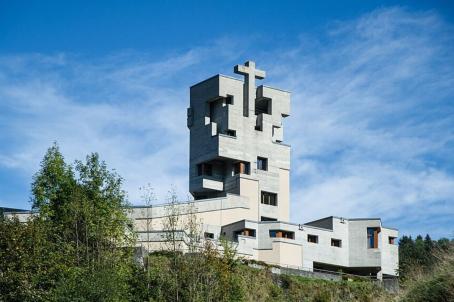
Walter Maria Förderer (1928–2006) was a Swiss architect and sculptor renowned for his neo-expressionist church designs in the 1960s. In this list we have compiled 6 of his church designs that seamlessly integrate religious and secular elements.

How is Religiana helping to conserve and promote Religious Heritage in Europe and why should you get involved?
Find out about Religiana
Are you a tourism organisation or religious heritage sites manager? Discover the advantages of becoming a partner.
See current partners
We can keep you up to date with the latest news from Religiana and religious heritage conservation across Europe.
Sign up to the FRH newsletter