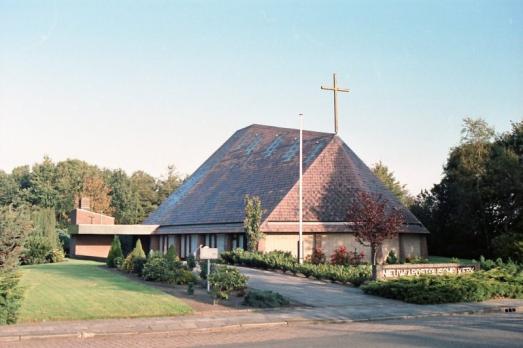
Nieuw Apostolische Kerk
s-Gravenhage, NL
Modern church without tower. In 2007-2009 extensively renovated.
Here you can search for a building to visit. You can use the map find destinations, or you can use the filters to search for a building based upon what different criteria.
s-Gravenhage, NL
Modern church without tower. In 2007-2009 extensively renovated.
Rotterdam, NL
Modern church without a tower in the Prins Alexander district in Rotterdam-East.
Nijmegen, NL
Former Restored Apostolic Missionary Church.
Amsterdam, NL
Former New Apostolic Church in the Netherlands. Interesting church building with two small rectangular towers, on either side of the front facade. Out of use as a church in the 1990s, after which apartments were built in. The front facade has remained almost completely intact.
Steenwijk, NL
The NAK had been holding its services for years in a renovated villa. It was in dire need of renovation. But it turned out to be cheaper to build a new church with 70 seats at De Vesting. And they started doing that in the summer of 2002. In July 2003, the new church in the new Woldmeenthe district was put into use. There are 75 seats and various side rooms. The old building, the Villa Botha, on the JH Trom Meesterstraat, had been in use since 1958. The new owner wants to use it as a home again. (48-02/50-03)
Breda, NL
Hall church without tower, built around 1960. In use as a church of the Apostolic Society until 1979.
Emmeloord, NL
The old building was demolished and a new church was built on the same site.
Den Helder, NL
Modern small church building. Replaced an earlier building.
Leeuwarden, NL
Interesting early modern complex, without a tower.
Apeldoorn, NL
With the arrival of Hendrik Groenier from Amsterdam to Apeldoorn on 5 May 1904, the Apostolic community in Apeldoorn began. Their first church was built in 1913. In 1928, a new church was built at De Ruyterstraat 7. After the schism in 1951, it became the building of the New Apostolic Church. The building was demolished in the summer of 2006.
new
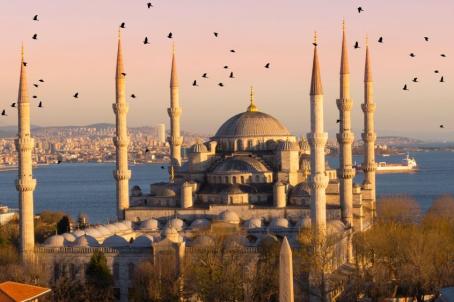
For a long time, Europe was ruled by powerful monarchies. Monarchy and religion have been connected since time immemorial. Here are 7 sites across Europe where royalty historically bent the knee to a higher power and received their crown.
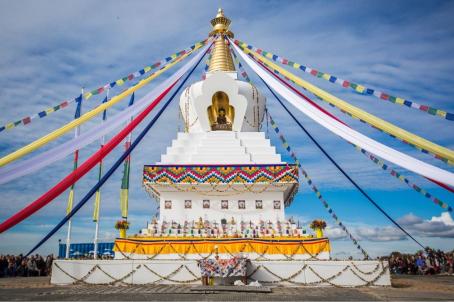
Stupas are symbols of enlightenment and peace that commemorate different stages of Buddha's life. Since the mid-20th century, thousands of stupas have begun to populate Europe. We have compiled some of the most impressive ones in this list.
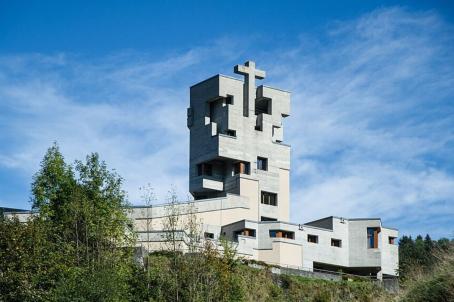
Walter Maria Förderer (1928–2006) was a Swiss architect and sculptor renowned for his neo-expressionist church designs in the 1960s. In this list we have compiled 6 of his church designs that seamlessly integrate religious and secular elements.