Onze Lieve Vrouw van Altijddurende Bijstand
Hengelo, NL
The Roman Catholic Church of Our Lady of Perpetual Help in the Woensel district at Onze Lieve Vrouwestraat 2-4 was built in the years 1930-1931 to a design by J. Bekkers.
Here you can search for a building to visit. You can use the map find destinations, or you can use the filters to search for a building based upon what different criteria.
Hengelo, NL
The Roman Catholic Church of Our Lady of Perpetual Help in the Woensel district at Onze Lieve Vrouwestraat 2-4 was built in the years 1930-1931 to a design by J. Bekkers.
Herfte/Wijthmen, NL
Reconstruction church without tower, with roof turret on the choir side.
Sliedrecht, NL
Small church from 1948 in traditionalist style, designed by architect Nic. Molenaar jr.; contractor was S. Geers from Voorburg. Before that time, church services were held in a temporary church, which stood in front of the current church on the Stationsweg, corner of Tiendweg. It was an old management shed of machine factory Smulders from Utrecht. This building was erected in the winter of 1918-1919 and consecrated on 19-03-1919 by pastor P. van der Cammen of the Antonius van Padua parish of Dordrecht, of which the Sliedrecht church became a branch church. Since the independence of the OLV Onbachtigte Ontvangenis parish of Papendrecht in 1960, Sliedrecht has been part of Papendrecht. In 1977 Sliedrecht became more or less and in 2003 definitively an independent parish. In 1998, the SAP was founded, a partnership between the parishes of Sliedrecht, Alblasserdam and Papendrecht, which was transformed into the Alblasserwaard-West federation in 2001. The planned expansion of the side room (sacristy) at the rear started in January 2006 and was completed in the summer of 2006.
Bilthoven, NL
Important interbellum church with tower and domed crossing, on which a small roof turret..
Santpoort-Noord, NL
Important interbellum church with tower and roof turret, both with copper-green spires.
Mariaparochie, NL
The church of Onze Lieve Vrouw van Altijddurende Bijstand (Our Lady of Perpetual Help) is a three-aisled so-called pseudo-basilica with multi-faceted closed transept and tower to the right of the front facade, covered by a high spire.
Ens, NL
The church in Ens has a sober design. This building style is an important characteristic of the so-called 'Delft School'. The use of the materials concrete, brick and wood also betrays characteristics of the 'Bossche School'. This movement originates from the Delft School and dates from the period of reconstruction between 1946 and 1973. This style, which is strongly based on numerical proportions, has its repercussions on Catholic church building in this period.
Bussum, NL
The church is considered an important work in the later oeuvre of Joseph Cuypers (1861 - 1949) (in collaboration with his son Pierre Cuypers Jr (1891 - 1982)) and is one of the three domed churches they built in the 1920s. The other two are the St. Laurentius in Dongen and the St. Agatha in Beverwijk. These three churches are closely related both stylistically (influence of (brick) expressionism) and spatially (central construction with dome).
Illikhoven, NL
Auxiliary church of the Buchten and Born parish. There is some misunderstanding among various church collectors about the Geloftekapel. It is often heard that the chapel was built in 1947 as a Dutch Reformed chapel and later became a Roman Catholic chapel. However, nothing could be further from the truth. It is a misconception that the chapel was a Dutch Reformed chapel. The Roman Catholic chapel / auxiliary church of Our Lady of the Rosary at Illikhoven 67 was built in 1947 to a design by the architectural firm Swinkels and Salemans. Due to secularization, the church was withdrawn from worship in 2012 and was purchased by a private individual who set up an external living room there.
Glanerbrug, NL
One of the last churches of architect Alfred Tepe (1840-1920). This interesting three-aisled neo-Gothic hall church, with roof turret, is inspired by Westphalian Gothic. Extension 1925.
new
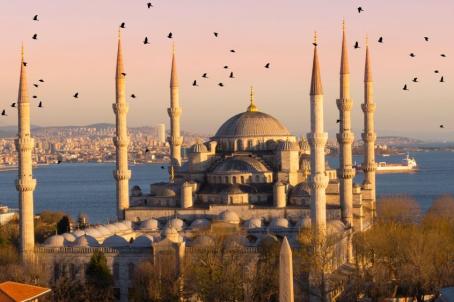
For a long time, Europe was ruled by powerful monarchies. Monarchy and religion have been connected since time immemorial. Here are 7 sites across Europe where royalty historically bent the knee to a higher power and received their crown.
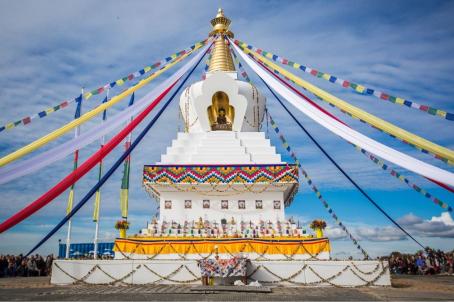
Stupas are symbols of enlightenment and peace that commemorate different stages of Buddha's life. Since the mid-20th century, thousands of stupas have begun to populate Europe. We have compiled some of the most impressive ones in this list.
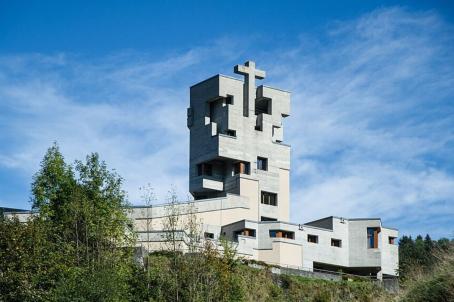
Walter Maria Förderer (1928–2006) was a Swiss architect and sculptor renowned for his neo-expressionist church designs in the 1960s. In this list we have compiled 6 of his church designs that seamlessly integrate religious and secular elements.