Explore Religious Heritage Across Europe

Here you can search for a building to visit. You can use the map find destinations, or you can use the filters to search for a building based upon what different criteria.

Refine search

St. Lawrence Church

St. Lawrence Church

Kuusalu, EE

St. Lawrence Church is a church built by the Cistercians at the end of the 13th century. According to legend, the builder of the church was the martyred monk Laurentius, who was burnt at the stake by the pagans. Probably in the second quarter of the 15th century, master builders from Tallinn were commissioned to vault the sanctuary. During the Livonian War (1564) the vaults and pillars were destroyed. The church also suffered from the Great Northern War, when, among other things, the church bells were taken away. The present Baroque bell tower was built in 1760, and a comprehensive reconstruction took place in 1889-90 under the direction of Friedrich Axel von Howen.

St. Lawrence Church

St. Lawrence Church

Lohja, FI

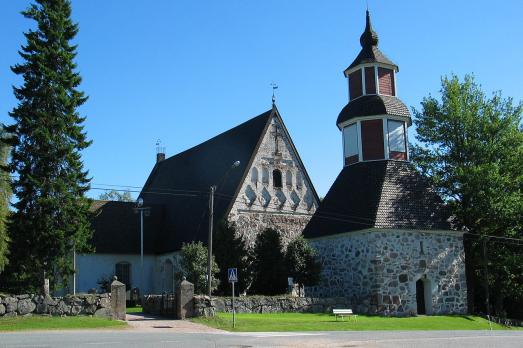
St. Lawrence Church is one of the largest medieval stone churches in Finland. It was built towards the end of the 15th century and is particularly famous for its 16th-century wall paintings. The first documented mention of a St. Lawrence church in Lohja dates back to 1382, and the present stone church was built between 1470 and 1490. Between 1953 and 1957 the church was restored.

St. Lawrence Church

St. Lawrence Church

Nõo, EE

St. Lawrence Church was built at the end of the 13th century as a defensive church with three naves. The first traces of construction of the building date back to the middle of the 13th century. The church is one of the oldest in Estonia and is extremely well preserved in its original form.

St. Lawrence Church

St. Lawrence Church

Pühalepa, EE

St. Lawrence Church, or Pühalepa Church, is the oldest church on the island of Hiiumaa. The church was built without a tower in the Gothic style in the 13th century. During the Livonian War (1558-1583) the church suffered a lot and had to be rebuilt after the war. At the beginning of the 17th century, the construction of a bell tower began. In 1770 it was given two new floors and in 1874 the church got its present form. From 1951 the church was used as a warehouse and fell into ruin. The church in Pühalepa was consecrated again in 1993.

St. Leonard’s Church, Wojnicz

St. Leonard’s Church, Wojnicz

Wojnicz, PL

St. Leonard’s Church in Wojnicz dates from the second half of the C16th and has come down to the present day almost unaltered.

St. Lorenz's Basilica

St. Lorenz's Basilica

Kempten, DE

St. Lorenz's Basilica is the former church of the Benedictine monastery of the princely abbey of Kempten, which has now been abolished. While the Thirty Years' War (1618-1648) was still going on, the then 29-year-old Abbot Roman Giel von Gielsberg began preparations for the construction of the church. The church became one of the first large church buildings after the Thirty Years' War in Germany.

St. Lorenz

St. Lorenz

Nürnberg, DE

St. Lorenz is a gothic church built from 1250 to 1477. The construction, which was badly damaged during the Second World War, was rebuilt identically. Since the Reformation, St. Lorenz is a Protestant church.

St. Ludwig

St. Ludwig

Celle, DE

St. Ludwig's Church is a Catholic church consecrated in 1838, designed by the Lübeck architect Anton Spetzler. The towers were added by Conrad Wilhelm Hase in 1881. St. Ludwig, King of France, was chosen as the patron saint of the church, a reverence to King Ludwig I of Bavaria, who had supported the construction with funds and a collection in Bavaria.

St. Luke's Church

St. Luke's Church

Tartu, EE

St. Luke's Church in Tartu is a modernist church completed in 2002, designed by architect Indrek Allmann. This church had been planned as early as 1931 by the architect Engelhard Corjus, but due to the Soviet occupation and World War II, the church was never built. The new church was built in two phases. The first was completed with the construction of a small hall, a café and other premises. The second, when a large hall with corresponding auxiliary rooms were added.

St. Maarten

Gendringen, NL

The Dutch Reformed Church in Gendringen is one of the oldest remaining buildings in the village. A chapel stood on this site as early as 800/900 AD. Around 1200, construction began on a church made of tuff stone and in later years the upper part of the masonry was replaced by brick. The Roman Catholic church at the time was much larger, approximately 12 metres longer, than the current church and also had an extension. This is still clearly visible because the tower is actually much too large in relation to the rest. During the Reformation, the church was stripped of all its decorations and it then became a Dutch Reformed Church. During the fire of 1830, a large part of the church was destroyed. Because there was no money for a complete restoration, the church was significantly shortened. This can still be seen in the brickwork on the current rear façade. The church was plastered to create a uniform appearance. The former entrance under the tower is no longer usable, but it is still visible that the current church was built on the remains of the former church. During excavations in 1955, the foundations of various burial vaults were uncovered. Some of these date from the Carolingian period and around 1700 the bodies of Count Willem van den Bergh, his wife Maria van Nassau and several of their children were also buried here. These burial vaults were also lost during the fire of 1830. The church still contains the organ that was built around 1840 by the Nolting company. The church and the organ were restored in ?. There used to be a bell foundry opposite the church. In the seventeenth century, the Voigt family (originally from Cologne) but then living in Isselburg cast bells here for many churches in the wide area, including Aalten and Winterswijk. The bell tower of Huis Landfort and the Dutch Reformed Church in Megchelen still contain bells from that period.

Be inspired

Stupkalnis.lt

10 Buddhist stupas to discover in Europe

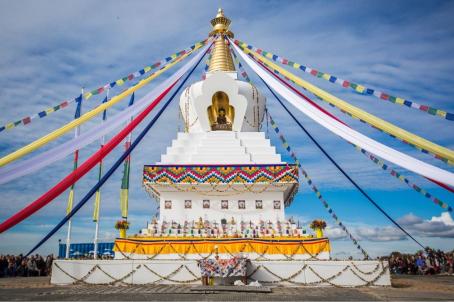
Stupas are symbols of enlightenment and peace that commemorate different stages of Buddha's life. Since the mid-20th century, thousands of stupas have begun to populate Europe. We have compiled some of the most impressive ones in this list.