St. Martin's Cathedral
Utrecht, NL
Utrecht Cathedral is a Gothic church built from 1254 as a continuation of a Romanesque cathedral. The church has been Protestant since 1580. With its 112.32 meter high tower, it is the tallest building in Utrecht.

Here you can search for a building to visit. You can use the map find destinations, or you can use the filters to search for a building based upon what different criteria.
Utrecht, NL
Utrecht Cathedral is a Gothic church built from 1254 as a continuation of a Romanesque cathedral. The church has been Protestant since 1580. With its 112.32 meter high tower, it is the tallest building in Utrecht.

Praha, CZ
St. Martin's Church in the Wall is a Gothic church built between 1178 and 1187. The church with its south wall adjoined the fortification wall, hence the name "in the wall". Of Romanesque origin, the construction of the Gothic building took place after 1350, under the reign of Charles IV. The church is currently used by the Evangelical Church of the Czech Brethren.

Biberach an der Riß, DE
The church of St. Martin was probably founded around 1100 as a Romanesque church and replaced by a Gothic building between 1320 and 1370. At the time of the Reformation, the Simultaneum (a policy allowing public worship by the followers of two or more religious groups in the same church: Simultankirche) was established for St. Martin's Church, and Protestants and Catholics shared the church since 13 August 1548. This was especially true for the nave, the choir remaining purely Roman Catholic. This condition was established by the Peace of Westphalia, which referred to the normal year 1624, and still exists today. According to the land register, the owner of the parish church is the Gemeinschaftliche Kirchenpflege Biberach.

Bremen, DE
The St. Martini Church, founded in 1229, is one of the oldest churches in the city. The late Gothic brick building was heavily destroyed in 1944 and rebuilt after the war. Since 1973, the building is a classified heritage.

Albstadt, DE
St. Martin's Church has existed for over a thousand years, but the present building actually dates from 1905-06, when the old church was largely replaced by a new building influenced by Art Nouveau. The heating and the interior have been modernised and renovated in recent years.

Landshut, DE
The Church of St. Martin and Castulus represents one of the greatest masterpieces of Gothic architecture in Germany. Its 130.60-metre high bell tower is the highest brick tower in the world and the third-highest medieval tower after those of Strasbourg Cathedral and St. Stephen's Cathedral in Vienna. In 1204, the year Landshut was founded by Duke Ludwig I of Bavaria, a church was already built on this site. Today's church is a reconstruction from the end of the 14th century, consecrated in 1500.

Ferwert, NL
The church was originally dedicated to Martinus. The single-nave church and the tower were built in the 15th century. Around 1525 the tower was raised and in the same period the choir was completed.

Stari Brod, HR
The wooden chapel of Saint Martin in Stari Brod, built in the 17th century, is a rare example of traditional Baroque architecture with a fully preserved painted interior. Although extremely dilapidated, the chapel remained in service until 2007, when its reconstruction began. After the restoration work was completed in 2015, the chapel was put back into service.

Wiśniowa, PL
St. Martin’s church in Wiśniowa was built in 1720-1730 and comprehensively renovatedand reconstructed in the 19th century.

Tarnowiec, PL
St. Martin’s Parish Church in Zawada (15th century) stands on the crest of a hill.
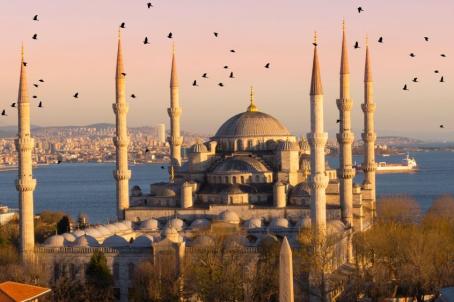
new
For a long time, Europe was ruled by powerful monarchies. Monarchy and religion have been connected since time immemorial. Here are 7 sites across Europe where royalty historically bent the knee to a higher power and received their crown.
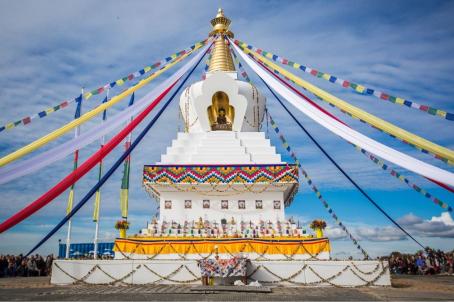
Stupas are symbols of enlightenment and peace that commemorate different stages of Buddha's life. Since the mid-20th century, thousands of stupas have begun to populate Europe. We have compiled some of the most impressive ones in this list.
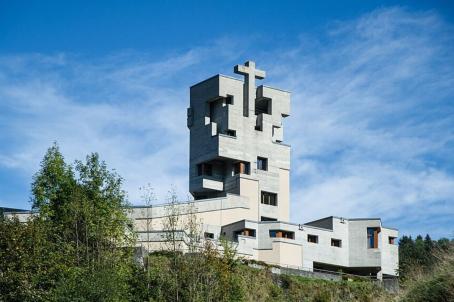
Walter Maria Förderer (1928–2006) was a Swiss architect and sculptor renowned for his neo-expressionist church designs in the 1960s. In this list we have compiled 6 of his church designs that seamlessly integrate religious and secular elements.

How is Religiana helping to conserve and promote Religious Heritage in Europe and why should you get involved?
Find out about Religiana
Are you a tourism organisation or religious heritage sites manager? Discover the advantages of becoming a partner.
See current partners
We can keep you up to date with the latest news from Religiana and religious heritage conservation across Europe.
Sign up to the FRH newsletter