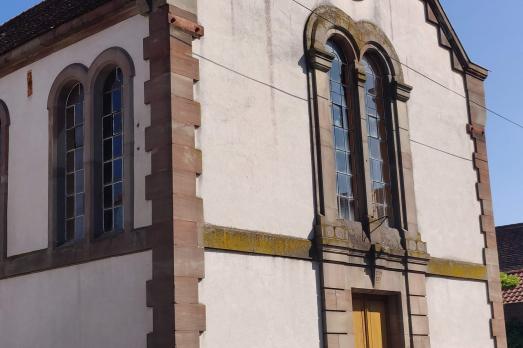
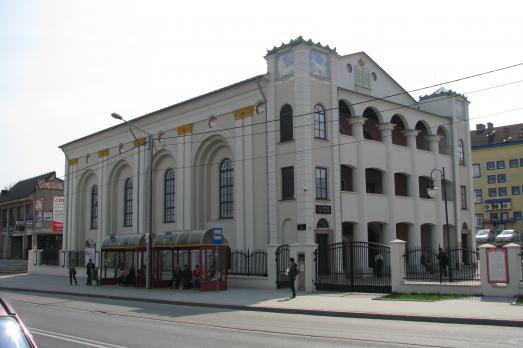
Synagogue in Dijon
Dijon, FR
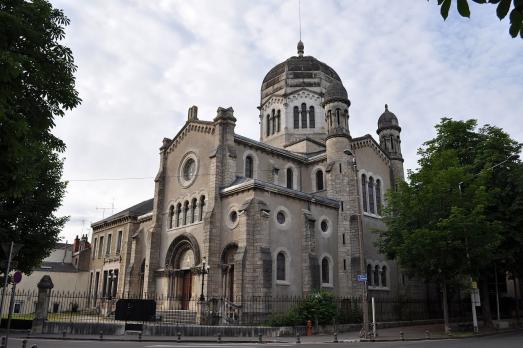
The Synagogue in Dijon is an Ashkenazi synagogue completed in 1879 by architect Alfred Sidorot. The synagogue was restored in the 1990s. This Neo-Romanesque stone building still serves as a synagogue.
Here you can search for a building to visit. You can use the map find destinations, or you can use the filters to search for a building based upon what different criteria.
Dijon, FR
The Synagogue in Dijon is an Ashkenazi synagogue completed in 1879 by architect Alfred Sidorot. The synagogue was restored in the 1990s. This Neo-Romanesque stone building still serves as a synagogue.
Divišov, CZ
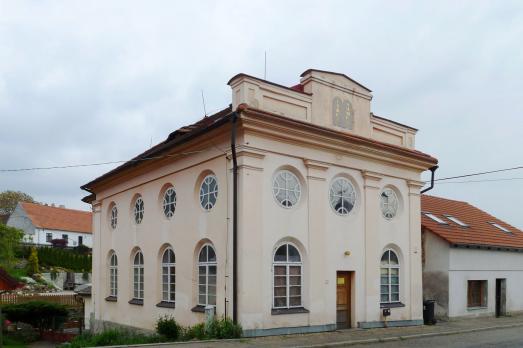
The Synagogue in Divišov is an Ashkenazi synagogue built in the early 19th century. The synagogue has been restored in 1856, 1995 and 2004. This Neo-Classical brick building now serves as a cultural centre.
Dobruška, CZ
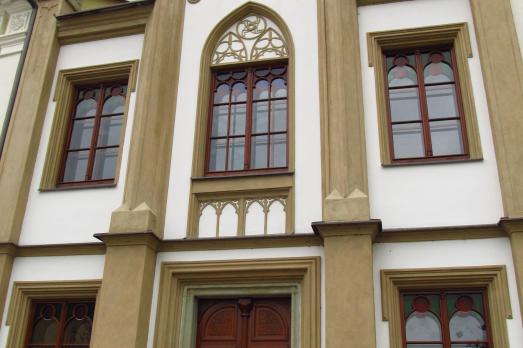
The Synagogue in Dobruška is an Ashkenazi synagogue built at the end of the 19th century. In use until WWII, this Neo-Gothic brick synagogue now serves as a museum.
Eijsden, NL
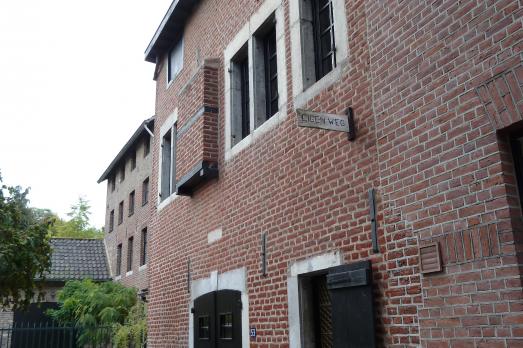
The Jewish community in Eijsden can be traced back to 1779 during which the religious services where held in a house synagogue. In 1782, a separate building was created along the Diepstraat to accommodate the Jewish services. The synagogue was located on the first floor and the small building expansion which functioned as the niche for the Torah ark can still be seen on the outside. The building continued to be used as such until 1935. In 1967, it received the official status of Rijksmonument. It is currently in use as a private residence.
Elburg, NL
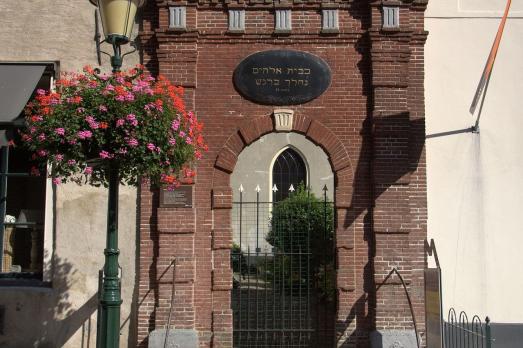
The northern façade of the synagogue is positioned along the Graaf Hendriksteeg but the building can be accessed via the Jufferenstraat. A Neo-Classical brick gate can be found at the entrance of the terrain of the synagogue. It contains a Hebrew inscription of Psalm 55:15 and dates back to 1855. The synagogue, which was consecrated in the same year, was situated in a redeveloped sixteenth-century private residence. During this redevelopment, the building was provided with new pointed arched windows and a women's gallery along one side of the wall. The first floor of the building was opened up in order to create a larger assembly hall. The Torah ark (dated ca. 1799) was taken from the former synagogue in Arnhem, located at the Betincksteeg. After the Second World War, the Jewish community of Elburg merged with Apeldoorn in the year 1947. The Torah ark and bimah were subsequently relocated to the synagogue in Winterswijk. A Hanukah menorah of the original synagogue can be found in the municipality building of Elburg. The building is currently used for cultural activities.
Emmen, NL
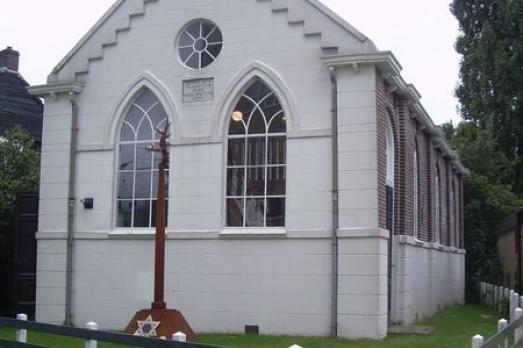
The synagogue was designed as a simple brick building with a gable roof and pointed arched windows. The building was expanded in 1909. During the Second World, the synagogue was used as a storage space but the building itself remained relatively unscathed. The building has been owned by the municipality of Emmen since 1974. It was renovated in 1975 and subsequently in 1993. It is the only active Jewish shul in the province of Drenthe. The interior of the synagogue consists of a wooden vaulted ceiling, Torah ark, bimah and benches, which all date back to the original date of construction of the synagogue. The current women's gallery was added during the renovations of 1909. Two white marble plaques, positioned against the walls of the synagogue, commemorate the Jewish citizens of Emmen who died during the Second World War.
Enkhuizen, NL
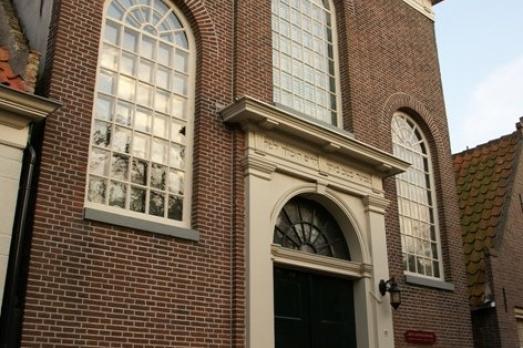
The synagogue can be dated back to the year 1791 and is provided with a small Neo-Classical façade, topped by a triangular pediment and containing large rounded arched windows with tracery. The main entrance includes a Hebrew inscription referring to Psalm 65:5b and the date 5551 (1791 CE). The Torah ark was located in a niche at the opposite of the main entrance, placed against the eastern wall. The Bimah was placed in the center of the assembly hall. The Neo-Classical Torah ark was later relocated to the Joods Historisch Museum in Amsterdam. A small women’s gallery could be found right above the vestibule of the synagogue. The synagogue closed down in 1964 after the Jewish community of Enkhuizen merged with Alkmaar. The building is currently in use as a church.
Enschede, NL
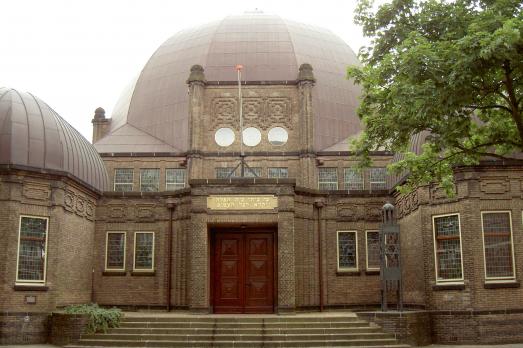
The monumental synagogue complex was constructed in a symmetrical manner. The three building segments of the complex are provided with a dome of which the central dome towers above the surrounding architecture. The synagogue complex includes small prayer rooms, classrooms, administrative spaces, a mikveh and residence for the Rabbi and Jewish tutor. The synagogue replaced an older synagogue (dated ca. 1865) which was located along the Stadsgravenstraat. A new proposed design was created by the architect K. P. C. de Bazel in 1918/19. After the death of de Bazel, the design of the synagogue was taken over by the architect A. P. Smits. The building plan of the complex was expanded but the rectangular-shaped assembly hall, topped by a large twelve-sided dome, as designed by de Bazel, was left unchanged. The ornamental details of the architecture are reminiscent of Egyptian and oriental building styles. The building was consecrated as for Jewish religious services in the year 1928. It was renovated by the architect S. B. de Boer in 2001/03. The same architect designed the cemetery chapel of Enschede along the Noord Esmarkerrondweg which was designed in a similar architectural style.
Ettelbruck, LU
The Synagogue in Ettelbruck is an Ashkenazi synagogue completed in 1870. In use until 1940, this brick building in the Rundbogenstil style is now under reconstruction.
Exeter, GB
The Synagogue in Exeter is an Ashkenazi synagogue completed in 1764. The synagogue was rebuilt in 1835-36 and later in 1997-99. This brick building in the Greek Revival style still serves as a synagogue.
new
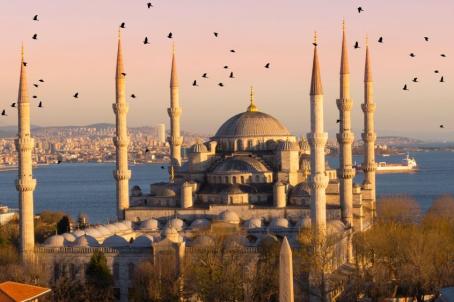
For a long time, Europe was ruled by powerful monarchies. Monarchy and religion have been connected since time immemorial. Here are 7 sites across Europe where royalty historically bent the knee to a higher power and received their crown.
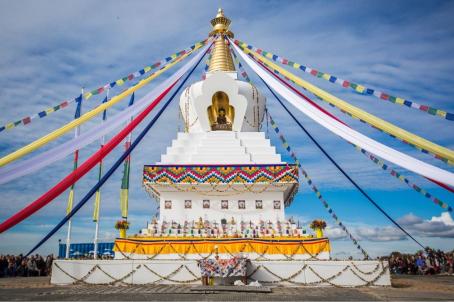
Stupas are symbols of enlightenment and peace that commemorate different stages of Buddha's life. Since the mid-20th century, thousands of stupas have begun to populate Europe. We have compiled some of the most impressive ones in this list.
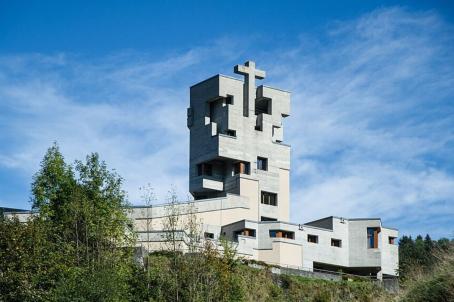
Walter Maria Förderer (1928–2006) was a Swiss architect and sculptor renowned for his neo-expressionist church designs in the 1960s. In this list we have compiled 6 of his church designs that seamlessly integrate religious and secular elements.