Explore Religious Heritage Across Europe

Here you can search for a building to visit. You can use the map find destinations, or you can use the filters to search for a building based upon what different criteria.

Refine search

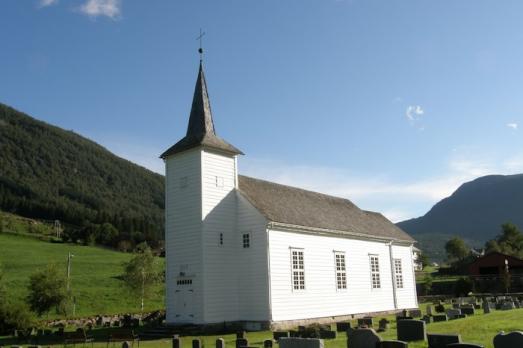
Viksdalen Church

Viksdalen Church

Viksdalen, NO

Built around 1620, the Viksdalen church is a reconstruction from 1847-48. In 1889, the church was rebuilt again and received spiers, a new choir and new colours inside. Until 1960 the church was called Vik, but in 1960 both the church and the parish changed its name to Viksdalen, mainly to avoid confusion with Vik in Sogn.
Víkurkirkja

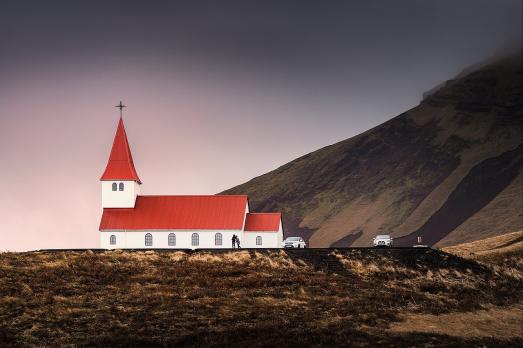
Víkurkirkja

Vík, IS

Víkurkirkja is a church built between 1931 and 1934 when the population of Vík was growing and no longer wanted to travel to the church in the neighbouring village for every mass. It was consecrated by Jón Helgason, the bishop of Iceland at that time.

Vikøy Church

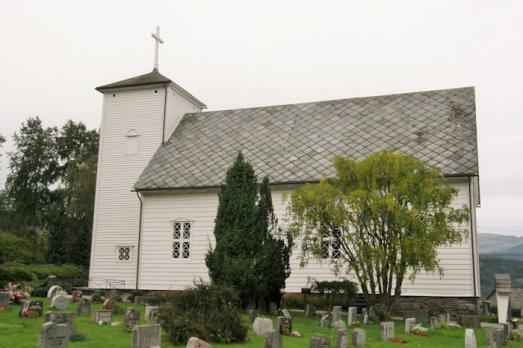
Vikøy Church

Kvam, NO

Vikøy church was consecrated in 1838 and replaced an old Stave church on the site. Vikøy church is a long wooden church built according to Linstow's plans. The church is a simple rectangular building with the choir included in the main building. To the west stands a square tower.

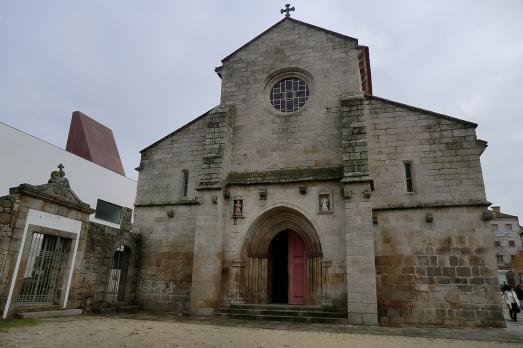
Vila Real Cathedral

Vila Real Cathedral

Vila Real, PT

Vila Real Cathedral was built in the 15th century and is considered the best example of Gothic architecture in the Trás-os-Montes region. As its name suggests, the current cathedral comes from a Dominican convent founded by monks from Guimarães in the 15th century. The church was modified in the 16th century, and especially in the 18th century when the present choir and bell tower were built in Baroque style. In 1834, with the extinction of the religious orders, the church became a parish church. It became a cathedral in 1924 when the Diocese of Vila Real was created.

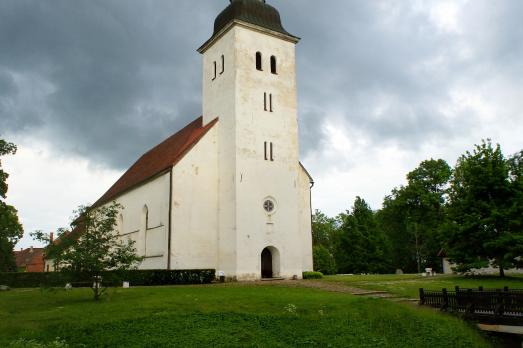
Viljandi Jaani kogudus

Viljandi Jaani kogudus

Viljandi, EE

In 1972, the then chief architect íìlo Stí?í?r and the fire chief Adolf Jí?rna refused to grant permission to build a reinforced concrete ceiling in the church. The possessor did not repair the building, the roof ran through and the church began to fall apart. The builders remember that the roof was so dilapidated that the sky could be seen from inside the church. The reconstruction of the church building began with the national awakening. In order to save the church building as a medieval architectural monument, the reconstruction of the building into a concert hall was started in the 1980s.

Village church

Leiden, NL

Built as a Reformed Church. Church building without a tower, with, among other things, windows in neo-Gothic style. Replaced an earlier church hall from 1854. Restoration 1903. Out of use as a Reformed Church in 1957, when it was taken over by the Reformed Church (Liberated). After the merger in 2023, it became the NGK.

Village church

Durgerdam, NL

Small village church with tower. The Dorpskerk Durgerdam, originally the Hervormde kerk van Durgerdam, is the Protestant church in Durgerdam in Amsterdam-Noord. The church building is not along the Durgerdammerdijk, but a little lower behind it.

Village church

Sleen, NL

In 1846, Vollebregt built an organ for the Kruisherenkapel in Sint Agatha. It had one keyboard and attached pedal. In 1871, Leonardus van Nistelrooij transferred it to the Kruisherenkapel in Uden. Van Nistelrooij probably expanded the organ with a positive. There are no indications that this happened in Sint Agatha, and in 1878 Kuijte noted the disposition with a positive. Around 1900, it was thoroughly restored. In September 1905, the organ was sold to Van Ingen. He placed it in the Reformed Church in Driebergen. After a restoration by Dekker in 1918, the organ remained unchanged until 1949. In that year, it was moved to Sleen by Hoogenboezem. In 1967, new wings, two pots and a harp were placed on the case, originating from the demolished organ from the Reformed Church of Dwingeloo. In 1968 W. Eppinga carried out work. He installed a new Mixture and a new Cymbel. In 1980 the wind chests were sealed and the mechanism was restored by Mense Ruiter. He later carried out another restoration, during which the pipework was restored. The starting point was the situation in 1871. On the main work the Gamba 8' was replaced by a Cornet III strong, and the Trumpet 8' that had never been installed was placed. The positive was also restored: the Sifflet 2' was replaced in the place where an Octave 2' stood, and the side slide with Cimbel III strong from 1968 was removed. Finally Mense Ruiter made an independent pedal with a Bourdon 16'. The instrument was put back into use on 8 May 1992.

Village church

Nieuw-Lekkerland, NL

Church building, because of the organ, a pulpit, a baptismal fence and a pew in it. The church building was built in 1847-1848 to a design by D. Slingerland from Meerkerk on the site of an older predecessor. The church was expanded several times in later times, most recently in 1994, when the layout in the church was changed. The inventory mentioned is partly from the predecessor of the current church, which dates from 1646 and was built on the site of a burnt-down church from the 15th century. The organ and the pew were added in the 19th century by order of the lords of the manor Smit from Nieuw-Lekkerland. In addition to the parts that are worthy of protection by the state, the church building also contains five 17th-century gravestones, three copper church crowns, which have been modified and partly renewed, and 12 cast-iron wall fixtures (1881). The protection does not apply to these parts.

Village church

Heerjansdam, NL

Dutch Reformed Church. Village church (15th century B) with single-nave nave, extended on the north side in 19th century B with a transept, deep, narrower choir with three-sided closure and tower, the second section of which is decorated with brick tracery. Barrel vaults with tie beams. Inventory: pulpit, two gentlemen's benches and baptismal fence (17th century B). Organ with main work and secondary work, made in 1869 by P. Flaes. Mechanical tower clock, B. Eijsbouts, with automatic winding, has been decommissioned.

Be inspired

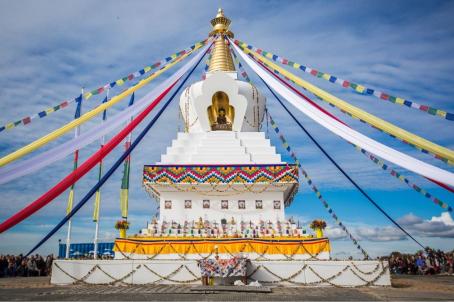
Stupkalnis.lt

10 Buddhist stupas to discover in Europe

Stupas are symbols of enlightenment and peace that commemorate different stages of Buddha's life. Since the mid-20th century, thousands of stupas have begun to populate Europe. We have compiled some of the most impressive ones in this list.