Explore Religious Heritage Across Europe

Here you can search for a building to visit. You can use the map find destinations, or you can use the filters to search for a building based upon what different criteria.

Refine search

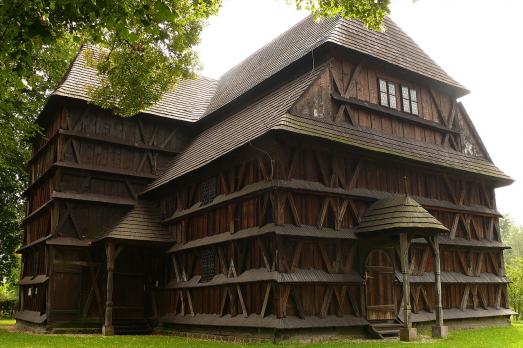
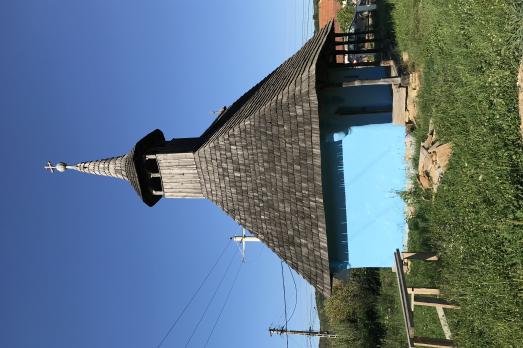
Wooden articular church of Hronsek

Wooden articular church of Hronsek

Hronsek, SK

The Wooden articular church of Hronsek is a Renaissance church dating from 1726. Its interior is original: the paintings, the bell and the organ all date from the 18th century. Since 2008, the church is a UNESCO World Heritage Site.

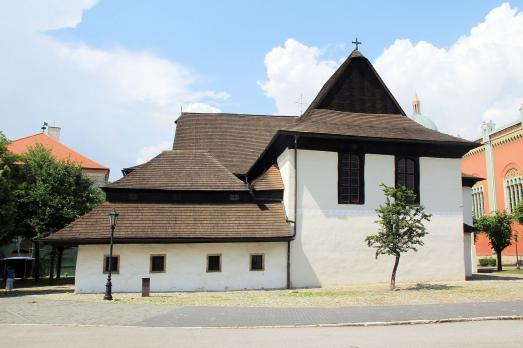
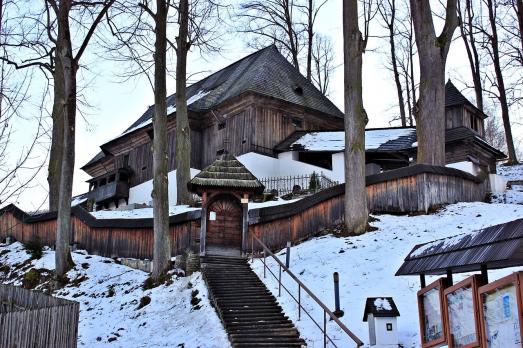
Wooden articular church of Leštiny

Wooden articular church of Leštiny

Leštiny, SK

The wooden joint church of Leštiny is an evangelical joint church built between 1688 and 1689. In this Catholic region, "articular" Protestant churches were then allowed as long as they were made of wood (a material seen as temporary) and did not have a tower or bell. However, a bell tower was erected later in 1777.

Wooden Beit Midrash in Rozalimas

Wooden Beit Midrash in Rozalimas

Rozalimas, LT

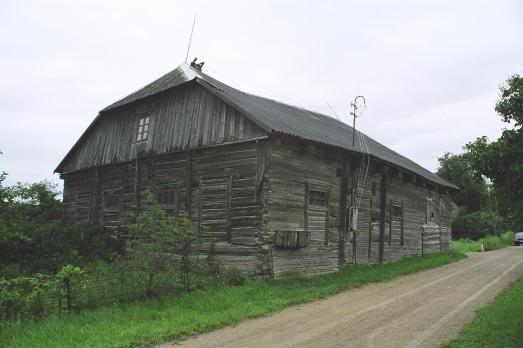
The Wooden Beit Midrash in Rozalimas is an Ashkenazi synagogue built in 1880-81 and reconstructed after 1945. After WW II the building served as a storage space; an annex of asbestos sheets was attached to its southwestern side and part of the southwestern wall is bricked over with white silicate bricks. The wooden building is now abandoned.

Wooden Beit Midrash in Veisiejai

Wooden Beit Midrash in Veisiejai

Veisiejai, LT

The Wooden Beit Midrash in Veisiejai is an Askhenazi synagogue built in 1927 by A. Abramas. The wooden building now serves as a church.

Wooden Beit Midrash in Žiežmariai

Wooden Beit Midrash in Žiežmariai

Žiežmariai, LT

The Beit Midrash in Žiežmariai is an Ashkenazi synagogue from the second half of the 19th century. The synagogue was rebuilt after 1918 and after 1945. This wooden synagogue is now under reconstruction.

Wooden Church Balan-Cricova

Wooden Church Balan-Cricova

Balan, RO

The church was transported to the village in 1848, during the countries' revolution. It is one of the oldest wooden churches in Transilvania.

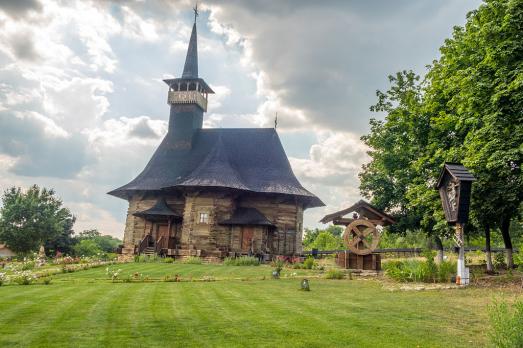
Wooden church from Hirisheni, Chisinau

Wooden church from Hirisheni, Chisinau

Chișinău, MD

The Intercession of the Virgin Mary or Assumption Church is a wooden church from the village of Hirișeni. Today it is preserved in the Village Museum in Chisinau where it can be visited along with other architectural monuments of Moldova.

Wooden Great Beit Midrash in Ivianets

Wooden Great Beit Midrash in Ivianets

Ivianets (Ivenets), BY

The Great Beit Midrash in Ivianets was likely first established in 1792. The current wooden building was built around 1912. After WWII, the building housed a cinema, and later a cultural centre. In 2005, old frescoes were found on the walls of the building. In 2010, the synagogue was transferred to a Jewish religious association.

Wooden Mosque

Wooden Mosque

Kruszyniany, PL

The wooden mosque of Kruszyniany was built by tatar settlers of the region around the 18th century. The modern mosque is estimated to have been built in the late 19th or early 20th century. The mosque and the village itself is was designated as a place of national importance for Poland in 2012.

Wooden Synagogue in Alanta

Wooden Synagogue in Alanta

Alanta, LT

The synagogue is a wooden log structure of rectangular plan, built on a rough-stone concrete foundation and divided into two floors in the west. The structure is spanned with a hipped rafter roof covered with tin. On the exterior, the building is protected with horizontal weather-boarding above the windowsills of the prayer hall, and a vertical one below them. A prayer hall of almost square plan is situated on the eastern side. On the western side the building includes a vestibule and a small room with a stove, which also heated the prayer hall. A staircase in the southwestern corner leads to a women's section on the first floor, which opens to the prayer hall with two long rectangular windows. Neither a bimah (presumably at the center), nor a Torah ark (presumably at the eastern wall) has survived. The main entrance to the building is in the western wall and the women's entrance is on the southern wall. Ten round-headed windows opened from the prayer hall: three windows on the southern and northern walls and two pairs of windows on the eastern wall (the central windows on the north and south were later converted into doors). The windows of the vestibule and the women's section are rectangular. The ceilings are joisted flat constructions that of the prayer hall is supported by two large beams, resting on the western wall of the women's section and the eastern wall of the prayer hall.

Be inspired

Stupkalnis.lt

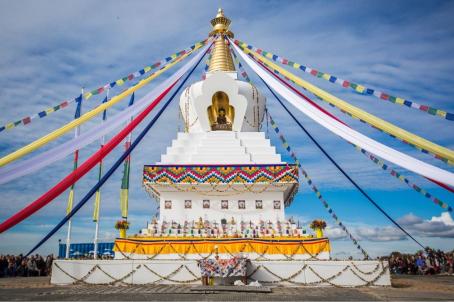
10 Buddhist stupas to discover in Europe

Stupas are symbols of enlightenment and peace that commemorate different stages of Buddha's life. Since the mid-20th century, thousands of stupas have begun to populate Europe. We have compiled some of the most impressive ones in this list.