Explore Religious Heritage Across Europe

Here you can search for a building to visit. You can use the map find destinations, or you can use the filters to search for a building based upon what different criteria.

Refine search

Church of Saint-Ferdinand

Church of Saint-Ferdinand

Arcachon, FR

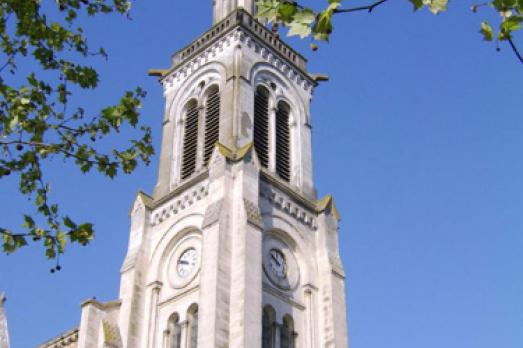
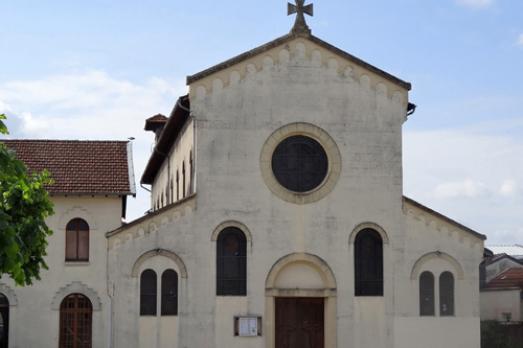
Clear and luminous, the Saint-Ferdinand church does not fail to offer a fine example of a modern church from the end of the 19th century in Arachon, in an eclectic style with Romanesque tendencies that can be appreciated both inside and outside.
Church of Saint-Florin

Church of Saint-Florin

Koblenz, DE

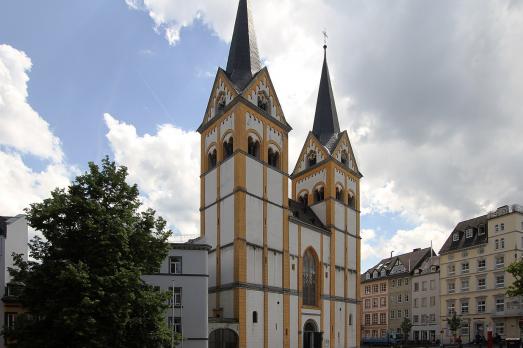
The church of Saint-Florin was built around 1100 and belonged to the canonical monastery of Saint-Florin. In the middle of the 14th century, the Romanesque apse of the church was replaced by a Gothic apse. In the years 1582 to 1614, the vaulting of the eastern nave followed. At the beginning of the 17th century, the bell towers were renovated. During the siege of Koblenz in 1688, during the War of the Palatinate Succession, the city was bombed by French troops. The church was badly damaged and had to be repaired between 1708 and 1711. After the secularization of the monastery in 1802, the church became the first church building in Koblenz to be consecrated as a Protestant church in the Rhineland.

Church of Saint-Fraigne, Siant-Fraigne

Saint-Fraigne, FR

The priory of Saint-Fraigne is mentioned as early as the 9th century. In 1567, it was handed over to the Abbey of Charroux. Ruined during the wars of religion, the abbey will be suppressed in 1762. After various repairs, the almost complete reconstruction of the old Romanesque church (1868-1869) is stopped according to the plans of the architect de Ruffec : Gaschtofte.

Church of Saint-François

Church of Saint-François

Bègles, FR

Modestly sized and simple-looking, but not without the charm of small churches in the suburbs of large cities. The church has a light interior decor and light exterior walls, giving the building a natural light that is pleasing to the visitor's eye.

Church of Saint-Genès

Church of Saint-Genès

Châteaumeillant, FR

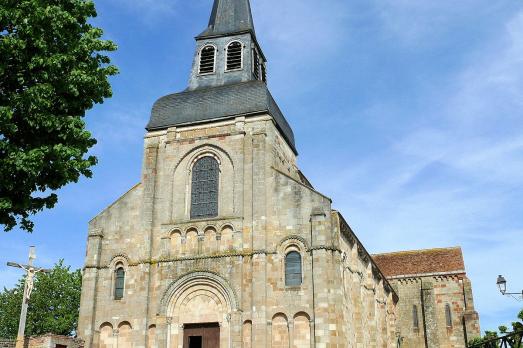
Listed as a Historic Monument in 1845, its construction dates from the end of the 11th and beginning of the 12th century, this building is one of the most imposing and beautiful monuments of Romanesque art in Berry. This church is particularly remarkable for its large number of sculpted capitals. There are 131 of them, illustrating the struggle of man confronted with demonic forces.

Church of Saint-Georges d'Azerables

Azerables, FR

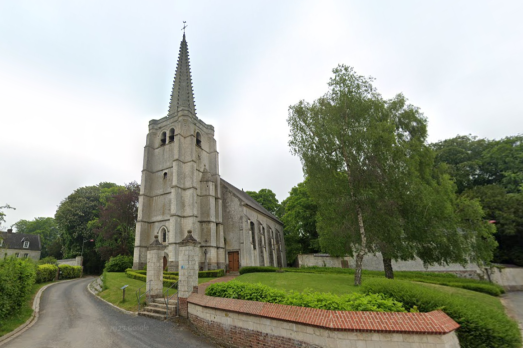
The church was built in the 12th century, although the oldest mention of the church dates back to 1201, at the chartier d'Aubignac. The bell tower would have been raised in the 16th century.

Church of Saint-Georges d’Hermaville

Church of Saint-Georges d’Hermaville

Hermaville, FR

The Church of Saint-Georges d’Hermaville was listed as a Historical Monument in 1926. The building was rebuilt in 1782 ( nave and sanctuary) on the site of the previous church, whose architecture is known due to the water-colour drawings of the albums of Croy (no. 18) which represented the village at the beginning of the 17th century.

Church of Saint-Georges

Church of Saint-Georges

Hotot-en-Auge, FR

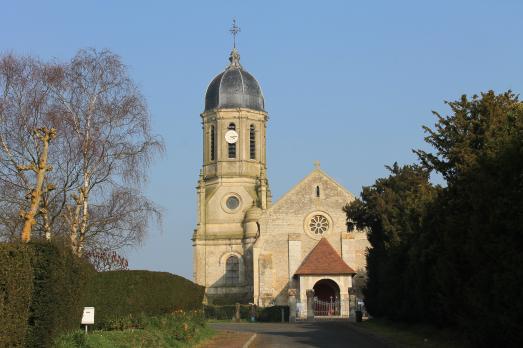
The church was built in the 12th and 15th centuries, the choir is Romanesque. The bell tower dates from 1534. The stone baptismal font is from the 17th century. The remarkable bell tower is a polygonal tower which rises on three levels and surmounted by a dome. The main façade is a flat gable wall pierced by a large rose window on the upper level. Inside, the nave has three bays framed by four buttresses and three-pointed arch bays with infills on the south side of the building. The choir has two bays, with two elongated round-arched bays and a round-arched door also on the westernmost bay. The chevet-apse chapel is pierced with three fine round-arched bays topped by a rose window.

Church of Saint-Georges

Church of Saint-Georges

Méallet, FR

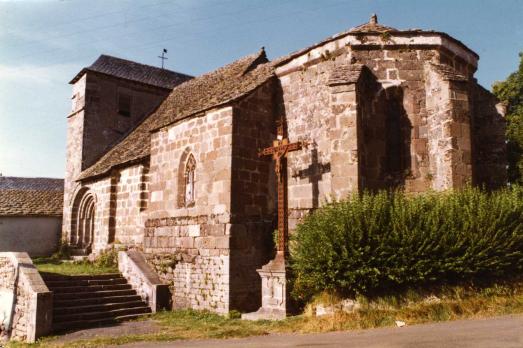
The Saint-Georges church is located in Méallet, Auvergne-Rhône-Alpes. The church dates back to the 12th century, and some parts of its original Romanesque constructions remain. The main part of the church was rebuilt in the fifteenth century for its reshaping of ogival style. When entering this building, one is struck by the elegance of the vaults which rest on robust ogival ribs being supported on caps representing heads. Several objects are classified as historical monuments (a holy water font, an altar-tabernacle, a chalice).

Be inspired

Stupkalnis.lt

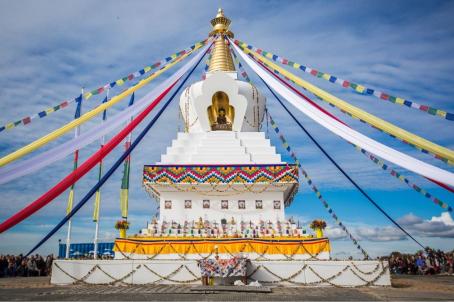
10 Buddhist stupas to discover in Europe

Stupas are symbols of enlightenment and peace that commemorate different stages of Buddha's life. Since the mid-20th century, thousands of stupas have begun to populate Europe. We have compiled some of the most impressive ones in this list.