Explore Religious Heritage Across Europe

Here you can search for a building to visit. You can use the map find destinations, or you can use the filters to search for a building based upon what different criteria.

Refine search

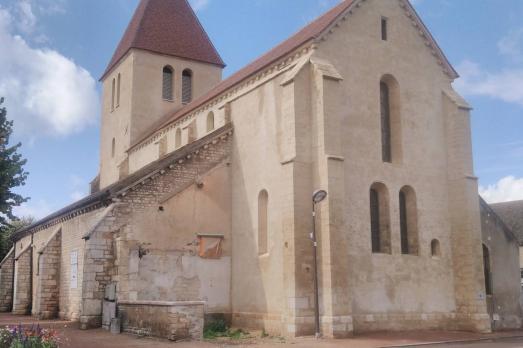
Church of Saint-Germain-l'Auxerrois

Church of Saint-Germain-l'Auxerrois

Gergy, FR

The church of Saint Germain-L'Auxerrois de Gergy, built at the beginning of the 13th century, is at the crossroads of two styles: the end of the Romanesque period and the beginning of the Gothic style, with a Cistercian inspiration and a limestone vaulted building. The interior includes a nave, an avant-choir and a choir with flat chevet, which are the characteristic elements of Gothic churches. The capitals and ornaments also illustrate this transition between Romanesque and Gothic art.
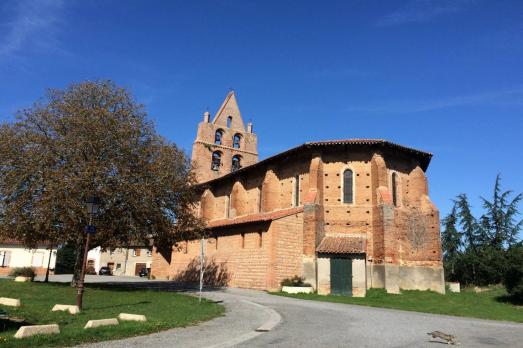
Church of Saint-Germier

Church of Saint-Germier

Sabonnères, FR

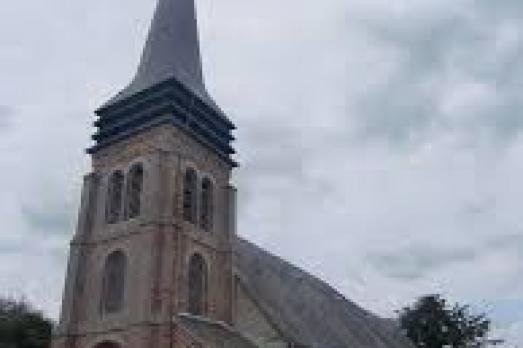
The Church of Saint-Germier is located in Sabonnères, in Occitanie. The circular village is surrounded by moats that protects the castle of Comenges. The church of Saint-Germain, built in the sixteenth century and modified in the nineteenth century, consists of a three span nave with vaulted ogives above an imposing five arched steeple. The masonry (nineteenth century) of the church consist of fairground bricks. The entire facade is made of fired bricks.

Church of Saint-Gervais-Saint-Protais

Church of Saint-Gervais-Saint-Protais

Falaise, FR

Saint-Gervais church is located in the heart of the town of Falaise. Its construction probably began shortly after the conquest of England in 1066, at the instigation of William the Conqueror, and was completed during the reign of Henry I Beauclerc (1100-1135). The original Romanesque building was inspired by the Trinity Church of the Abbaye-aux-Dames in Caen, on which it depended. Only a few elements remain in the south wall of the nave, the lantern tower and the west façade. Excavations carried out in 1953, showed that the Romanesque choir had the appearance of that of Notre-Dame de Guibray, with an apse and two apsidioles. The most interesting Romanesque remains are the capitals with secular themes, from the first four south pillars of the nave.

Church of Saint-Gervais-Saint-Protais

Church of Saint-Gervais-Saint-Protais

Paris, FR

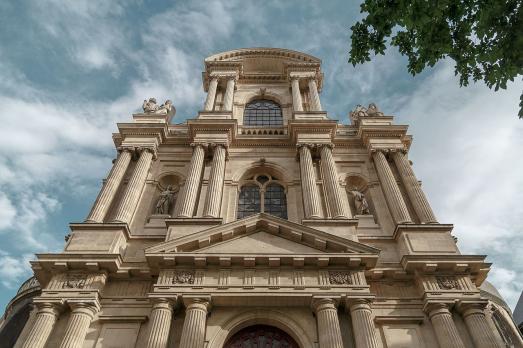
Saint-Gervais is considered one of the first parishes on the right bank. The remains of an ancient cemetery and a vast Merovingian necropolis discovered around Saint-Gervais would explain the age of the foundation. The church was consecrated in 1420, then enlarged from 1494 until about 1620. The facade is the first of a church to use the classical vocabulary of orders in a monumental way, in accordance with the ancient fashion that prevailed in the 16th and 17th centuries. It was closed in 1793 and reopened in 1795 and shared between Catholics and theophilanthropists until the Concordat. On Good Friday, March 29, 1918, a German shell destroyed part of the nave in the middle of the mass, killing about a hundred people.

Church of Saint-Gildas

Church of Saint-Gildas

Auray, FR

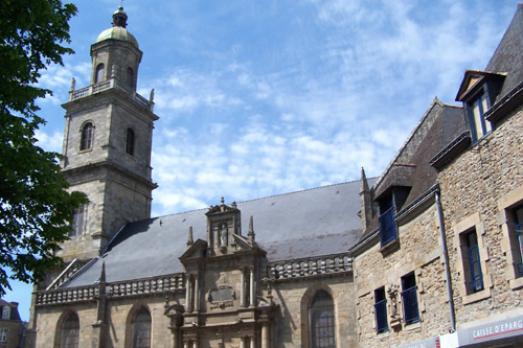
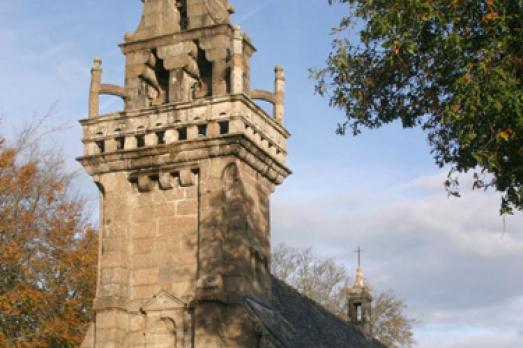
The church of St Gildas owes its name to a 12th century priory which depends on the Benedictine abbey on the Rhuys peninsula. It was designed on the site of the former priory by the architect Gilles Monsay who combines medieval forms and baroque style. Work began in 1623 but was not completed until 1663. The bell tower of the three-storey square tower, however, was not completed until 1701. It dominates the whole town and will serve as a model for the region.

Church of Saint-Gilles de Fougy

Church of Saint-Gilles de Fougy

Le Bourg-Saint-Léonard, FR

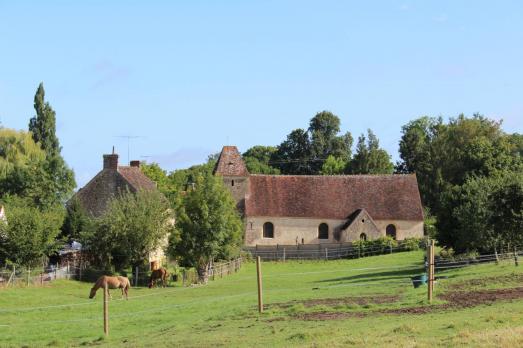
The church of Saint-Gilles de Fougy, a listed historical monument, is located in Bourg-Saint-Leonard, Normandy. This old chapel, built in the twelfth century, became, the following century, one of the fourteen priory-cures dependent on the Abbey of Silly-en-Gouffern. The value of this building lies in the exceptional decoration of the choir, dated from the end of the 16th and beginning of the 17th century.

Church of Saint-Gonéry

Church of Saint-Gonéry

Saint-Connec, FR

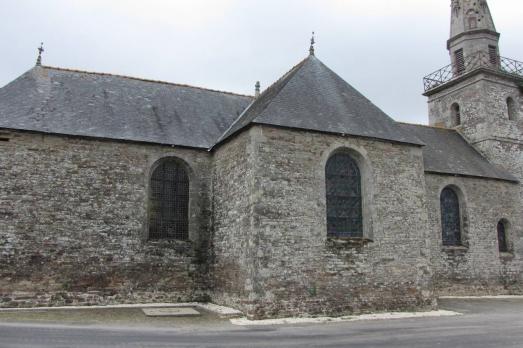
The Church of Saint-Gonéry is located in Saint-Connec, in Brittany. The current building, built of schist and granite, replaced the old church at the end of the eighteenth century, under the oversight of the Guerlogoden family. The first stone of the original church was laid in 1784. Inside the church, there are the emblems of the Guerlogoden and Rohan families. An eighteenth century polychrome wooden altarpiece adorns the chevet, and the altarpiece of the high altar represents Saint Connec.

Church of Saint-Grégoire

Church of Saint-Grégoire

Saint-Grégoire-du-Vièvre, FR

The Church of Saint Gregoire, listed as a Historic Monument, is located in Saint-Grégoire-du-Vièvre, Normandy. The church, built in the thirteenth century, was partly rebuilt after the Hundred Years War. The southern wall – rebuilt in the sixteenth century – has an alternating chessboard pattern of white stones and black-cut flint. You can see the graffiti of pilgrims representing characters and animals, as well as an amazing rebus that was probably made in the sixteenth century. The bell tower is from the 19th century.

Church of Saint-Guénolé

Church of Saint-Guénolé

Locquénolé, FR

The church stands in the heart of the village of the smallest commune of Finistère (with its 87 ha). The church of Saint-Guénolé rises near the Liberté oak tree, like an old lady who hasn't aged a day. A heritage phoenix, whose rescue is praised by the Locquenolesians.

Church of Saint-Hilaire

Church of Saint-Hilaire

Asnière-sur-Vègre, FR

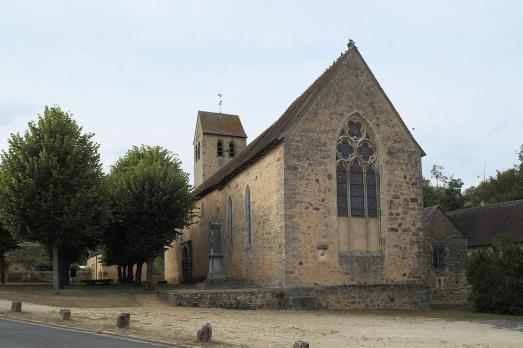
The church of Saint Hilaire would have been built in the 11th century by monks belonging to the bishopric of Le Mans. Over the centuries, the church was enlarged and adapted to the needs of worship. In the 12th century, a high square tower was added to it, resembling a medieval defensive element. In the 13th century, the walls of the nave are covered with numerous wall paintings, completing some of the original ones.

Be inspired

Stupkalnis.lt

10 Buddhist stupas to discover in Europe

Stupas are symbols of enlightenment and peace that commemorate different stages of Buddha's life. Since the mid-20th century, thousands of stupas have begun to populate Europe. We have compiled some of the most impressive ones in this list.