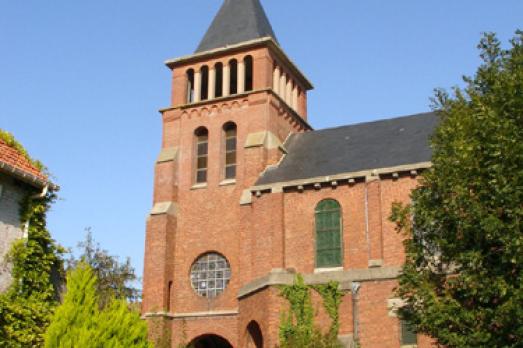
Sainte-Germaine-Cousin Church, Calais
Calais, FR
In 1923, the first stones and bricks are laid but the construction site is delayed. Finally, the work was spread out over about a decade, in particular because the ground was too muddy.

Here you can search for a building to visit. You can use the map find destinations, or you can use the filters to search for a building based upon what different criteria.
Calais, FR
In 1923, the first stones and bricks are laid but the construction site is delayed. Finally, the work was spread out over about a decade, in particular because the ground was too muddy.
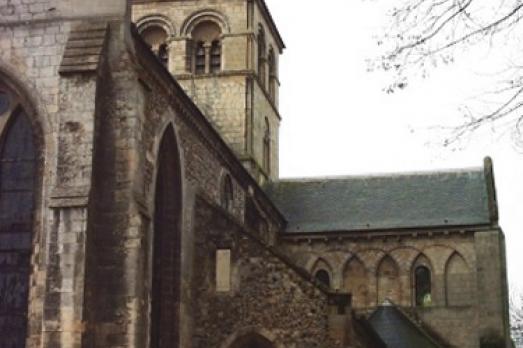
Havre , FR
The nave and transept date from the 11th century, while the choir dates from the 13th century. In the XVIIth century the building underwent modifications following the installation of the congregation of Saint-Maur, it is thus separated into two parts, a first one for the faithful, a second one for the monks. In 1731, the façade was rebuilt. The church has undergone a total of two phases of devastation, one during the wars of religion, one finally with the bombings of 1944.
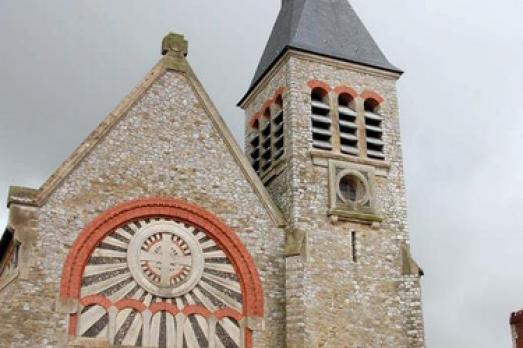
Le Touquet-Paris-Plage, FR
A first church was built in 1886, then another one in 1911, the first one being too small, and in 1946 it was decided to rebuild everything that had been demolished in 1944. Materials are scarce and work is slow. The rebuilt church was consecrated on June 7, 1954. As in 1911, the church turns out to be too small. An annex was therefore built as an extension of the right transept, between March 1, 1957 and June 1, 1958.
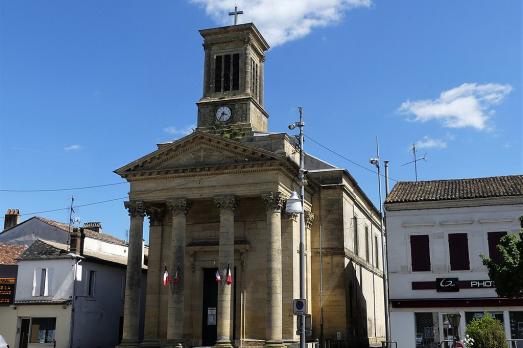
Bergerac, FR
The Sainte-Madeleine church was built in 1843. This neo-classical church was built by the contractor Prévôt to replace a dilapidated church demolished for the construction of the new Saint-Jean bridge. With a rectangular plan, it has a Greek-style pediment with a tetrastyle portico of Corinthian columns; it is topped by a small square bell tower with three bells.
Paris, FR
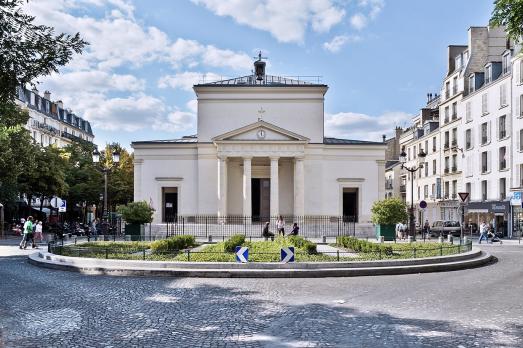
The church of Sainte-Marie des Batignolles was built between 1828 and 1851. The construction was carried out under the direction of the architect Jacques Molinos. The church took the name Sainte-Marie des Batignolles in 1830 when Charles X created the new commune of Batignolles-Monceau by separating it from the commune of Clichy-la-Garenne. The neo-classical church is shaped like a Greek temple. Its triangular pediment is supported by four columns. It is one of the few churches that does not have a bell tower. However, it has a bell in a small tower built in 1857.
Havre , FR
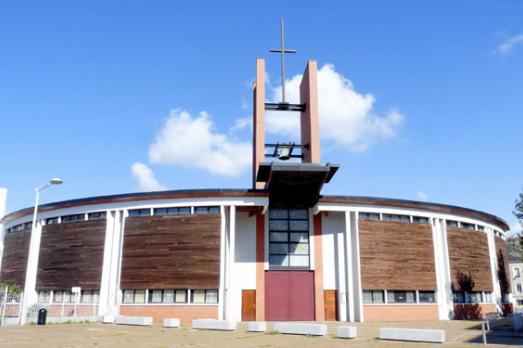
Building consecrated in 1839, then enlarged in 1865. The German army damaged the church in the 1940s. It also underwent modifications in the 2000s, following an urban rehabilitation plan.
Avrainville, FR
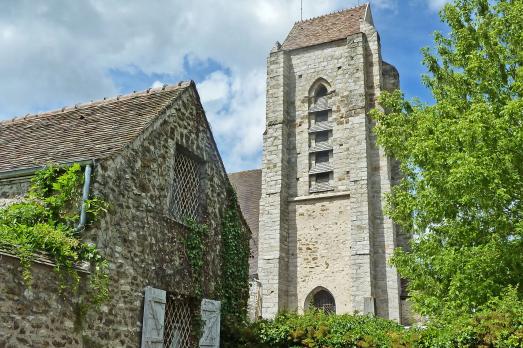
Once a proud Romanesque church, the various horrors of the Hundred Years War reduced the building to ruins, apart from the entrance gate and bell tower.
Calais, FR
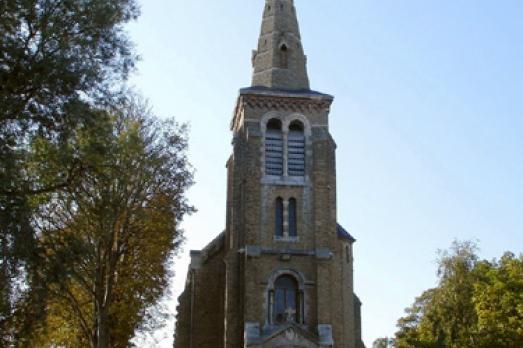
The work was quickly carried out and the building was completed well before St. Peter and the Sacred Heart, at a cost of 27,000 francs for the church and 8,000 francs for the presbytery. On March 8, 1868, the dean of Notre-Dame, Canon de Lencquesaing, delegated by Mgr. Lequette, Bishop of Arras, proceeded to the blessing and inauguration of the church, which was placed under the patronage of Saint Madeleine.
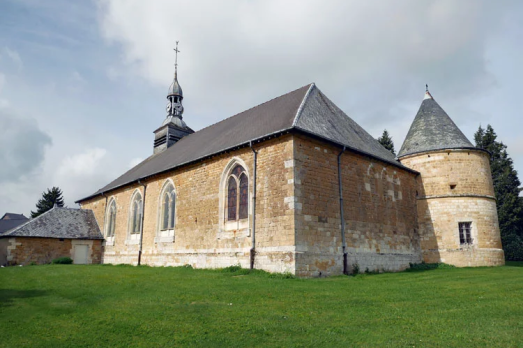
Dommery, FR
Église Sainte-Marie-Madeleine is located in Dommery, a small village with 183 inhabitants in the Département Ardennes in the region Grand Est. Two gravestones and the baptismal font are classified as "Monuments historiques"
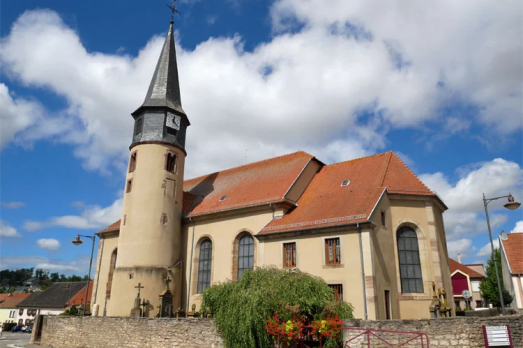
Hilbesheim, FR
Église St Brice is located in Hilbesheim, a village in the Département Moselle in France, about 4 miles northeast of Saarburg.
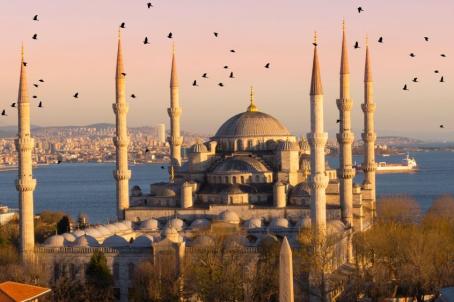
new
For a long time, Europe was ruled by powerful monarchies. Monarchy and religion have been connected since time immemorial. Here are 7 sites across Europe where royalty historically bent the knee to a higher power and received their crown.
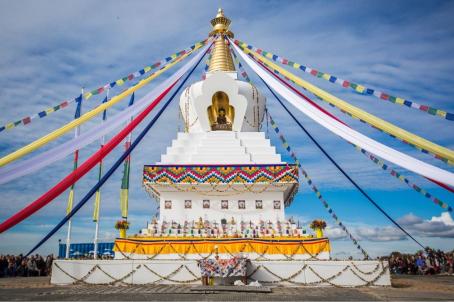
Stupas are symbols of enlightenment and peace that commemorate different stages of Buddha's life. Since the mid-20th century, thousands of stupas have begun to populate Europe. We have compiled some of the most impressive ones in this list.
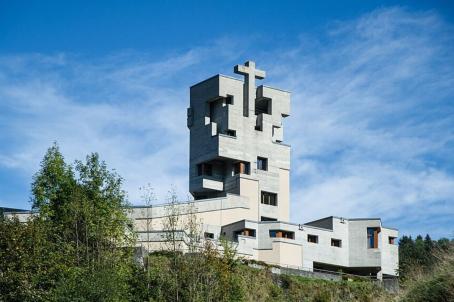
Walter Maria Förderer (1928–2006) was a Swiss architect and sculptor renowned for his neo-expressionist church designs in the 1960s. In this list we have compiled 6 of his church designs that seamlessly integrate religious and secular elements.

How is Religiana helping to conserve and promote Religious Heritage in Europe and why should you get involved?
Find out about Religiana
Are you a tourism organisation or religious heritage sites manager? Discover the advantages of becoming a partner.
See current partners
We can keep you up to date with the latest news from Religiana and religious heritage conservation across Europe.
Sign up to the FRH newsletter