Gereformeerde Kerk
Oldehove, NL
This church is listed as a National Monument of the Netherlands.
Here you can search for a building to visit. You can use the map find destinations, or you can use the filters to search for a building based upon what different criteria.
Oldehove, NL
This church is listed as a National Monument of the Netherlands.
Moddergat, NL
Hall church with wooden facade tower and framed entrance, built in 1889 with both neoclassical and gothic details. Enlarged in 1924, which resulted in the current interior and floor plan. The interior from that period was preserved, but the pulpit was modernized.
Opperdoes, NL
Built on the site of the Opperdoes, which was demolished in 1939, Noorderpad 21 - Reformed Church (1883-1939) from 1883.
Stellendam, NL
Dutch Reformed Church. Simple hall church, dated on a foundation stone on the front facade: 1819. On the high, tiled hipped roof a wooden bell tower, according to the VL originating from a farm in Ouddorp. The church, which has a barrel vault and tie beams, has among other things a pulpit, first quarter 19th century; an organ case, 1827; a copper lectern from the time of the pulpit; a gallery with a draught portal from the time of construction; an elder's bench, also from the time of construction and a copper crown, late 17th century. Bell tower with bell by Gebr. van Bergen, 1912, diam. 62 cm.
Ommen, NL
This church is listed as a National Monument of the Netherlands.
Munnekezijl, NL
Interesting hall church with tower, built in 1913 by L. Reitsma according to a model that was common in the Northern Netherlands in those years. Characteristic is the combination of painted wainscoting in the interior with stained glass windows, wooden ceilings, plastered walls and brick details. From the outside, this type of church, also in Munnekezijl, has a robust brick appearance, usually with a tower rising from the facade. Organ from 1920 by the Gebr. Rohlfing (Osnabrück). This church is listed as a National Monument of the Netherlands.
Rottevalle, NL
The Reformed Church in Rottevalle, like the rectory next door, was built in 1937 to a design by T. van der Kooi from Drachten in a building style characteristic of the thirties. The church shows strong similarities with the Reformed Church in Twijzel. The church replaces a church building from 1874, the memorial stone of which is built into the outer wall of the extension of the meeting room with the inscription: "EBENHAEZER / (...) / on 1 March 1874, the first stone was laid at this building. / (...) //. The church is set well back from the public road and is separated from it by a garden wall with a pipe that runs along the front of the parsonage. The church garden thus created is furnished with lawns on either side of the access path and separated from the adjacent plots by privet hedges. The church was modified at the rear in 1950 and 1971 by enlarging the consistory, meeting rooms and modifying the front hall.
Oldekerk, NL
Reconstruction church with roof turret. Replaced an earlier church that was demolished in 1964.
Sint Laurens, NL
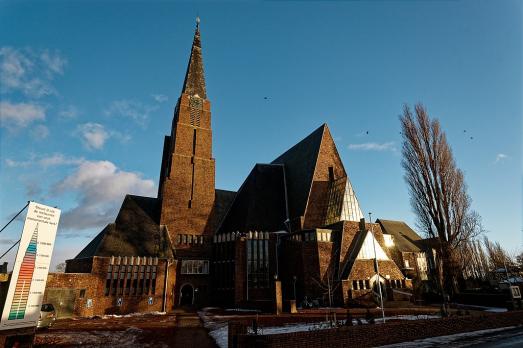
Built as a Reformed Church. Hall church without tower in Amsterdam School style.
Renkum, NL
This reformed church on the Utrechtseweg in Renkum was put into use on 8 August 1928. The first stone had been laid the year before, on 2 December 1927. The building served as a replacement for a church from 1889 on the Molenweg. Design sketches date back to 1925 and were published as intended for a church in nearby Oosterbeek. It is likely that this is the same church. These sketches were much more daring and are much more in line with the expressive Amsterdam School than the final result. Due to war damage, the building is no longer original in all places and some additions have been made to the rear.
new
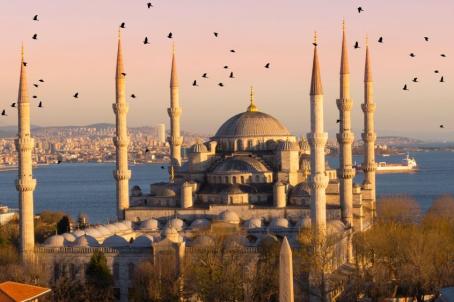
For a long time, Europe was ruled by powerful monarchies. Monarchy and religion have been connected since time immemorial. Here are 7 sites across Europe where royalty historically bent the knee to a higher power and received their crown.
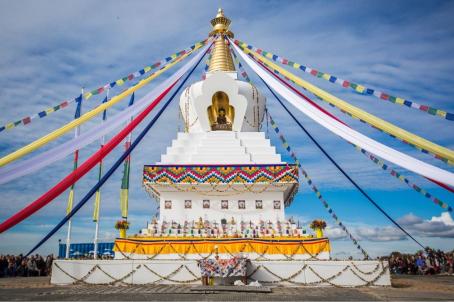
Stupas are symbols of enlightenment and peace that commemorate different stages of Buddha's life. Since the mid-20th century, thousands of stupas have begun to populate Europe. We have compiled some of the most impressive ones in this list.
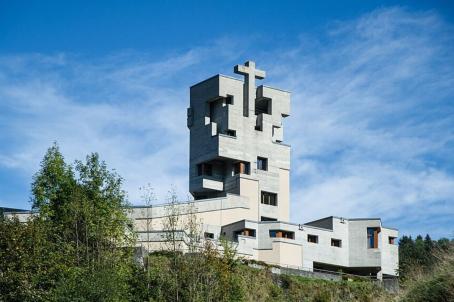
Walter Maria Förderer (1928–2006) was a Swiss architect and sculptor renowned for his neo-expressionist church designs in the 1960s. In this list we have compiled 6 of his church designs that seamlessly integrate religious and secular elements.