Gereformeerde Kerk
Den Ham, NL
Modern church without tower. The church replaced a church from 1870 .

Here you can search for a building to visit. You can use the map find destinations, or you can use the filters to search for a building based upon what different criteria.
Den Ham, NL
Modern church without tower. The church replaced a church from 1870 .
Earnewâld, NL
Hall church, built in 1906 with round arch windows and short lower transepts. Small stone facade tower, crowned by pyramid-shaped spire. Interior changed in 1951. During a change to the interior in 1992, the pulpit from the construction period was replaced by a pulpit in the shape of the bow of a skûtsje.
Donkerbroek, NL
Neo-Romanesque church with roof turret. Built as a Reformed church, protected by the State because of the single-manual organ that was made in 1821 by A. van Gruisen from Leeuwarden for a church that was still unknown. In 1920 it was moved to Donkerbroek by Bakker & Timmenga from Leeuwarden. The case and the mechanism were renewed on that occasion. In 1964 the company Gebr. Reil (Heerde) expanded it with a mixer. The company Bakker & Timmenga restored it in 1997.
Ottoland, NL
Farmhouse-like barn church. The church was built in 1888. In the shape of a farm, because if it turned out that this church had no right to exist, it could be turned into a farm.
Coevorden, NL
Important church building with tower. Replaced an earlier small Reformed hall church.
Oldehove, NL
This church is listed as a National Monument of the Netherlands.
Moddergat, NL
Hall church with wooden facade tower and framed entrance, built in 1889 with both neoclassical and gothic details. Enlarged in 1924, which resulted in the current interior and floor plan. The interior from that period was preserved, but the pulpit was modernized.
Lioessens, NL
Characteristic Reformed church building with tower.
Een, NL
In the middle of the village of Een at Hoofdstraat no. 16 is the church center "De Edenhof". This church building was founded by the members of the original Reformed Church. The church in Een was founded on January 19, 1845. From 1845 to 1869 the name of this church was: Christian separated community of Een. Then until 1892 it was: "Christian Reformed Church of Een". From 1892 until the merger with Veenhuizen and Norg in 1974 the name was "Reformed Church of Een". On December 14, 2003 the church continued as Protestant Community of Een-Norg-Veenhuizen. The building dates from 1928. The following text can be read in stone above the church door: '1878 - Lord, I love the dwelling of your house - 1928'. In 1938 a very heavy storm raged over Een. The church suffered considerable damage. A horizontal crack appeared in the southern wall that ran over almost the entire length. The roof suffered considerable damage. That is why the church council of 1938 decided on a major reconstruction. The roof was reinforced and the existing narrow buttresses were replaced by sturdy buttresses. The project cost € 908.60. During the war years 1940-1945 a shelter for people in hiding was built under the floor of the church. In 1962 the church was expanded with a number of halls: the so-called "Youth Building". In 1983 a completely new organ was installed by BAG organ builders in Enschede. The old organ stood on the gallery. The gallery has pews. The colours of the pews are dark red. There are approximately 60 seats. The year 2000 was a new starting point for the “Youth Building”. It was renovated again and expanded with a kitchen and youth centre and was given the name “De Edenhof”. The church building was also called “De Edenhof” and was completely renovated in 2008/2009. The wooden floor was replaced by a concrete floor with heating and covered with hard-baked tiles. The benches were replaced by chairs. Rows of six chairs are placed on either side of the central aisle. The liturgical centre/stage was enlarged and the new pulpit is movable. The liturgical table, like the pulpit, is made of solid white oak. Noteworthy is the scroll made of wood that hangs on the left side of the liturgical centre. The names of the children who were baptised in the past year or the names of the church members who have died are written on it. The baptismal font consists of natural stone with a ground hollow and has four supports. The church offers space for ± 200 persons and is equipped with modern sound equipment.
Idskenhuizen, NL
Built as a Reformed church. Renovated in 1929, damaged by storm in 2000. This church has a fascinating history. During the renovation of the original church building in 1929, interesting early modern stained glass windows were installed, both on both sides and in the front facade. The window in the front facade shows the dates 1844 - 1994, this on the occasion of the 150th anniversary of the Reformed Church in this village. The console of the organ is on the gallery above the entrance.
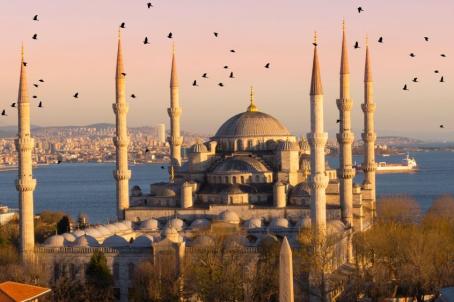
new
For a long time, Europe was ruled by powerful monarchies. Monarchy and religion have been connected since time immemorial. Here are 7 sites across Europe where royalty historically bent the knee to a higher power and received their crown.
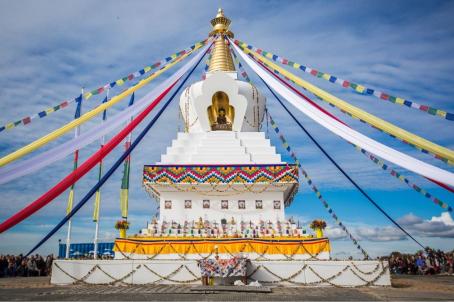
Stupas are symbols of enlightenment and peace that commemorate different stages of Buddha's life. Since the mid-20th century, thousands of stupas have begun to populate Europe. We have compiled some of the most impressive ones in this list.
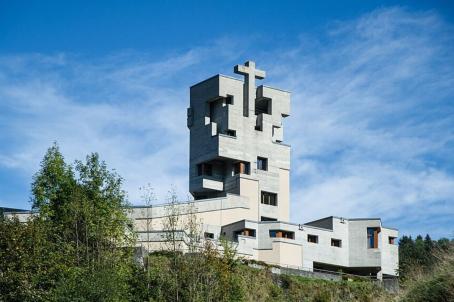
Walter Maria Förderer (1928–2006) was a Swiss architect and sculptor renowned for his neo-expressionist church designs in the 1960s. In this list we have compiled 6 of his church designs that seamlessly integrate religious and secular elements.

How is Religiana helping to conserve and promote Religious Heritage in Europe and why should you get involved?
Find out about Religiana
Are you a tourism organisation or religious heritage sites manager? Discover the advantages of becoming a partner.
See current partners
We can keep you up to date with the latest news from Religiana and religious heritage conservation across Europe.
Sign up to the FRH newsletter