Gereformeerde Kerk (Vrijgemaakt)
Rotterdam, NL
Built as the Reformed Church (Liberated) in Rotterdam-Delfshaven. Since the merger in 2023, NGK.
Here you can search for a building to visit. You can use the map find destinations, or you can use the filters to search for a building based upon what different criteria.
Rotterdam, NL
Built as the Reformed Church (Liberated) in Rotterdam-Delfshaven. Since the merger in 2023, NGK.
Roodeschool, NL
Built as a Reformed Church. Church building on a T-shaped plan, with a roof turret, built in 1871. The front facade has plastered decorations with neoclassical elements and is crowned by a roof turret with a spire. Furnishings from the construction period. Organ case from 1908, made by M. Eertman (Noordwolde), single-manual instrument from 2001, made by Henk van Eeken. From 1944 also Reformed Church (Liberated). In 1950 a new Reformed Church was built in Roodeschool. After church merger in 2023 NGK.
Leek, NL
Built as a Reformed Church. Interesting Reformed church building with a tower. In 1846, a church hall was built behind a house (the rectory) for the Separatists of the Reformed Church Midwolde-Leek. In 1908, the building was renovated and enlarged and the rectory was built next to the church.
Enumatil, NL
Built as a Reformed Church. In 1945 it became a Reformed Church (Liberated).
Kantens, NL
Sober reconstruction church without a tower. Built as the Reformed Church (Liberated) since the merger in 2023 with the NGK.
Middelharnis, NL
Modest modern church without a tower.
Rotterdam, NL
The Reformed Church (GKV) in Rotterdam Centrum is an interesting example of post-war reconstruction architecture. Although the building originally served as a GKV church, it is now known as the "Simonstraatkerk". It is a modernist church without a tower and is surrounded by modern high-rise buildings. In 2017, the church was restored, renovated and refurbished. Despite its inconspicuous appearance, the building has architecturally significant details that are characteristic of the post-war reconstruction period. It is a valuable piece of architecture that reflects the history and development of Rotterdam. During the restoration and renovation of the church, the GKV services were temporarily held in the Christian Reformed Rehoboth Church on the Noordsingel. This was a practical solution to provide the religious community with a place to live while their own church building was being renovated. It is interesting to see how this church, amidst modern high-rise buildings, has found and maintained its place in the city centre of Rotterdam. It emphasises the importance of preserving historically and architecturally valuable buildings in a constantly developing city.
Axel, NL
Characteristic Tjeerd Kuipers church with tower. Built as a Reformed Church. Expansion of the church in 1918-1919, also under the leadership of Tj. Kuipers. The church has been used by the Reformed Church (Liberated) since 1945, and was renovated again in 1948. Around 1998, the church was renovated on the inside. During this renovation, the organ console was raised. This created extra space under the church hall (the church is located on a rampart, which means that there is a considerable difference in height between the front and back of the church hall) where extra meeting space was created.
Bakkeveen, NL
Modern church without tower. Replaced an older Reformed evangelism room.
Bleiswijk, NL
From the autumn of 2003, liberations took place and due to fundamental difficulties with the course of the Reformed Church (liberated), members of the congregation liberated themselves. The Reformed Church in Lansingerland started as the Reformed Church in Berkel and Rodenrijs / Bergschenhoek. This name was due to the fact that the first liberations took place in these places (in Berkel and Rodenrijs on 4 September and in Bergschenhoek on 27 September 2003). The members of both congregations together formed one congregation. The official institution (by the election and confirmation of three elders and two deacons) took place on 23 November 2003. During and after this period, there was an influx of members who liberated themselves in surrounding, but also in more distant places such as Amstelveen and Hoofddorp. As a result, the congregation increasingly became a regional congregation. In mid-2020, the congregation has around 250 members. Initially, church services were held in the Multi-Functional Space on the Anthuriumsingel in Berkel en Rodenrijs. When this space quickly became too small, after some wandering around at various buildings in Bleiswijk, the sports hall 'De Sterrenhal' on the Wilgenlaan in Berkel en Rodenrijs could be used for many years. On Saturday evenings, the sports hall was prepared for church services by several members of the congregation and after the second church service the hall was cleared out again. The catechisms, associations and other meetings were held in the building 'De Tupper' at Kerkstraat 31 in Bleiswijk. From March 2016, the Auditorium, belonging to the former vegetable auction in Bleiswijk, could be used for the weekly church services. Setting up and clearing away the church hall was therefore a thing of the past. From 2013 onwards, the desire grew within the community for its own church building as a central address for church services, catechisms and association life. Organised evangelism could also be started from there. It turned out to be feasible to finance our own church building. In 2015, we were able to start the new construction and since October 2016, with deep gratitude to the LORD, Who made all this possible, we have been the user of the church building at Rembrandtlaan 42 in Bleiswijk.
new
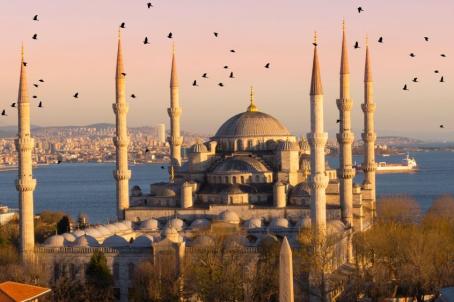
For a long time, Europe was ruled by powerful monarchies. Monarchy and religion have been connected since time immemorial. Here are 7 sites across Europe where royalty historically bent the knee to a higher power and received their crown.
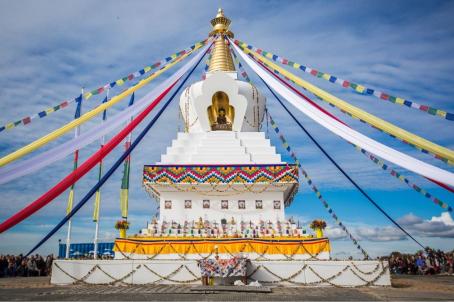
Stupas are symbols of enlightenment and peace that commemorate different stages of Buddha's life. Since the mid-20th century, thousands of stupas have begun to populate Europe. We have compiled some of the most impressive ones in this list.
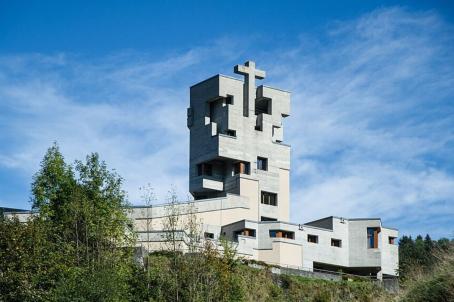
Walter Maria Förderer (1928–2006) was a Swiss architect and sculptor renowned for his neo-expressionist church designs in the 1960s. In this list we have compiled 6 of his church designs that seamlessly integrate religious and secular elements.