Ancienne Abbaye de St Georges, Boscherville
Saint-Martin-de-Boscherville, FR
The Abbey was built in the 12th century, and additions were made little by little between the 13th and 17th centuries.

Here you can search for a building to visit. You can use the map find destinations, or you can use the filters to search for a building based upon what different criteria.
Saint-Martin-de-Boscherville, FR
The Abbey was built in the 12th century, and additions were made little by little between the 13th and 17th centuries.
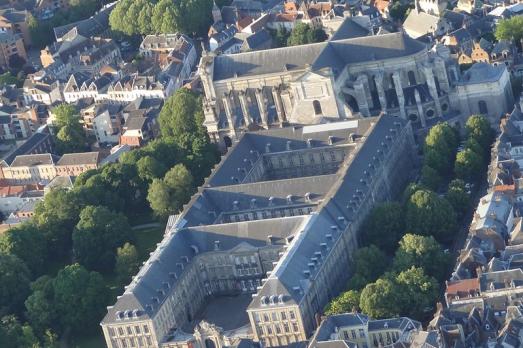
Arras, FR
The huge 18th century abbey church became the new cathedral of Notre-Dame-et-Saint-Vaast d'Arras in 1804. It replaced the old Gothic cathedral Notre-Dame-en-Cité in the west of the city which was destroyed, and since 1825 the vast monastery buildings of the abbey have housed the Arras Fine Arts Museum.
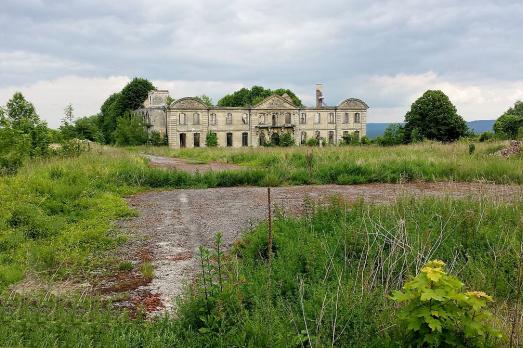
Laon, FR
According to tradition the abbey was founded under the name of Saint-Vincent in 589 by Queen Brunehaut. The abbey has suffered several destructions in its history, the last of which took place in the 19th century.
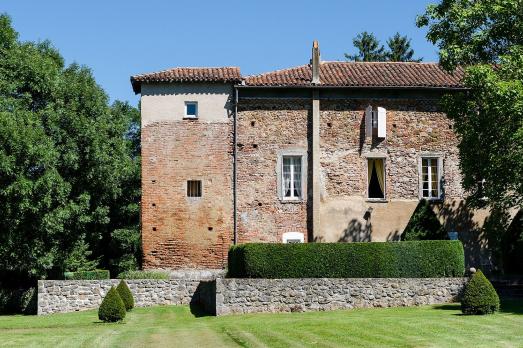
Rimont, Saint-Girons , FR
This abbey was founded in 1138 by the Earl of Pallars, for his own son who became the leader of the abbey. A few years later, the abbey welcomeed Louis VII, on his way to Compostela. The 14th century turned out to be very prosperous for the abbey, which accommodated at this time close to a hundred monks of the order of the Prémontrés. The 15th century saw the decline of the abbey, which experienced a succession of events: the Black Death, the Hundred Years War and then the wars of religion. The Revolution also affected the abbey, which was pillaged, burnt down and finally sold in 1791.
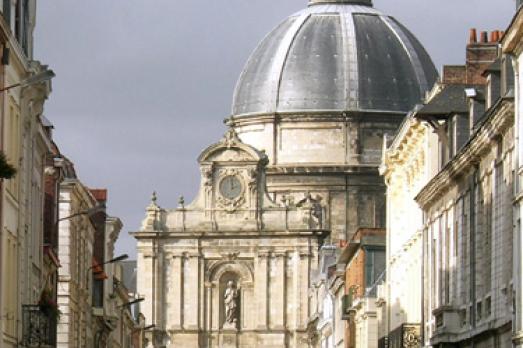
Lille, FR
The Carmelites acquired a piece of land in 1620, at the "Riez du château", near the new walls of the Porte de Gand, in order to establish their convent there. The church was completed in 1623, but was destroyed by fire in 1645. The present church was rebuilt between 1646 and 1669.
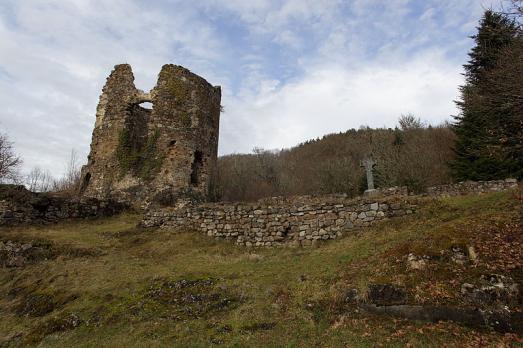
Chapdes-Beaufort, FR
The monastery is the only establishment of the Carthusian order in Auvergne. Today in ruins, it nevertheless preserves particularly interesting remains and constitutes an essential milestone in the understanding of the evolution of the architecture of the Carthusian order.
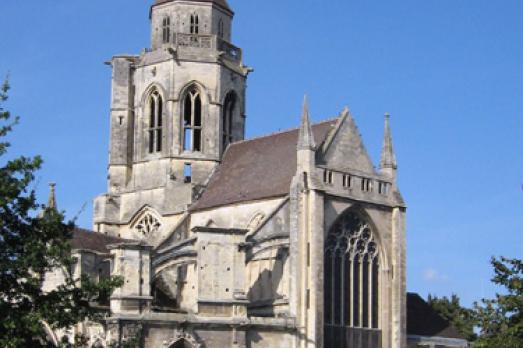
Caen , FR
Built from the 10th century, the qualifier "le Vieux" added following the construction of the Abbey aux Hommes in the 11th century. The church was disused in 1793, and was not given back to worship until 1802. The nave was destroyed by bombing in 1944.
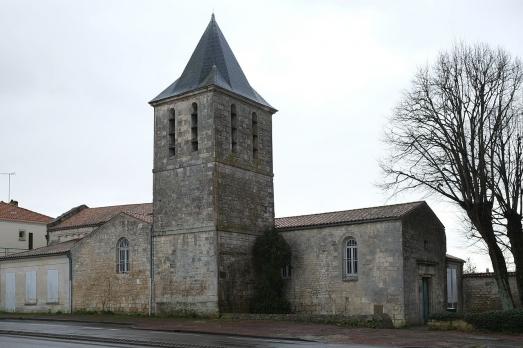
Rochefort, FR
The Old Church of Our Lady is a Romanesque church dating from the beginning of the 11th century, making it one of the oldest building in the town of Rochefort. The church has been restored in 1977 by the municipality, the Geographical Society, which was looking for premises for its permanent exhibitions, had a museum set up there: the Musée Archéologique de la Vieille Paroisse.
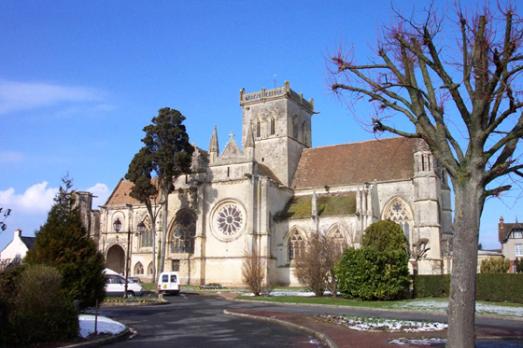
Dives-sur-Mer , FR
First mention of the church in the 11th century, work was undertaken in the 14th century following the war. In the 10th century, the nave is again undergoing work. Finally, in the XVIIth century, the facade is reworked but keeps its flamboyant gothic style.
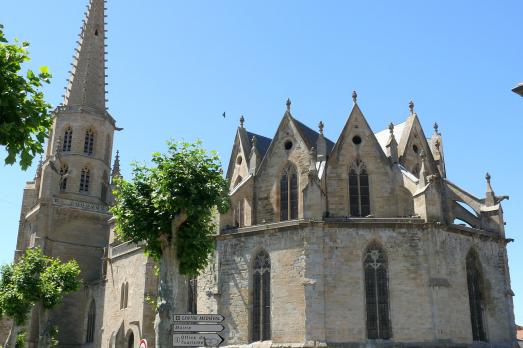
Mirepoix, FR
The current building was built in 1298, and its construction spanned 6 centuries, although there were some interruptions. In 1317, the Church became cathedral, but problems of financing delayed the enlargement. It was in the 16th century that the biggest works are finally carried out, by clearing the building of the attached houses. The building was also embellished, and the bell tower and its 60m high spire were erected. In the 19th century, the building was restored by Viollet-le-Duc and Prosper MÈrimÈe. Currently, this building no longer has the title of cathedral; it has once again become a parish church.
new
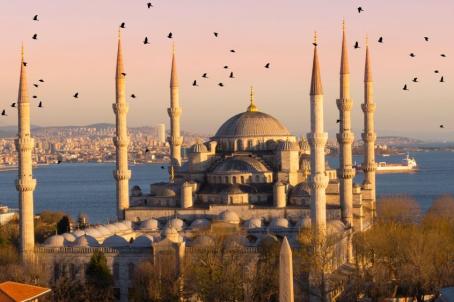
For a long time, Europe was ruled by powerful monarchies. Monarchy and religion have been connected since time immemorial. Here are 7 sites across Europe where royalty historically bent the knee to a higher power and received their crown.

Stupas are symbols of enlightenment and peace that commemorate different stages of Buddha's life. Since the mid-20th century, thousands of stupas have begun to populate Europe. We have compiled some of the most impressive ones in this list.
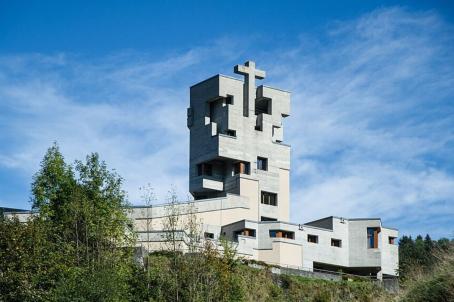
Walter Maria Förderer (1928–2006) was a Swiss architect and sculptor renowned for his neo-expressionist church designs in the 1960s. In this list we have compiled 6 of his church designs that seamlessly integrate religious and secular elements.

How is Religiana helping to conserve and promote Religious Heritage in Europe and why should you get involved?
Find out about Religiana
Are you a tourism organisation or religious heritage sites manager? Discover the advantages of becoming a partner.
See current partners
We can keep you up to date with the latest news from Religiana and religious heritage conservation across Europe.
Sign up to the FRH newsletter