Heggvik Church
Bjugn, NO
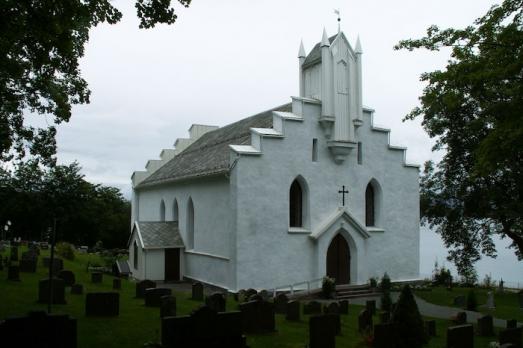
Heggvik Church, also called Stjørna Church, is a stone church built in a long church style in 1858. The construction was based upon designs by architect Christian Heinrich Grosch (1801–1865).

Here you can search for a building to visit. You can use the map find destinations, or you can use the filters to search for a building based upon what different criteria.
Bjugn, NO
Heggvik Church, also called Stjørna Church, is a stone church built in a long church style in 1858. The construction was based upon designs by architect Christian Heinrich Grosch (1801–1865).
Stjørdal, NO
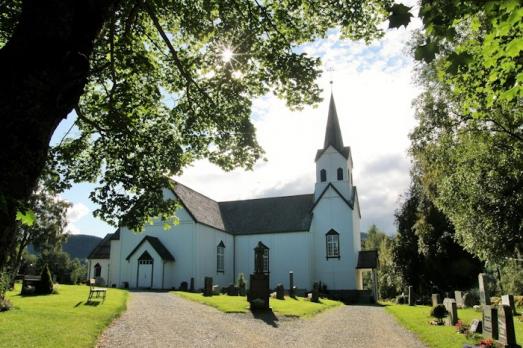
Hegra church is a wooden church dating back from 1783. The architects of the building are Erich Must and J. Strøen.
Sel, NO
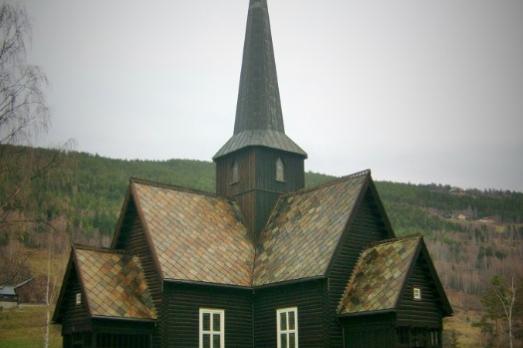
The Heidal church was built after the old Heidal church of 1754 burned down due to a lightning strike in 1933. Only the silverware, the candlestick, the altar books and the crucifix were saved. The construction of a new church started quickly and already in 1941 the new church was consecrated.
Tilburg, NL
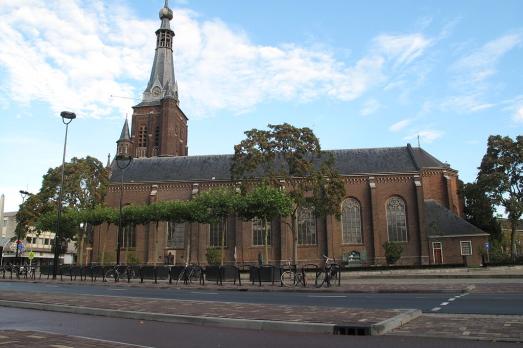
The Saint Dionysius Church in Tilburg, also known as the Heikese Church, was originally a barn church in the 't Heike area.
Oldenzaal, NL
Modest church hall with roof turret, built as a Reformed Church. In the context of the Samen Op Weg process, it was taken out of use as a Reformed Church in 1985. Since 1985 it has been in use as a Roman Catholic chapel, community hall and mass centre of the Dogmatic Union (a traditionalist Roman Catholic foundation founded in 1981 by the late chaplain WJ Kouwenberg), with the name Church of the Holy Altar Sacrament .
Lemelerveld, NL
Three-aisled neo-Gothic pseudo-basilica with west tower and choir section, which was later enlarged and raised.
Kerkrade, NL
With elements of Neo-Romanesque in 1931 to a design by the architects Caspar and Jos. Franssen from Roermond built church in honour of the Sacred Heart of Jesus. The church is situated in a small park. In front of the church is a Sacred Heart statue from around 1935 in artificial stone on a plinth of Kunradersteen. Around the Sacred Heart statue is a natural stone wall with columns with iron bars in between. At the rear of the church on the altar side is a Lourdes grotto also from around 1935 (1940 according to the year at the grotto) built from so-called hard mine stone with an altar table, a pulpit and a niche with a statue of Mary.
Heerlen, NL
Roman Catholic Church of the Holy Heart, BECAUSE of the single-manual organ with 10 registers, made in 1830 by the Gebr. Schauten from Jüchen, Germany) for the St. Peter's Church in Gulpen, placed in Heerlen-Schandelen in 1928. Restored in 1968 by the company DA Flentrop (Zaandam).
Heerhugowaard, NL
The first pile was driven on 21 January 1910 and nine months later the church was ready. At first the church stood alone between the meadows, but soon after the opening other houses, shops and a café were added. This created the heart of the current village. On 22 November 1910 the church was consecrated by Dean Ebbinkhuizen. The consecration by Bishop Callier took place on 1 May 1911.
Maasbracht, NL
As far as can be determined, the name 'Beek' was first mentioned around 1500, in Gelderland fief deeds. The hamlet was then called: 'Leen ter Beke', 'Aen gen Beeck', or later 'ter Beeck in den kerspel Bracht'. In 1526, the village of Bracht was no more than a chapel, served from the old parish of Linne and Echt, in 1756 Bracht was called a parish and Beek also fell under that. However, according to a provision of Bishop Reginaldus, since 1696 the proceeds of 'Aen gen Beeck' had to go to Linne and not to Bracht. In the meantime, a chapel had been built in Beek. It is still there and bears the date 1791. It is crowned with a nice roof turret and has an altar from the 18th century. This chapel was dedicated to Our Lady from the beginning and was immediately served from Bracht. The pastor of this place had to ensure that the holy mass was read once a week in Beek. Because the number of believers in Beek increased over the years, the bishop of Roermond decided in 1932 to start building his own house of God on the spot and he appointed a rector. The church was built in 1933 to a design by J. Franssen. On 1 August 1946, the rectorate was elevated to a parish with H. von Schwarzenberg as the first pastor. During the month of December 1944, the church was hit by several grenades. However, the damage was minor. Even the windows by René Smeets in the chancel were preserved. The church of Brachterbeek was the only one in the immediate vicinity that had come off so well. Pious souls attributed this to the fact that the church was dedicated to the Sacred Heart and pointed out that other Sacred Heart churches in Roermond, Tegelen and Venlo were also spared. (Source: The destroyed churches in Limburg/A. van Rijswijck, pr. - 1946)
new
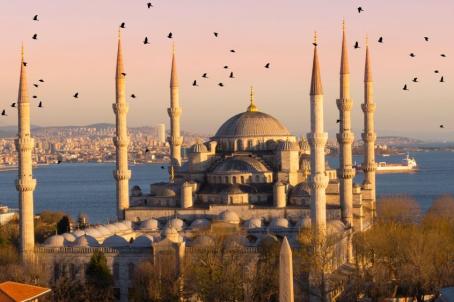
For a long time, Europe was ruled by powerful monarchies. Monarchy and religion have been connected since time immemorial. Here are 7 sites across Europe where royalty historically bent the knee to a higher power and received their crown.
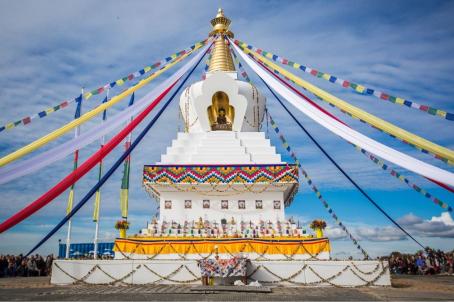
Stupas are symbols of enlightenment and peace that commemorate different stages of Buddha's life. Since the mid-20th century, thousands of stupas have begun to populate Europe. We have compiled some of the most impressive ones in this list.
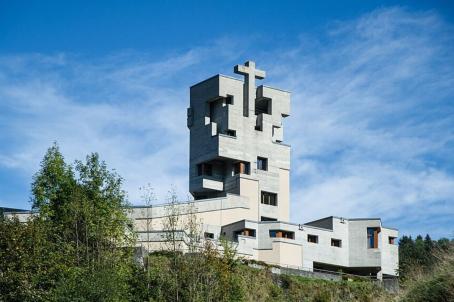
Walter Maria Förderer (1928–2006) was a Swiss architect and sculptor renowned for his neo-expressionist church designs in the 1960s. In this list we have compiled 6 of his church designs that seamlessly integrate religious and secular elements.

How is Religiana helping to conserve and promote Religious Heritage in Europe and why should you get involved?
Find out about Religiana
Are you a tourism organisation or religious heritage sites manager? Discover the advantages of becoming a partner.
See current partners
We can keep you up to date with the latest news from Religiana and religious heritage conservation across Europe.
Sign up to the FRH newsletter