Explore Religious Heritage Across Europe

Here you can search for a building to visit. You can use the map find destinations, or you can use the filters to search for a building based upon what different criteria.

Refine search

Heilig Hart van Jezus

Maastricht, NL

The Heilig Hart van Jezuskerk (Sacred Heart of Jesus) is a Roman Catholic parish church in the neighbourhood of Oud-Caberg, in Maastricht. It was built between 1876 ​​and 1877. The nave was designed by Architect Johannes Kayser, the tower by by Willem Sprenger. The enlargement of the chancel was the work of architect Alphons Boosten.

Heilig Hart van Jezus

De Zilk, NL

Important work by architect Jos. CF Margry. The Heilig Hart van Jezuskerk is a Roman Catholic church at Beeklaan 13 in the Dutch village of De Zilk. Originally, the Catholic inhabitants of De Zilk belonged to the parish of Vogelenzang. The Heilig Hart van Jezuskerk was built in 1919-1920 to a design by Jos Margry. It is a three-aisled neo-Gothic cruciform church. In 1922, the church was enlarged and in 1928 the tower was built. The church was put into use in 1920 and dedicated to the Sacred Heart of Jesus. Nowadays, the church is used by the Wilibrordus parish, a merged parish in which the parishes of Hillegom, Lisse and De Zilk have been merged since 1 January 2010. The church building has the status of municipal monument. (Source: Wikipedia)
Heilig Hart van Jezus / Koepelkerk

Maastricht, NL

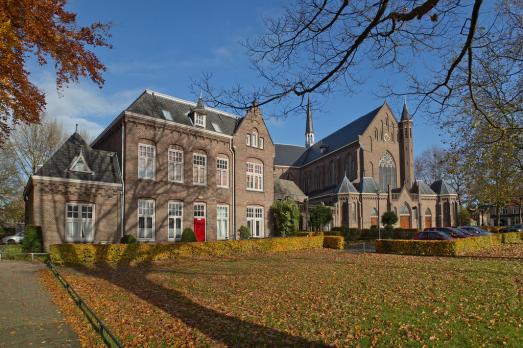
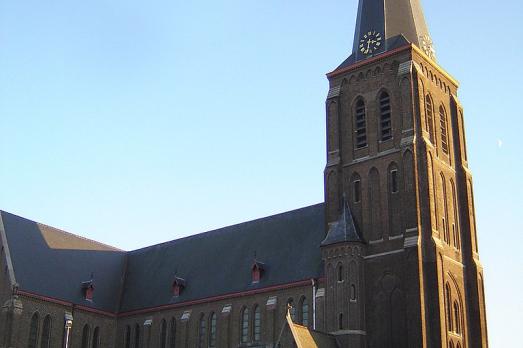
The Koepelkerk or church of the Heilig Hart van Jezus (Sacred Heart of Jesus) is a Roman Catholic temple with a dome consecrated in 1923.

Heilig Hart van Jezus-Kerk

Heilig Hart van Jezus-Kerk

Oss, NL

The foundation of a second parish church had long been a wish of the church board of the parish of Maria Immaculate Conception (Grote Kerk). In 1919 the church board decided M.O.O. to purchase some large plots of land in the De Hoef district, located between Kromstraat and Amsteleindstraat. These areas were later transferred in ownership to the new board of the H. Hartparochie. The required capital was partly raised by donations from a few well-to-do parishioners, including from the Jurgens firm, which gave rise to the nickname 'Butter Church'. The rest of the huge sum of money was obtained through loans. The well-known Bossche architect Jan van der Aalst designed the church and rectory.

Heilig Hartkerk, Sint-Amandsberg

Heilig Hartkerk, Sint-Amandsberg

Ghent, BE

The Heilig Hartkerk is a historic church in the district of St. Amandsberg in Ghent. The church was constructed between 1881 and 1883. Its church tower was erected in 1910. The urban renewal project ‘En Route’ was approved to breathe new life into the church and the square where it is located by transforming these spaces into a lively meeting place for the local community.

Heilig Kreuz / Public event space, Gelsenkirchen

Heilig Kreuz / Public event space, Gelsenkirchen

Gelsenkirchen, DE

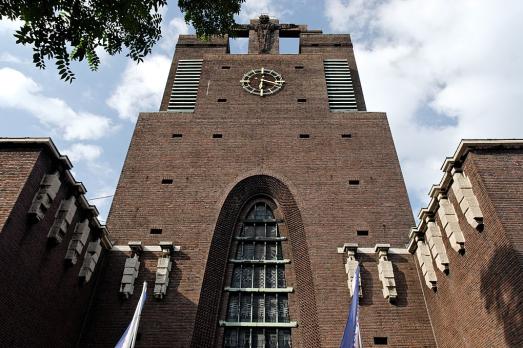
Heilig Kreuz Church in Gelsenkirchen, built between 1927 and 1929, is a remarkable example of brick expressionism, featuring industrial aesthetics and vibrant interior spaces. The church is undergoing conversion into a multipurpose venue and cultural center, revitalizing the neighborhood.

Heilig Kreuz Kirche

Heilig Kreuz Kirche

Bad Kreuznach, DE

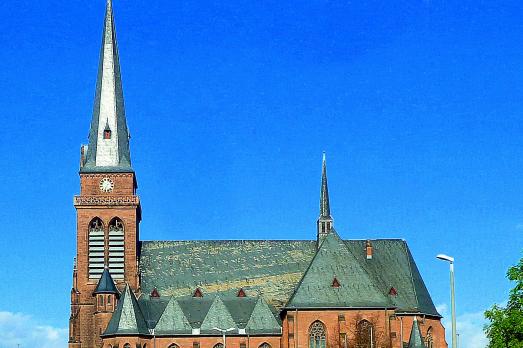
Holy Cross was built in the neo-Gothic style of the Holy Cross in 1895 - 1897 according to plans of the Mainz cathedral builder Ludwig Becker (1855 - 1940). Until 1921, the interior was completed - also according to the architect's designs. Father Caspar Kranz, among other things, supplemented the equipment with further sculptures from 1921 to 1935. After serious war damage, the reconstruction followed in 1947 - 1949. In 1963, the sacristy was rebuilt and a medical chapel was established. In 1968, the external renovation and the entrances were relocated. 1969 - 1972, the redesign of the church space followed and in 2006 finally the interior renovation.

Heilig Kreuz Kirche, Bottrop

Heilig Kreuz Kirche, Bottrop

Bottrop, DE

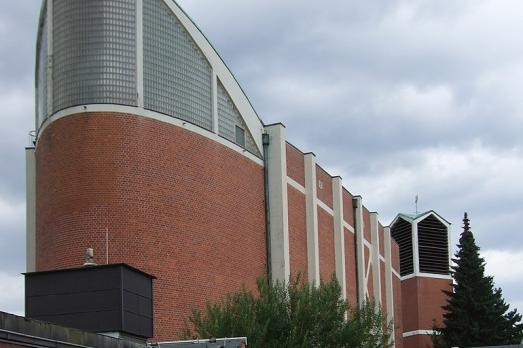
The Heilig Kreuz Church in Bottrop, Germany, built from 1955 to 1957, showcases a parabolic floor plan and combines historical influences with modern materials. Symbolic elements include spiral windows, a glass eye, and a hovering dove. Deconsecrated in 2007, now preserved by the Cultural Church Heilig Kreuz Association.

Heilig-Geist-Kirche

Heilig-Geist-Kirche

Munich, DE

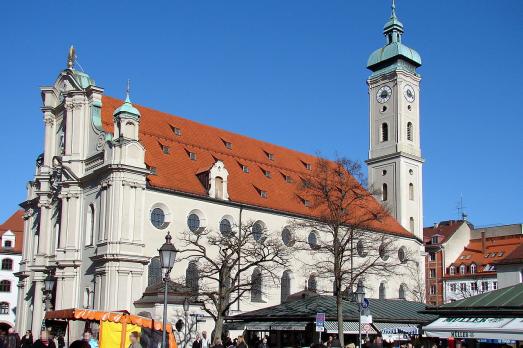
Heilig-Geist-Kirche was built in the 13th century as an annexed chapel of a religious hospital. The current neo-baroque building is much more recent, dating back to the 18th century.

Be inspired

Stupkalnis.lt

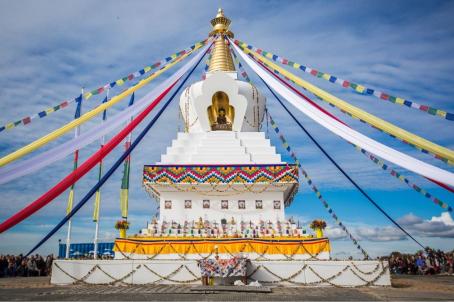
10 Buddhist stupas to discover in Europe

Stupas are symbols of enlightenment and peace that commemorate different stages of Buddha's life. Since the mid-20th century, thousands of stupas have begun to populate Europe. We have compiled some of the most impressive ones in this list.