Heilige Nicolaas
Nieuwveen, NL
Interesting early neo-Gothic church from 1867. Three-aisled pseudo-basilica. Iconic neo-Gothic tower from 1887 designed by EJ Margry.

Here you can search for a building to visit. You can use the map find destinations, or you can use the filters to search for a building based upon what different criteria.
Nieuwveen, NL
Interesting early neo-Gothic church from 1867. Three-aisled pseudo-basilica. Iconic neo-Gothic tower from 1887 designed by EJ Margry.
Edam, NL
Important neoclassical church with a small tower.
Baarn, NL
Beautiful neo-Gothic church without a real tower, therefore no role in the village image. The current church replaced a neo-Gothic church from 1861. Consecrated in 1905. Three-aisled neo-Gothic hall church without transept. Tower, right of the front facade, unfinished. Left of the front facade a staircase turret. Interesting late neo-Gothic church, in the style of churches by architect A. Tepe. In the choir beautiful stained glass windows, made by studio F. Nicolas & Zn, from 1906. Exterior and interior were restored in 3 phases in the years 2000-2010.
Schoonebeek, NL
Modern church, with small bell tower, dating from 1978-1979.
Eemnes, NL
Roman Catholic church 1845, elongated house of worship with built-in tower against which adjoins the rectory. In the bell spire a clock by Petit and Fritsen, 1892, 72 cm.
Denekamp, NL
The church consists of a 13-15th century nave and 15th century tower (mon.nr 12330) with a neo-Gothic eastern extension designed in 1912 by architect Wolter te Riele Gzn. The extension of the St. Nicholas Church is an exemplary example of Wolter te Riele's attempts to find a synthesis between a basilica and a central building. He shared this aim with Joseph Cuypers and Jan Stuyt. The church contains stained glass windows from 1912 by Frans Nicolas and sons Charles and Francois, from 1953 by Joep Nicolas, from 1963 by Sylvia Nicolas and from 1977 by Jan Schoenaker.
Odijk, NL
Traditionally, the parish of Odijk belonged to the archdeaconry of Oudmunster. In Odijk there were grounds, 'a court' which were successively in the hands of the German emperors (end of the 10th century), the archbishop of Cologne (until 1019), the Benedictine abbey of Deutz (until 1256) and finally of the count of Gelre. The oldest church building of Odijk, a chapel, probably stood within this court. This was probably a 'daughter' of the church of Werkhoven. In the 12th century, a Romanesque cruciform church with tower was built in Odijk. This church was probably dedicated to St. Heribert. In the sixteenth century, around 1547, the choir of this church was replaced by a late Gothic choir. In the 19th century, the tower, the transept and the nave were demolished. What remained, the choir, is the current Dutch Reformed Church (the 'white church'). During the Reformation, Odijk initially remained Roman Catholic. From 1564, Evert Aelbertsz. was pastor in Odijk and around 1593 he baptized Protestants and Catholics, depending on the denomination of the parents. After the death of this last Catholic pastor, the people of Odijk went to church in Bunnik (Rhinauwen castle), Blikkenburg castle south of Zeist and also to Rijsenburg castle. In 1718, a new church was built in the hamlet of Schoudermantel near Bunnik. This church became the heart of the Bunnik station, which also included Odijk.
Muiden, NL
Single-nave church with neoclassical, stately façade, turret and bollards, early 19th century. Neo-Romanesque transept and choir from 1894. In the choir of the church a bell by Melchior de Haze, 1686, diam. 39.2 cm. This church is listed as a National Monument of the Netherlands.
Sint Nicolaasga, NL
St. Nicolaas, 1885-1887, JD van de Weide. Neo-Gothic cruciform basilica with a two-storey tower with balustrade, spire and pinnacles, supported by perpendicular and diagonal buttresses. Brick-built cluster pillars on hardstone bases, cross-ribbed vaults. A star vault over the crossing. Rose windows in the west facade of the tower and in the end gables of the transept. Plastered wall surfaces, structural parts treated as fair work. Neo-Baroque communion bench, now converted into an altar; neo-Gothic interior with the exception of the pulpit still present. A bronze baptismal font by the Brom brothers from 1933, carried by four prophets. Tub and lid with twelve biblical scenes and crowned with the scene of the baptism of Christ. Mechanical tower clock B. Eijsbouts, Asten, 1925, no. 871, later fitted with electric winding.
Broekhuizen (L), NL
Historic church with beautiful roof turret. Destroyed by fire in 1862, then rebuilt. Destroyed by war in 1944. Rebuilt and expanded in 1952.
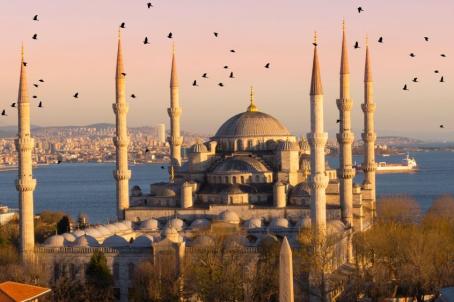
new
For a long time, Europe was ruled by powerful monarchies. Monarchy and religion have been connected since time immemorial. Here are 7 sites across Europe where royalty historically bent the knee to a higher power and received their crown.
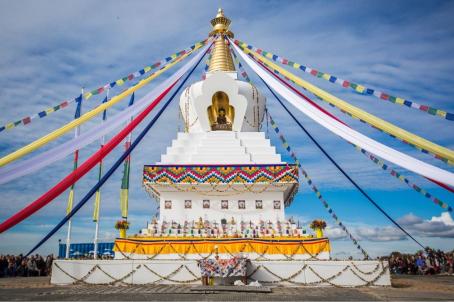
Stupas are symbols of enlightenment and peace that commemorate different stages of Buddha's life. Since the mid-20th century, thousands of stupas have begun to populate Europe. We have compiled some of the most impressive ones in this list.
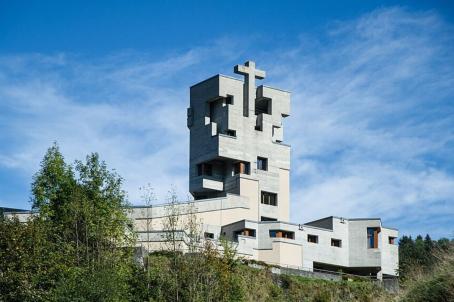
Walter Maria Förderer (1928–2006) was a Swiss architect and sculptor renowned for his neo-expressionist church designs in the 1960s. In this list we have compiled 6 of his church designs that seamlessly integrate religious and secular elements.

How is Religiana helping to conserve and promote Religious Heritage in Europe and why should you get involved?
Find out about Religiana
Are you a tourism organisation or religious heritage sites manager? Discover the advantages of becoming a partner.
See current partners
We can keep you up to date with the latest news from Religiana and religious heritage conservation across Europe.
Sign up to the FRH newsletter