Onze Lieve Vrouw Onbevlekt Ontvangen
Heteren, NL
Interesting expressionist church with tower and roof turret. Replaced an earlier church building.
Here you can search for a building to visit. You can use the map find destinations, or you can use the filters to search for a building based upon what different criteria.
Heteren, NL
Interesting expressionist church with tower and roof turret. Replaced an earlier church building.
Kessel-Eik, NL
Late Wielderskerk. Roof turret at crossing.
Peij, NL
Roman Catholic Church from 1857, by Pierre Cuypers (1827 - 1921), with a series of wooden statues, ca. 1500-18th century.
IJsselmuiden, NL
The Roman Catholic parish of IJsselmuiden was founded on 1 January 1857 and is dedicated to Our Lady of the Immaculate Conception. Before 1857, Catholics from IJsselmuiden attended church in one of the two stations in Kampen. The first church in IJsselmuiden was built in 1859. Due to the growth of the parish, a larger church was built on the same site in 1919. The architect was Jan Stuyt and the contractors were the Koenders brothers from Enschede. The church was consecrated on 7 October 1919. The relics of Saint Damian and Saint Euphemia were placed in the main altar.
Hank, NL
Late neo-Gothic church with a high post-war tower, which at 63 m is one of the highest post-war church towers in the Netherlands.
Overveen, NL
Our Lady of the Immaculate Conception. 1855-1856, Th. Molkenboer. Neo-Gothic pseudo-basilica with transept. Tower with squat square bell storey, accompanied by incurved buttresses. Plastered interior with slender clustered pillars, capitals executed in stucco, niches with high-Gothic tracery above the arches and stuccoed wooden cross-ribbed vaults. High altar with large retable, in which statues, all executed in marbled wood by Veneman in Den Bosch. Marble statues by Mengelberg, copper baptismal font modelled on the 16th century font in Zutphen by JHBrom, 1887-1888. Church and inventory form an interesting example of an early neo-Gothic church interior from the period before Cuypers.
Amstenrade, NL
The current church was built in the years 1852-1856 to an early design by Carl Weber . The construction was made possible by a large financial contribution from Count Jean Baptiste Marchant d'Ansembourg, who in return received a count's chapel in the church reserved for his family and the right to be buried near the church. The new church replaced the old village church, which was dedicated to St. Gertrude. This church had existed since at least the 14th century.
Leerdam, NL
Exceptionally important church with tower, in expressionist brick architecture according to the school of Dom. P. Bellot OSB. This church replaced a smaller parish church, elsewhere in the city centre, which had become too small. The church is considered an important work in the oeuvre of Dom. P. Bellot and HC van de Leur.
Nieuw-Vennep, NL
In several respects exceptionally original and important "reconstruction church", influenced in design by the Delft School (traditionalism), with references to early Christian church architecture. Front facade with a high, shallow wall; even higher wide, shallow bell tower above the choir. In the bell tower hang, in 4 separate niches, 4 church bells, all 4 of which are rung for church services. Rich detailing with various side chapels. In the choir are 2 important older stained glass windows. Redesign and/or reduction of pew plan in around 2007, whereby the original spatial effect has remained completely intact. The organ is now placed at the front right, at the choir side, instead of above the entrance to the church.
Hilversum, NL
Second Roman Catholic church in Hilversum (after the St. Vitus church). Important neo-Gothic church, on a centralising plan, with a hexagonal crossing with a high roof turret. Very important early work in the oeuvre of Wolter te Riele (1867-1937).
new
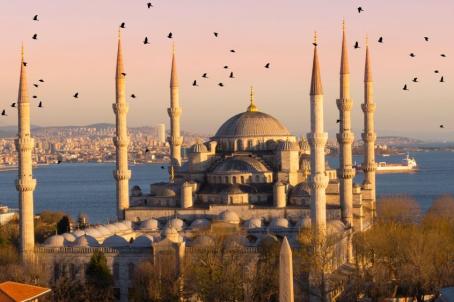
For a long time, Europe was ruled by powerful monarchies. Monarchy and religion have been connected since time immemorial. Here are 7 sites across Europe where royalty historically bent the knee to a higher power and received their crown.
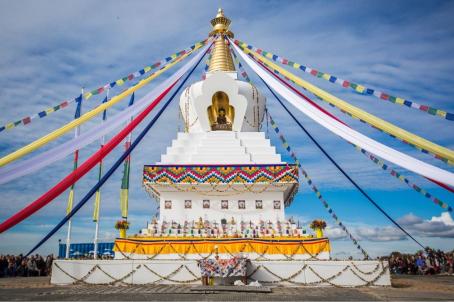
Stupas are symbols of enlightenment and peace that commemorate different stages of Buddha's life. Since the mid-20th century, thousands of stupas have begun to populate Europe. We have compiled some of the most impressive ones in this list.
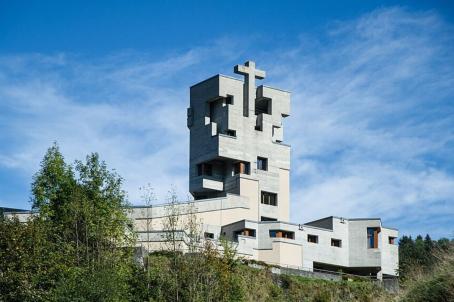
Walter Maria Förderer (1928–2006) was a Swiss architect and sculptor renowned for his neo-expressionist church designs in the 1960s. In this list we have compiled 6 of his church designs that seamlessly integrate religious and secular elements.