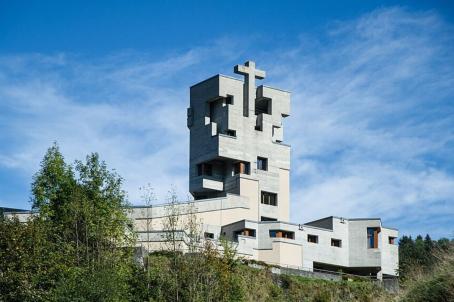
Reformed church
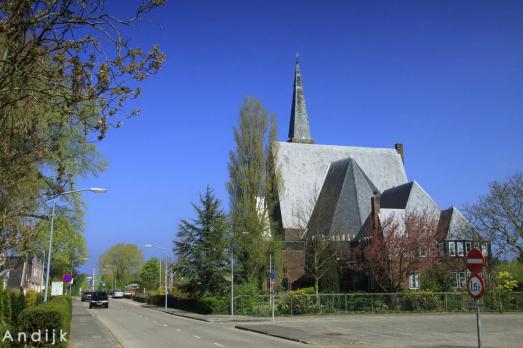
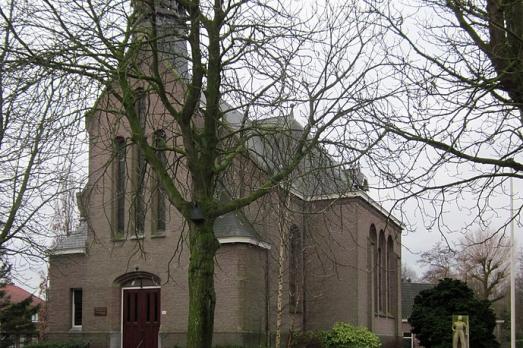
Schiedam, NL
Built as Reformed Church (Liberated) (GKV). In 1968 "GKV Buiten Verband". In 1979 the name of that church became Dutch Reformed Church (NGK).
Here you can search for a building to visit. You can use the map find destinations, or you can use the filters to search for a building based upon what different criteria.
Schiedam, NL
Built as Reformed Church (Liberated) (GKV). In 1968 "GKV Buiten Verband". In 1979 the name of that church became Dutch Reformed Church (NGK).
Spijkenisse, NL
Beautiful modern church. The first members of Spijkenisse initially attended church in the Reformed Church in Poortugaal. On 1 January 1961, the first Sunday church service was held in Spijkenisse, in the Kontakt association building on Vredehofstraat. After first being a department of the church in Poortugaal, the church was established as an independent church on 21 March 1963. In 1967, the church community decided to build a church building. This church building was put into use on 22 February 1968, with 160 seats. In 1974, the number of seats was expanded to 280.
Rotterdam, NL
Built as a Reformed Church (Liberated) in the IJsselmonde district. Now in use (since when?) by Jehovah's Witnesses. Between 2014 and 2019, the Jehovah's Witnesses left this building. Today, the building is used as a mosque.
Hardinxveld-Giessendam, NL
Simple hall church without a tower.
Moerkapelle, NL
Replaced a 15th century chapel. Historic church with tower, both from the 17th century. The church has no name, but is referred to as a Reformed Church or Village Church. This church is listed as a National Monument of the Netherlands.
Sebaldeburen, NL
The Reformation also drove out the priests in Sebaldeburen. It is not known how the service was performed at that time. In the year 1602 Nicolaus Petri took charge of the service here. At that time there was a combination with Grijpskerk. This probably lasted until 1606. Then there is mention of a joint minister for Grootegast and Sebaldeburen: Thomas Joannis. The stamp above the entrance was left by Rev. Nicolaus Westendorp on the reformed congregation when the new church was put into use in 1807. Because it was this Rev. Westendorp who, when he became minister of Sebaldeburen in 1797, was very annoyed by the dilapidated church he found there. He says it like this: "When I came to the Community (in 1797) I had considered the pitiful condition of the Church with the saddest emotions. This feeling became tormenting, as often as I imagined the approaching moment when the care for our lives would force us to avoid it. There was no repairing it: it was not possible to establish a new one from the church goods and income, because they were not even sufficient to maintain the Parsonage and Sacristan. There was also no expectation of the Community; because it was small, burdened by other institutions and consisted mainly of peat and laborers."
Grolloo, NL
Dutch Reformed CHURCH built in 1853 in neoclassical style. Foundation stone in the front facade: 'Founded 1853. Churchwardens Roelof Hagting, Remmelt Haange, Lens Beyring'. The church was restored in 1975 by order of the church council by the Bureau Monumentenzorg of the province of Drenthe. Among other things, the (half-) columns in the Doric order and a new chandelier were installed. Worth mentioning is the cemetery behind the church; however, this is of local importance.
Rozenburg, NL
The Reformed Church in Rozenburg was instituted on 15 March 1855 and on 13 May 1888. In December 1944, a small part of the congregation declared itself Free. This is how the Reformed Church (Liberated) in Rozenburg was founded. The church building at Emmastraat 75 was built in the 1950s on a plot of land between the back gardens of two parallel streets. Partly due to its recessed location, the building is hidden between the surrounding buildings. The architect of the building was A. Warnaar in Maasland. In 1973, the church building was expanded on both sides. In 1983, the church building was expanded again for more spacious meeting facilities. The attention of the interior, which appears square due to the widening, is drawn to the organ front that has been expanded opposite the large church window.
Aalst, NL
This church building of the Reformed Church in Aalst dates from 1974, although it was expanded in 1985.
Aarlanderveen, NL
The Hervormde Kerk (Reformed Church) in Aarlanderveen was built in 1905. It replaced an earlier church, which was demolished. Several artefacts were transferred from the older church to the new one including a pulpit with baptismal fence from the second half of the 17th century; a stone late Gothic baptismal font, used as a base for the pulpit; fronts of pews from the 18th century and two copper lecterns from the 17th century.
new
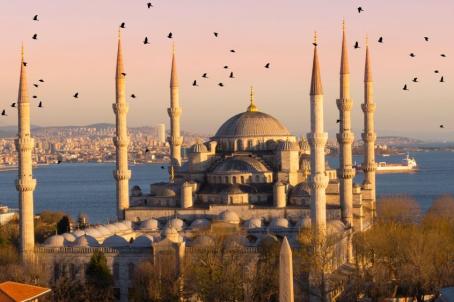
For a long time, Europe was ruled by powerful monarchies. Monarchy and religion have been connected since time immemorial. Here are 7 sites across Europe where royalty historically bent the knee to a higher power and received their crown.
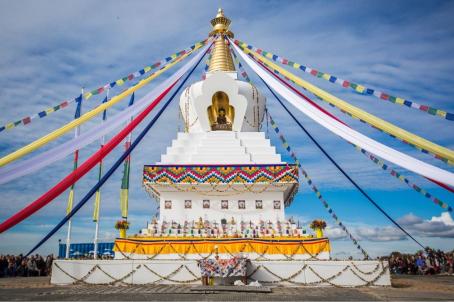
Stupas are symbols of enlightenment and peace that commemorate different stages of Buddha's life. Since the mid-20th century, thousands of stupas have begun to populate Europe. We have compiled some of the most impressive ones in this list.
Walter Maria Förderer (1928–2006) was a Swiss architect and sculptor renowned for his neo-expressionist church designs in the 1960s. In this list we have compiled 6 of his church designs that seamlessly integrate religious and secular elements.