Doopsgezinde Kerk
Berlikum, NL
Mennonite Church. Hall church under hipped roof from 1841. Front facade finished by cornice with classical frieze. Entrance framed by pediment. Organ by the firm L. van Dam & Zonen from 1916.

Here you can search for a building to visit. You can use the map find destinations, or you can use the filters to search for a building based upon what different criteria.
Berlikum, NL
Mennonite Church. Hall church under hipped roof from 1841. Front facade finished by cornice with classical frieze. Entrance framed by pediment. Organ by the firm L. van Dam & Zonen from 1916.
Enkhuizen, NL
Mennonite CHURCH (meeting house), built in 1892 to a design by architect Van der Meulen. The design is comparable to the meeting house in Vlissingen built three years earlier.
Balk, NL
Three-sided closed hall church with round arch windows, built in 1862. Single-manual organ by Bakker & Timmenga (Leeuwarden) from 1908.
Drachten, NL
The Mennonite Meeting House dating from 1790 and its associated side rooms were restored and renovated in 2007. The old entrance with the large doors is now the main entrance again. Inside, everything is so flexibly arranged that the building can have a multifunctional purpose. (60-08/61-09)
Noordhorn, NL
Mennonite church from 1838. The side walls are divided by lesenes, between which there is a semicircular closed window. It also has a framed entrance. This church is listed as a National Monument of the Netherlands.
Eenrum, NL
In 1819, the Mennonite communities of Obergum, Rasquert and Den Hoorn founded a new church in Mensingeweer. But when the province of Groningen planned a road in the fifties of the 20th century on the site of the church building and parsonage, they moved to Eenrum where a new church building was built on the J.J.Willingestraat. The name of the community then became: "Mennonite community of Mensingeweer in Eenrum".
Steenwijk, NL
Simple, early 19th century Mennonite Meeting House (date stone 28 June 1828), on a rectangular plan. The building, which shows Gothic elements on the front facade, is constructed of brick; only the front facade is provided with a block-shaped plastering. The wide pointed gable is terminated on both sides by corner pilasters with profiling. In the facade plane two blind niches with trefoil motif and wide round-arched windows with wooden tracery, the latter type of window also used in the side facades. Protruding plastered entrance portal with corner pilasters with sunken fields and crownings; the entrance is set within an arch with trefoil motif. Simple profiled gutter; bar anchors. Furthermore, two stones with inscription, respectively: THE EARTH STONE LAID BY CHOVENSGREVE 28 JUNIJ 1828 and: IMMANUEL Ao 1630. Internally some 19th century furniture consisting of benches, pulpit and small organ on gallery. The site is bordered by a simple iron fence crowned with even profiled points and French lilies.
Hallum, NL
Straight-ended hall church with extended entrance portal, built in 1912. Round-arched windows with coloured stained glass in rectangular patterns, furniture from the construction period, made of unpainted pine, still present in its entirety. Single-manual organ by Bakker & Timmenga (Leeuwarden) from 1906.
Joure, NL
In the 16th and 17th centuries, Mennonite believers were tolerated by the local government. The government allowed Mennonite communities to build their own church, but these were not allowed to be on the public road. In practice, this usually meant that a house was built for the church. In Joure there is no longer a house in front of the church hall, but the small square in front of the church is a reminder of the situation in the 17th century. The church building on Midstraat dates from 1824.”
Bolsward, NL
The Bolsward clandestine church is located behind the building line of the buildings in the street. Built in 1809 and expanded and embellished from 1848 to 1855. Framed entrance (all mid-19th century). With a roof turret.
new
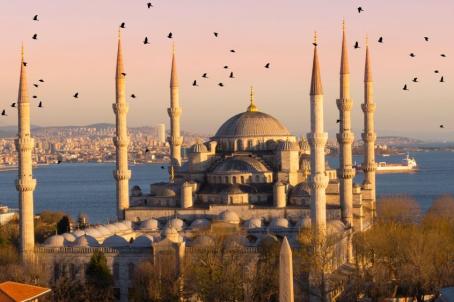
For a long time, Europe was ruled by powerful monarchies. Monarchy and religion have been connected since time immemorial. Here are 7 sites across Europe where royalty historically bent the knee to a higher power and received their crown.
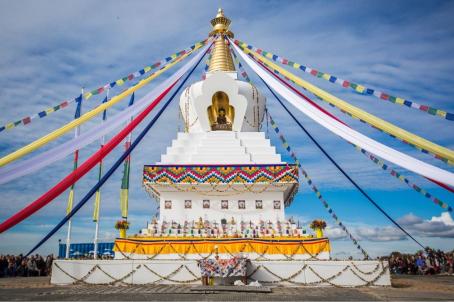
Stupas are symbols of enlightenment and peace that commemorate different stages of Buddha's life. Since the mid-20th century, thousands of stupas have begun to populate Europe. We have compiled some of the most impressive ones in this list.
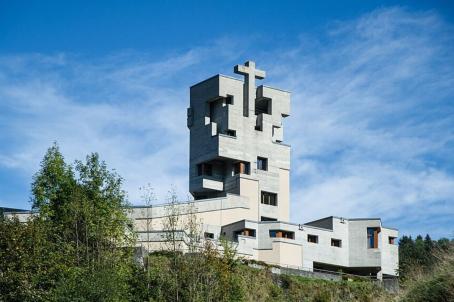
Walter Maria Förderer (1928–2006) was a Swiss architect and sculptor renowned for his neo-expressionist church designs in the 1960s. In this list we have compiled 6 of his church designs that seamlessly integrate religious and secular elements.

How is Religiana helping to conserve and promote Religious Heritage in Europe and why should you get involved?
Find out about Religiana
Are you a tourism organisation or religious heritage sites manager? Discover the advantages of becoming a partner.
See current partners
We can keep you up to date with the latest news from Religiana and religious heritage conservation across Europe.
Sign up to the FRH newsletter