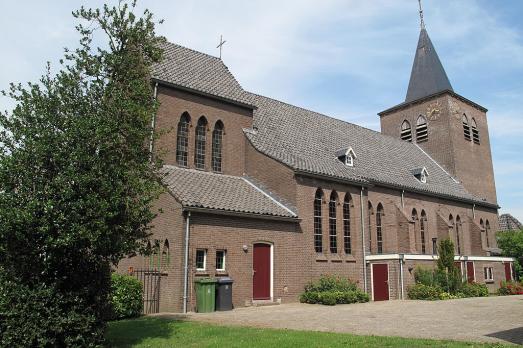
Heilige Willibrordus
Achter-Drempt, NL
The Heilige Willibrordus church is a Roman Catholic temple dating from 1936. It was built according to the designs of HCM van Beers in traditionalist forms and influenced by the Delft School.

Here you can search for a building to visit. You can use the map find destinations, or you can use the filters to search for a building based upon what different criteria.
Achter-Drempt, NL
The Heilige Willibrordus church is a Roman Catholic temple dating from 1936. It was built according to the designs of HCM van Beers in traditionalist forms and influenced by the Delft School.
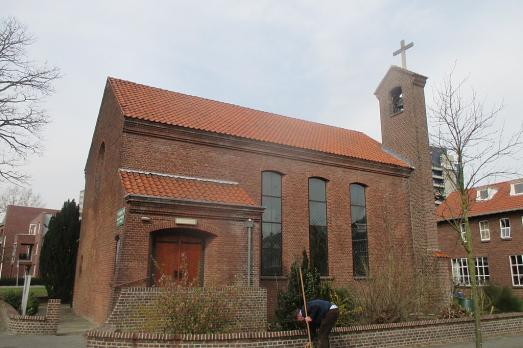
Arnhem, NL
The Johannes de Doper Parish in Arnhem had grown so much in size in the early 1940s that the Episcopate considered the time ripe to split the parish and build a new church. In 1943, on the initiative of Dean Voskuilen, a committee was set up to deal with the construction.
Demen, NL
Built by Pierre Cuypers (1827 - 1921) while retaining the 15th century tower of the former church, in 1890 this architect clad it, raised it and provided it with a staircase tower. The church consists of a nave of five bays, covered by a pointed wooden barrel vault and a choir with 5/8 closure and brick cross-ribbed vaults. Tower 15th century.
Berghem, NL
Tower added in 1475. Church demolished in 1856, and replaced. The historic tower was then maintained.
Boskamp, NL
The current church dates from 1860 and is a typical work in the oeuvre of HJ Wennekers, built under the influence of the so-called stucco Gothic style.
Bergschenhoek, NL
Charming neo-Romanesque church with tower designed by AAJ Margry, built to replace a church from 1833.
Sint Willibrord, NL
In 1841 a parish was founded and a church built. Since 1885 Sint Willebrord has been a place of pilgrimage. In that year a first Lourdes grotto was built. In 1925 a new church was built. The original design by pastor Bastiaansen, a representation of the Basilica of Lourdes, was elaborated by the architect Jacques (NJH) van Groenendael from Breda. In front of the church is a procession park.
Beilen, NL
Church without tower. Built as Reformed Church . As such out of use in 1957. After renovation and extension with transept and choir in 1958 in use as Roman Catholic St. Willibrordus Church.
Julianadorp, NL
Founded as a temporary church from the Roman Catholic parish of Den Helder. Sober church with roof turret. Never replaced by a permanent church building.
Oud-Vossemeer, NL
The brick hall church is built in neoclassical style and has a tower on top of a gable, arched windows and a front facade with blind niches . The main altar dates from the 18th century. In 1854 a second-hand church organ was delivered by organ builder CJ Rogier from Bergen op Zoom , the builder and the year of construction are unknown. In 1951 the organ was restored by the Verschueren company.
new
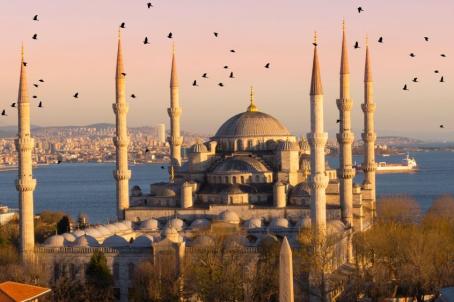
For a long time, Europe was ruled by powerful monarchies. Monarchy and religion have been connected since time immemorial. Here are 7 sites across Europe where royalty historically bent the knee to a higher power and received their crown.
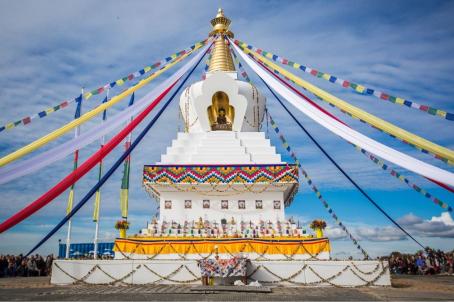
Stupas are symbols of enlightenment and peace that commemorate different stages of Buddha's life. Since the mid-20th century, thousands of stupas have begun to populate Europe. We have compiled some of the most impressive ones in this list.
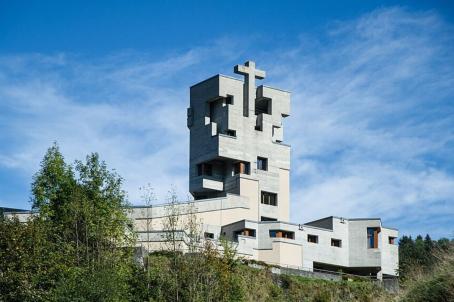
Walter Maria Förderer (1928–2006) was a Swiss architect and sculptor renowned for his neo-expressionist church designs in the 1960s. In this list we have compiled 6 of his church designs that seamlessly integrate religious and secular elements.

How is Religiana helping to conserve and promote Religious Heritage in Europe and why should you get involved?
Find out about Religiana
Are you a tourism organisation or religious heritage sites manager? Discover the advantages of becoming a partner.
See current partners
We can keep you up to date with the latest news from Religiana and religious heritage conservation across Europe.
Sign up to the FRH newsletter