Explore Religious Heritage Across Europe

Here you can search for a building to visit. You can use the map find destinations, or you can use the filters to search for a building based upon what different criteria.

Refine search

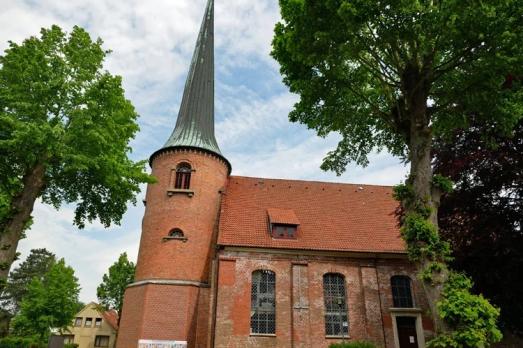
Heilige Willibrordus

Demen, NL

Built by Pierre Cuypers (1827 - 1921) while retaining the 15th century tower of the former church, in 1890 this architect clad it, raised it and provided it with a staircase tower. The church consists of a nave of five bays, covered by a pointed wooden barrel vault and a choir with 5/8 closure and brick cross-ribbed vaults. Tower 15th century.

Heilige Willibrordus

Mill, NL

Monumental neo-Gothic church with tower. Replaced a dilapidated medieval church. The richly decorated interior was redecorated around 1960 and drastically simplified. This church is listed as a National Monument of the Netherlands.

Heilige Willibrordus

Casteren, NL

Three-aisled neo-Romanesque cruciform basilica with west tower. Typical of C. Franssen's oeuvre, in this case built under slight influence of late Romanesque architecture in the German Rhineland. The interior has plastered rib vaults. Some stained glass windows in the left wall of the nave are (presumably) from the previous church. The church was expanded in 1935 with two side aisles by J. Franssen.

Heilige Willibrordus

Liessel, NL

The Roman Catholic Church, built on the western side of the Hoofdstraat in the centre of Liessel and dedicated to St. Willibrordus, was built between 1899 and 1901 and was designed by C. Franssen. It is a non-oriented Neo-Gothic cross basilica with an eastern tower. The church was consecrated on 30 April 1901. In 1944 the church was severely damaged by war. Shortly after the war, as a result of this damage, part of the masonry, vaults and roof, as well as the spire, were renewed under the architecture of SJP van der Sluijs (Eindhoven). The repairs were generally carried out in a neo-Gothic style.

Heilige Willibrordus

Oegstgeest, NL

Iconic neo-Gothic church with a tower placed sideways, next to the choir. Around 1900, the church from 1772 became too small and it was decided to build a new church and parsonage. The architectural firm Cuypers/Stuyt was commissioned to do this. Father Cuypers was the builder of the Central Station and the Rijksmuseum in Amsterdam. Son Cuypers built the new St. Bavo Cathedral in Haarlem. The Holy Willibrord Church was therefore not built by just anyone. The church is a fine example of neo-Gothic church architecture from that period.

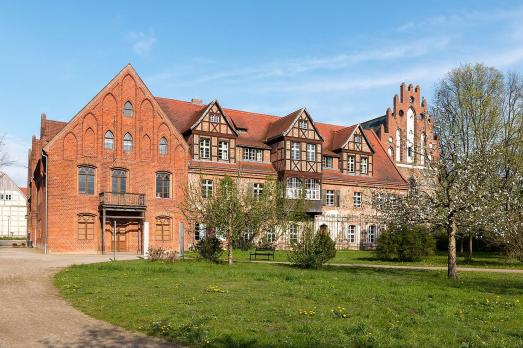
Heiligengrabe Abbey

Heiligengrabe Abbey

Heiligengrabe, DE

Heiligengrabe Abbey is a former Cistercian abbey which was founded at the end of the 13th century. The first buildings to be constructed were the abbey church and the eastern wing of the cloister; the latter contains the chapter house on the ground floor and the sisters' dormitory on the ground floor. The other two wings are from slightly later periods. In 1510, the cloister was vaulted; the chapter house was moved to the west wing. When the Reformation was adopted, the monastery went through a period of conflict; finally, in 1549, the entire community was transferred to the Lutheran church.

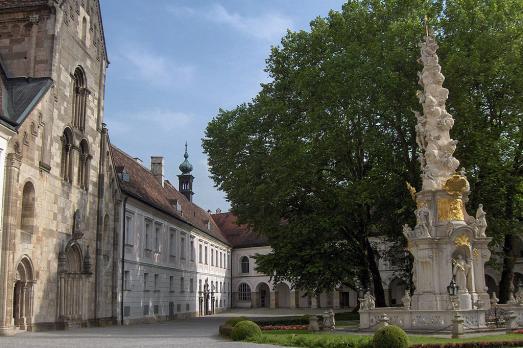
Heiligenkreuz Abbey

Heiligenkreuz Abbey

Heiligenkreuz im Wienerwald, AT

Heiligenkreuz Abbey (Stift Heiligenkreuz) is a Cistercian monastery in the village of Heiligenkreuz in the southern part of the Vienna Woods. Founded in 1133, it is the oldest continuously occupied Cistercian monastery in the world. With more than 270,000 volumes, the monastery library is the largest private library in Austria. At the heart of the library is the medieval collection of 1250 manuscripts and 860 incunabula. Today, the monastery library is an institution of knowledge and a partner of various regional and even international research centres.

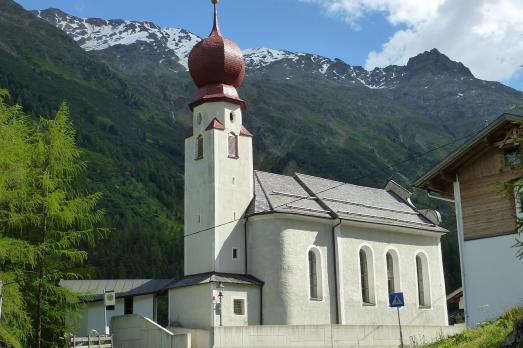
Heiligkreuz Church

Heiligkreuz Church

Soelden, AT

The Heiligkreuz church was built in 1804 and restored in 1976. The tower stands at the head of the choir and has flat arched windows and an octagonal transition to the onion dome. The gabled façade has a scrolled gable above a continuous main cornice. The three-bay nave is followed by a slightly indented basket-arched choir. Ludwig Sturm painted the vault in 1936.

Be inspired

Stupkalnis.lt

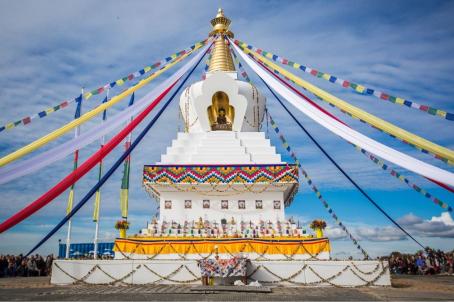
10 Buddhist stupas to discover in Europe

Stupas are symbols of enlightenment and peace that commemorate different stages of Buddha's life. Since the mid-20th century, thousands of stupas have begun to populate Europe. We have compiled some of the most impressive ones in this list.