Doopsgezinde Kerk
Balk, NL
Three-sided closed hall church with round arch windows, built in 1862. Single-manual organ by Bakker & Timmenga (Leeuwarden) from 1908.

Here you can search for a building to visit. You can use the map find destinations, or you can use the filters to search for a building based upon what different criteria.
Balk, NL
Three-sided closed hall church with round arch windows, built in 1862. Single-manual organ by Bakker & Timmenga (Leeuwarden) from 1908.
Roden, NL
Large church with roof turret. Extension in 1983.
Borne, NL
Small hall church without tower. Replaced adjacent church house. Destroyed by fire in 1983, subsequently restored.
Sneek, NL
Mennonite Church. Neoclassical hall church, built in 1842 to plans by PJ Rollema. Front facade with an entrance with round arch windows, four Doric pilasters, a Doric frieze and a triangular gable field. The windows in the side facades have, remarkably enough, the pointed arch shape. The interior has a semicircular closure and shows a wall treatment formed by Corinthian pilasters. These carry a cornice that forms the transition to the flat ceiling. Pulpit in neo-Gothic shapes. Organ with main work and upper work, made in 1847 by JC Scheuer. Scheuer used the wind chest and pipework of the old organ, which was made in 1786 by A. van Gruisen.
Stavoren, NL
Hall church without tower.
Bussum, NL
Church building without a tower.
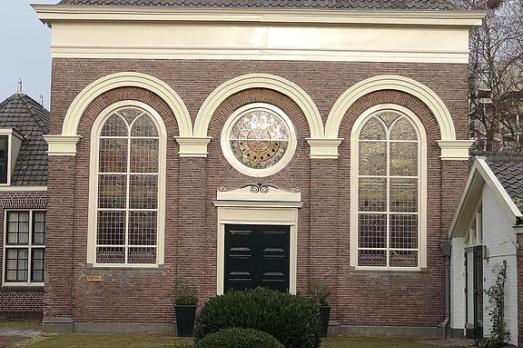
Alkmaar, NL
The Doopsgezinde Kerk (Mennonite Church) was initially built as a clandestine church in 1617. In 1856, the buildings on the Koningsweg that hid the church from view were demolished and the church came into view. In 1854, the church received its current facade with round-arched windows. This facade was designed by CW Bruinvis, city archivist of Alkmaar. It is listed as a National Monument of the Netherlands.
Schagen, NL
Built as a Reformed Church. As such out of use around 1974, when a new Reformed Church was put into use elsewhere in Schagen.
De Westereen, NL
In Kollumerzwaag a Mennonite community was founded between 1600 and 1620. At the beginning of the 19th century this community declined and was threatened with dissolution. Around 1816 the Vermaning was demolished and rebuilt in 1816 in Zwaagwesteinde. There was not a single church there at the time. After the death of Rev. Bosma the community ceased to exist in 1844. The Vermaning was sold and converted into a smithy. Later it became two workers' houses and in 1934 family doctor Noordhof bought the old Vermaning, had it demolished and built his doctor's house on the foundation.
Noordhorn, NL
Mennonite church from 1838. The side walls are divided by lesenes, between which there is a semicircular closed window. It also has a framed entrance. This church is listed as a National Monument of the Netherlands.
new
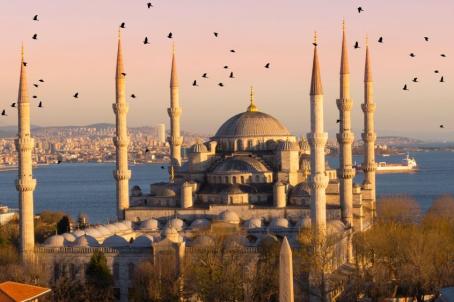
For a long time, Europe was ruled by powerful monarchies. Monarchy and religion have been connected since time immemorial. Here are 7 sites across Europe where royalty historically bent the knee to a higher power and received their crown.
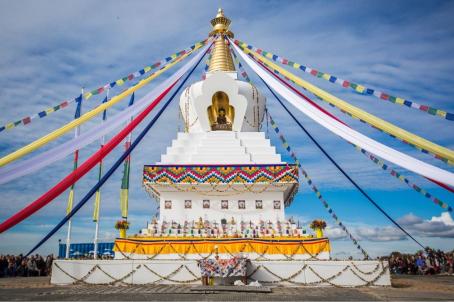
Stupas are symbols of enlightenment and peace that commemorate different stages of Buddha's life. Since the mid-20th century, thousands of stupas have begun to populate Europe. We have compiled some of the most impressive ones in this list.
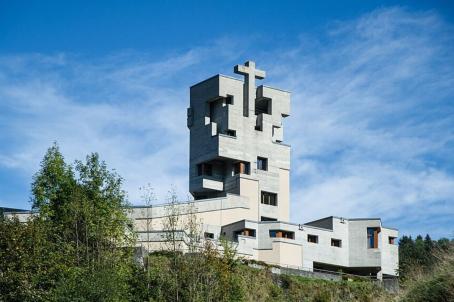
Walter Maria Förderer (1928–2006) was a Swiss architect and sculptor renowned for his neo-expressionist church designs in the 1960s. In this list we have compiled 6 of his church designs that seamlessly integrate religious and secular elements.

How is Religiana helping to conserve and promote Religious Heritage in Europe and why should you get involved?
Find out about Religiana
Are you a tourism organisation or religious heritage sites manager? Discover the advantages of becoming a partner.
See current partners
We can keep you up to date with the latest news from Religiana and religious heritage conservation across Europe.
Sign up to the FRH newsletter