Doopsgezinde Kerk
Baarn, NL
Simple hall church without tower. Inaugurated on 19 February 1928.

Here you can search for a building to visit. You can use the map find destinations, or you can use the filters to search for a building based upon what different criteria.
Baarn, NL
Simple hall church without tower. Inaugurated on 19 February 1928.
Beverwijk, NL
Hall church in neo-Romanesque forms, with a roof turret on the front facade. Since 2010 (after the Mennonite Meeting House in IJmuiden was decommissioned), this has been the Mennonite Church for "De IJmond". In 2012, extensive attention was paid to the centenary of this church building. Among other things, with an exhibition about the Danish artist Thorvaldsen.
Nieuwe Niedorp, NL
Charming hall church from 1878 in neo.
Heerenveen, NL
Before 1600 there were Mennonites in Heerenveen. The first mention of the community was in 1674. The church of the Flemish, orthodox community was in the Kakelsteeg in Heerenveen, this alley is now called Vermaningsteeg. The other community was more liberal and was called the Waterlandse community. This church was on the Munniksteeg, west of the Dracht. Both churches were clandestine churches. In 1741 these communities merged and built a new church building in 1762, which was put into use in 1763. The organ, supplied by the Van Dam company from Leeuwarden, was used for the first time on 5 July 1840. The 'Van Dam' organ was replaced in 1900 by the current organ, which was supplied by the Bakker en Timmenga company. (source: ANWB)
Berlikum, NL
Mennonite Church. Hall church under hipped roof from 1841. Front facade finished by cornice with classical frieze. Entrance framed by pediment. Organ by the firm L. van Dam & Zonen from 1916.
Joure, NL
In the 16th and 17th centuries, Mennonite believers were tolerated by the local government. The government allowed Mennonite communities to build their own church, but these were not allowed to be on the public road. In practice, this usually meant that a house was built for the church. In Joure there is no longer a house in front of the church hall, but the small square in front of the church is a reminder of the situation in the 17th century. The church building on Midstraat dates from 1824.”
Feanwâlden, NL
In 1895 Bakker & Timmenga built a new organ for the Mennonite Church in Veenwouden. The same firm restored the work in 1981. In June 1981 the organ could be put back into use.
Edam, NL
In the 17th and 18th centuries, the Mennonites were not allowed to build their churches on public roads. They often held their church services in an ordinary house or a clandestine church. That is why this inconspicuous building is half hidden behind the sexton's house. It was the meeting place of the Frisian community that united with the Waterland movement in Edam in 1742. The Vermaning was built in 1702 after a previous church building on the same site was seriously damaged by fire in 1699. The interior has an oak interior from the 18th century.
Holwerd, NL
The foundation stone for this Mennonite meeting house was laid on 15 June 1850. The official opening took place on New Year's Day 1851. The building was restored between 1994 and 2000. The interior was restored in 2008. The meeting house that was used before 1850 is located on Koningsstraat . It is now a residential building, but the windows on the side clearly show that it used to be a church. (60-08)
Hallum, NL
Straight-ended hall church with extended entrance portal, built in 1912. Round-arched windows with coloured stained glass in rectangular patterns, furniture from the construction period, made of unpainted pine, still present in its entirety. Single-manual organ by Bakker & Timmenga (Leeuwarden) from 1906.
new
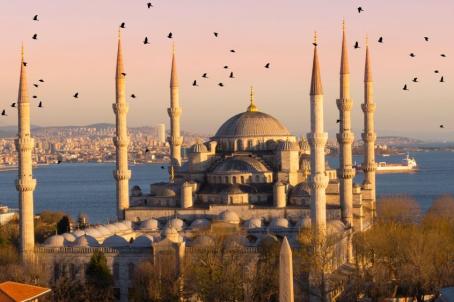
For a long time, Europe was ruled by powerful monarchies. Monarchy and religion have been connected since time immemorial. Here are 7 sites across Europe where royalty historically bent the knee to a higher power and received their crown.
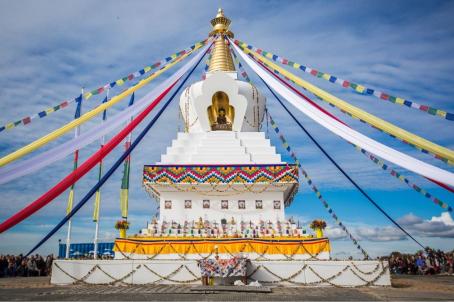
Stupas are symbols of enlightenment and peace that commemorate different stages of Buddha's life. Since the mid-20th century, thousands of stupas have begun to populate Europe. We have compiled some of the most impressive ones in this list.
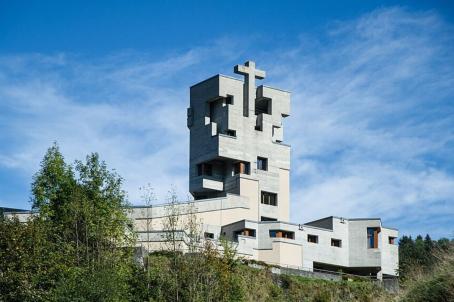
Walter Maria Förderer (1928–2006) was a Swiss architect and sculptor renowned for his neo-expressionist church designs in the 1960s. In this list we have compiled 6 of his church designs that seamlessly integrate religious and secular elements.

How is Religiana helping to conserve and promote Religious Heritage in Europe and why should you get involved?
Find out about Religiana
Are you a tourism organisation or religious heritage sites manager? Discover the advantages of becoming a partner.
See current partners
We can keep you up to date with the latest news from Religiana and religious heritage conservation across Europe.
Sign up to the FRH newsletter