Dorpskerk
Oud-Beijerland, NL
This church is listed as a National Monument of the Netherlands.

Here you can search for a building to visit. You can use the map find destinations, or you can use the filters to search for a building based upon what different criteria.
Oud-Beijerland, NL
This church is listed as a National Monument of the Netherlands.
Ouderkerk aan den IJssel, NL
Single-nave late Gothic cruciform church with west tower and five-sided closed choir. The church is located inside the dike. Due to the dike raising, it has come to lie lower than the surroundings. In the second half of the 12th century, a tuff church was built here, consisting of a nave and a narrower choir. In the middle of the 14th century, the choir was replaced by a wider, five-sided closed choir with buttresses. After the building was destroyed between 1425 and 1428 during the Hoekse and Kabeljauwse wars, the choir was the first to be rebuilt. The 14th-century foundations were used for this. The nave was then rebuilt. The tuff stone that was still present was reused as wall cladding. At about the same time, construction of the current tower began. Around 1510, the church was enlarged to a cruciform church. The transept arms were built against the existing nave. At the end of the 18th century, the church and tower were extensively restored.
IJsselmuiden, NL
Village church.
Numansdorp, NL
Beautiful village church with charming, iconic tower. Characteristic Protestant interior, almost completely filled with pews. The "attention wall" with pulpit and baptismal font is located in the right (= southern) side of the interior. In that wall are also two colorful modern stained glass windows, on either side of the pulpit. This church is listed as a Municipal Monument of the Netherlands.
Oostvoorne, NL
Plastered hall church, remnant of the former parish church (XV) that burned down in 1612, after which around 1627 only the nave was restored. Inventory: pulpit with wooden surround and two gentlemen's pews in Lod. XV style. Two psalm boards in Lod. XVI FRAME. Series of eight stained glass windows, around 1745, restored by Schouten in 1908 and for the second time in 1963. Originally a single-manual organ, made in 1773 by JHW Bätz and expanded in 1807 by F. Friedrichs, for the Mennonite Church in Haarlem. In 1934 transferred to the Bakenesserkerk. There it was combined with the organ from 1874 by JA Strobel to form a pneumatic organ with two manuals and free pedal. In 1996 the furniture of Bätz, including a significant number of registers of Bätz and Friedrichs, was purchased by the reformed community of Oostvoorne. Restoration and reconstruction in 2000 by AH de Graaf from Leusden. This church is listed as a National Monument of the Netherlands.
Nieuwer ter Aa, NL
Extremely important historical village church with tower. Particularly important for the English organ, and the series of stained glass windows. This church is listed as a National Monument of the Netherlands.
Nunspeet, NL
Extension in 2001, rear extension.
De Bilt, NL
Dutch Reformed Church, 1657. Simple hall building. Tower with wooden crowning, 1839. Organ with main work and upper work, made in 1845 by the brothers HB and GW Lohman. Restored in 1980 by Flentrop Orgelbouw and extended with a free Pedal. Bell frame with clock by C. and J. Seest, 1783, diam. 70.5 cm. A wooden south pointer is placed on the south wall of the church.
Nieuwegein, NL
Dutch Reformed Church. Built as village church of Vreeswijk. Oldest church building in present-day Nieuwegein. This church is listed as a National Monument of the Netherlands.
Beetsterzwaag, NL
In the church under the organ gallery hangs the certificate of the union of the Reformed Church and the Reformed Church, September 17, 1997, when the Samen op Weg community Via Pacis - the way of peace - in Beetsterzwaag was called Olterterp. Now the Protestant community Via Pacis. This church is still regularly used for evening services and special services. The community holds the morning services in De Ontmoetingskerk (the former Reformed Church).
new
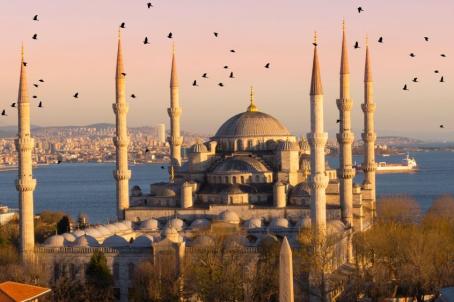
For a long time, Europe was ruled by powerful monarchies. Monarchy and religion have been connected since time immemorial. Here are 7 sites across Europe where royalty historically bent the knee to a higher power and received their crown.
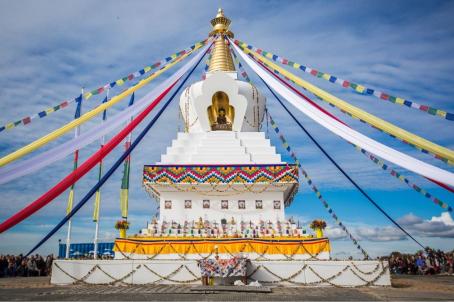
Stupas are symbols of enlightenment and peace that commemorate different stages of Buddha's life. Since the mid-20th century, thousands of stupas have begun to populate Europe. We have compiled some of the most impressive ones in this list.
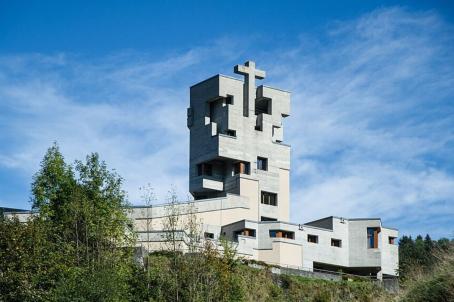
Walter Maria Förderer (1928–2006) was a Swiss architect and sculptor renowned for his neo-expressionist church designs in the 1960s. In this list we have compiled 6 of his church designs that seamlessly integrate religious and secular elements.

How is Religiana helping to conserve and promote Religious Heritage in Europe and why should you get involved?
Find out about Religiana
Are you a tourism organisation or religious heritage sites manager? Discover the advantages of becoming a partner.
See current partners
We can keep you up to date with the latest news from Religiana and religious heritage conservation across Europe.
Sign up to the FRH newsletter