Heilige Kruisvinding
Rotterdam, NL
In terms of urban development, this church forms a beautiful ensemble with the Reformed Breeplein Church, which is situated diagonally opposite it and also has a large tower.

Here you can search for a building to visit. You can use the map find destinations, or you can use the filters to search for a building based upon what different criteria.
Rotterdam, NL
In terms of urban development, this church forms a beautiful ensemble with the Reformed Breeplein Church, which is situated diagonally opposite it and also has a large tower.
s-Hertogenbosch (Engelen), NL
Very simple hall church from 1829 in Waterstaat style with approx. 100 seats. Single manual organ from 1840 by AA Kuerten (Huissen). Demolished in 1933, after the current St. Lambertus church in Engelen was put into use.
Haarsteeg, NL
The foundation stone was laid on 19 April 1870 and was taken into use by pastor A. Ceelen on 9 January 1873. The church was built in a simple neo-Gothic style. The architect or master builder was HC Dobbe from 's-Hertogenbosch. The basis is a three-aisled cruciform church with transept (transepts and the part in between) and a polygonal closed choir. At the front is a low porch with entrance door. The sacristy has been added on the west side and the transepts have a confessional extension on both sides. All roofs are designed as saddle roofs, only the side aisles have lean-to roofs and the current coffee room has a tent roof. All roofs are covered with slates. On the crossing, the centre of the transept, a square roof turret has been placed with a tower clock, a bell and a wrought iron cross on the spire. There are four small dormer windows in the main roof.
s-Gravenzande, NL
The Holy Lambertus Church is situated on a site surrounded by ditches, accessible via a wooden bridge, with a balustrade and passageway built up in tree branches. The site is planted with various trees. The church, built in 1872-1873, is constructed in a sober Neo-Gothic style. The church was built for the residents of the tenant houses founded by Jonkheer AJA van Rijckevorsel and the service houses belonging to his country house. The houses, which have since been demolished, were leased by the lord for the development of the sanded dune lands (the Staelduin).
Haaren, NL
Large neo-Gothic church with high tower. Main work of architect Van Aalst.
Oirsbeek, NL
Two-aisled church in round arch style, built in 1954 by Ir. FPJ Peutz. Tower from 1514 in brick with layers of marlstone. The spire is 18th century. The church walls connected to the tower are also made of brick with layers of marlstone. Internal barrel vaults and columns with a modern interpretation of the Ionic capital. Tower 1514 and 18th century, demolition of ship 1954 and rebuilding. The Roman Catholic Sint Lambertus Church has been completely provided with stained glass windows since 19 November 2006. They were designed and made by the artist Sjef Hutschemakers. This church is listed as a National Monument of the Netherlands.
Maren-Kessel, NL
The Saint Lambertus Church is a Roman Catholic church built in 1951.
Drunen, NL
The church building was designed by the Nijmegen architect Hendrik van de Leur (1898-1994). It was built by the company de Bonth-van Hulten from Nieuwkuijk. The consecration took place on 16 August 1954 by mgr. Mutsaerts, bishop of Den Bosch. The original design included two towers on the corners of the front. This was not implemented in the final version; the south work has a diagonally placed central tower as a crowning feature. In addition to the chancel, an angelus bell in a small tower. The exterior of the nave is designed as a pseudo-basilica; however, the central nave has no windows and is only a few decimetres higher than the roof of the side aisles. Internally, the nave is vaulted with a stone barrel vault, supported by brick arches. The arches rest on brick pillars with natural stone accents. Low transepts, accentuated in the interior by the use of concrete pillars.
Someren, NL
This modern church, which is not included on the list itself, is the successor to a church built in 1829 on Speelheuvelstraat, which in turn replaced a barn church that was opened in 1672 and renovated in 1760. The medieval church, largely dating from 1436, came into the hands of the Reformed Church in 1648, and was demolished in 1870. The following has been taken over in the modern church: a richly carved main altar, ca. 1750, with life-size statues of Franciscus, Jozef, Augustine and Elias, and two altarpieces, 1753 by OE Pirotte, depicting John the Baptist, Anna and Maria. Furthermore, an oak communion bench from 1750, two stone holy water fonts (18th century) in the shape of a vase. Organ with main work and positif, made in 1857 by FC Smits. Restored in 1963 and expanded with a free pedal.
Gemonde, NL
Roman Catholic CHURCH of Saint Lambertus, built in 1923 and 1924 to a design by the architect Wolter te Riele (1867 - 1937) in neo-Gothic forms. Te Riele had also built the nearby rectory on the Sint-Lambertusweg in 1913. The first drawings for the church date back to the period 1912-1914. It is not entirely clear why the construction of the church ultimately took another 10 years, but it is likely that the uncertain political and financial situation after the outbreak of the First World War played a role in this. Construction began on 17 September 1923. The church was put out to tender for f.62,500. The parishioners themselves did the groundwork from 21 October to 10 November. The first stone was laid on 21 January 1924 and the church was put into use on 13 December of that year. The church was only consecrated on 20 June 1927 by Mgr. AF Diepen, bishop of 's-Hertogenbosch. The small three-aisled village church with a central entrance tower is located on the south side of the Twijnmeer and belonged to the municipality of Boxtel until 1997.
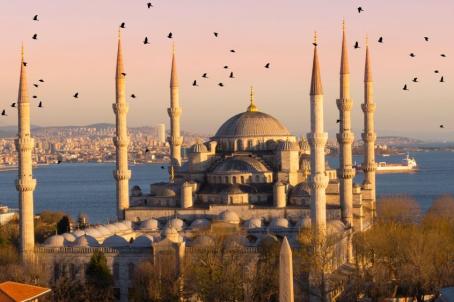
new
For a long time, Europe was ruled by powerful monarchies. Monarchy and religion have been connected since time immemorial. Here are 7 sites across Europe where royalty historically bent the knee to a higher power and received their crown.
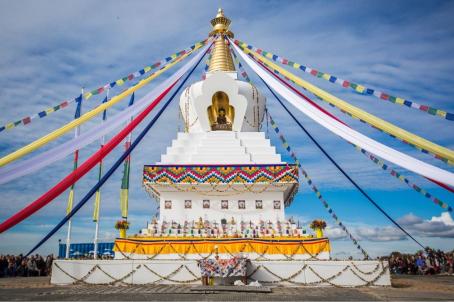
Stupas are symbols of enlightenment and peace that commemorate different stages of Buddha's life. Since the mid-20th century, thousands of stupas have begun to populate Europe. We have compiled some of the most impressive ones in this list.
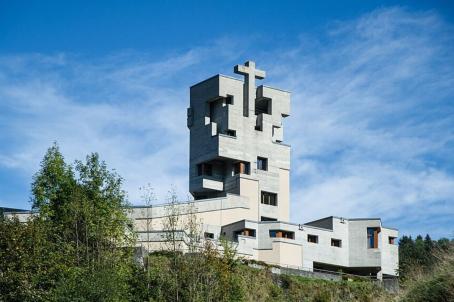
Walter Maria Förderer (1928–2006) was a Swiss architect and sculptor renowned for his neo-expressionist church designs in the 1960s. In this list we have compiled 6 of his church designs that seamlessly integrate religious and secular elements.

How is Religiana helping to conserve and promote Religious Heritage in Europe and why should you get involved?
Find out about Religiana
Are you a tourism organisation or religious heritage sites manager? Discover the advantages of becoming a partner.
See current partners
We can keep you up to date with the latest news from Religiana and religious heritage conservation across Europe.
Sign up to the FRH newsletter