Heilige Lambertus
Nistelrode, NL
This church is listed as a National Monument of the Netherlands.

Here you can search for a building to visit. You can use the map find destinations, or you can use the filters to search for a building based upon what different criteria.
Nistelrode, NL
This church is listed as a National Monument of the Netherlands.
Helmond, NL
Central Roman Catholic church and parish in the centre of Helmond. Very important early neo-Gothic church building with tower. Richly detailed interior with, among other things, a historical organ. This church is comparable to the Roman Catholic Church of Our Lady of the Immaculate Conception on the Keizersgracht in Amsterdam, an earlier design by Th. Molkenboer, especially because of the exuberant polychromy.
Nederweert, NL
Historic church with high tower (76 m). Replaced older church. According to a memorial stone, the tower dates from 1467. The church was damaged by War in 1944. This church is listed as a National Monument of the Netherlands.
Nederwetten, NL
Beautiful neo-Gothic village church with neo-Romanesque elements, and with tower. There is a cemetery behind the church. This church is listed as a National Monument of the Netherlands.
Someren, NL
This modern church, which is not included on the list itself, is the successor to a church built in 1829 on Speelheuvelstraat, which in turn replaced a barn church that was opened in 1672 and renovated in 1760. The medieval church, largely dating from 1436, came into the hands of the Reformed Church in 1648, and was demolished in 1870. The following has been taken over in the modern church: a richly carved main altar, ca. 1750, with life-size statues of Franciscus, Jozef, Augustine and Elias, and two altarpieces, 1753 by OE Pirotte, depicting John the Baptist, Anna and Maria. Furthermore, an oak communion bench from 1750, two stone holy water fonts (18th century) in the shape of a vase. Organ with main work and positif, made in 1857 by FC Smits. Restored in 1963 and expanded with a free pedal.
Linden, NL
The original chapel on this site was founded by Jan I van Cuijk. According to tradition, he did this as penance for his involvement in the murder of the Dutch count Floris V in 1296. The current building was built between 1450 and 1475. At that time, the chapel was still subordinate to the parish church of St. Martin in Cuijk. Around 1550, the church had its own churchwardens and a sexton. Masses were also celebrated there. In short, there was already development towards an independent parish church. And in 1564, the chapel was given that status, but that was over within a century. Because after the Peace of Munster in 1648, the Lambertus Church was closed: in the young Republic of the United Netherlands, the public practice of the Roman Catholic faith was no longer permitted. The church in Linden was closed (due to a lack of Protestants who could use the building). The Catholics from Linden went to church in Kleef or Mook. For a short while, from 1672 to 1674, the people of Linden got their church back from the French. But after their departure, the church lost its function as a place of worship again and was used as a salt storage facility. At the end of the seventeenth century, things became a bit more relaxed: in many places, Catholics built a so-called barn church: an inconspicuous building where people could go to church. In Linden, there was no barn church, but a house church (or church house). In 1698, pastor Verstraten built a church house with a home. A very beautiful kind of clandestine church, which one of his successors would later gratefully use for his seminary.
Haarsteeg, NL
The foundation stone was laid on 19 April 1870 and was taken into use by pastor A. Ceelen on 9 January 1873. The church was built in a simple neo-Gothic style. The architect or master builder was HC Dobbe from 's-Hertogenbosch. The basis is a three-aisled cruciform church with transept (transepts and the part in between) and a polygonal closed choir. At the front is a low porch with entrance door. The sacristy has been added on the west side and the transepts have a confessional extension on both sides. All roofs are designed as saddle roofs, only the side aisles have lean-to roofs and the current coffee room has a tent roof. All roofs are covered with slates. On the crossing, the centre of the transept, a square roof turret has been placed with a tower clock, a bell and a wrought iron cross on the spire. There are four small dormer windows in the main roof.
Reuver, NL
The Saint Lambertus Church is a Roman Catholic church built between 1878-1880. This church is listed as a National Monument of the Netherlands.
Huisseling, NL
Neo-Gothic church with tower.
Kerkrade, NL
Roman Catholic church, built in 1843, retaining the 18th-century tower, against which the current choir was built. Three-aisled neoclassical pseudo-basilica. Enlarged westwards in 1956. Internally plastered barrel vaults and Tuscan columns. Very rich main altar in Louis XV style from the second half of the 18th century and two 17th-century side altars. Organ with main work, positive and free pedal, made in 1848 by the Müller brothers from Reifferscheidt (Germany). Restored to its original state in 1987. Bell frame with bell by anonymous founder, 1763, diameter 49 cm.
new
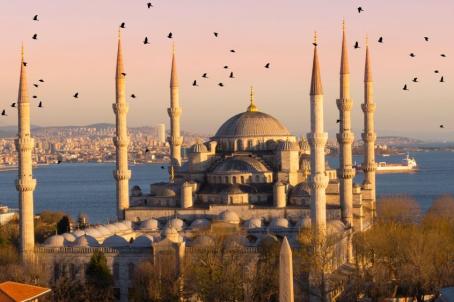
For a long time, Europe was ruled by powerful monarchies. Monarchy and religion have been connected since time immemorial. Here are 7 sites across Europe where royalty historically bent the knee to a higher power and received their crown.
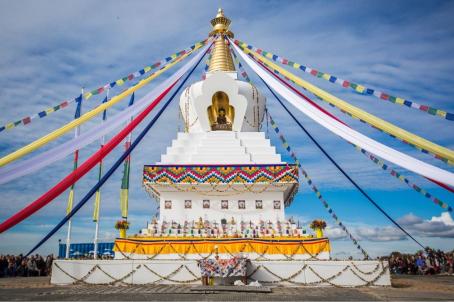
Stupas are symbols of enlightenment and peace that commemorate different stages of Buddha's life. Since the mid-20th century, thousands of stupas have begun to populate Europe. We have compiled some of the most impressive ones in this list.
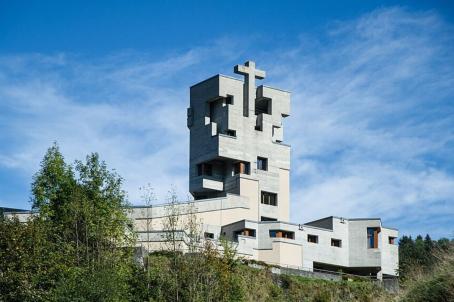
Walter Maria Förderer (1928–2006) was a Swiss architect and sculptor renowned for his neo-expressionist church designs in the 1960s. In this list we have compiled 6 of his church designs that seamlessly integrate religious and secular elements.

How is Religiana helping to conserve and promote Religious Heritage in Europe and why should you get involved?
Find out about Religiana
Are you a tourism organisation or religious heritage sites manager? Discover the advantages of becoming a partner.
See current partners
We can keep you up to date with the latest news from Religiana and religious heritage conservation across Europe.
Sign up to the FRH newsletter