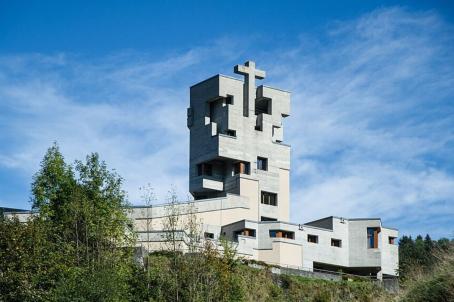
Explore Religious Heritage Across Europe

Here you can search for a building to visit. You can use the map find destinations, or you can use the filters to search for a building based upon what different criteria.

Refine search

Heilige Victor

Neerloon, NL

The church is designed as a single-nave church with a saddle roof. The 14th-century tower has tufa in the lower layers and was raised around 1820. During this raising, the existing sound holes were bricked up and new sound holes were made with round arches. The clock from 1929 was made by the clock manufacturer Eijsbouts from Asten, who also started making clocks after the Second World War. The tower has a tent roof. The church has an organ, made in 1845 by Franciscus Cornelius Smits. In addition, there is a lowered altar from around 1700. The church was designated a national monument in 1965. This church is listed as a National Monument of the Netherlands.
Heilige Victor

Noordwijkerhout, NL

Early neo-Gothic church with a newer tower, in the south of Noordwijkerhout. The Roman Catholic St. Victor Church was built in 1852 to a design by Th. Molkenboer. Tower 1938, B. Stevens. This tower, with entrance gate, strongly resembles tower designs by architect Kropholler. Renovations took place in 1926, in 1938 (tower) and in 1945. The interior was renovated around 1960. This church is listed as a Municipal Monument of the Netherlands.

Heilige Victor

Benschop, NL

Neo-Gothic church with tower. Replaced an older church from 1810. To the left of the oriented church is a monumental parsonage.

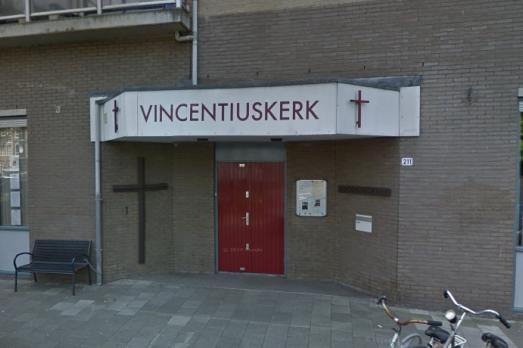
Heilige Vincentius

Heilige Vincentius

Amsterdam, NL

The church was built on the south bank of the Jacob van Lennepkanaal . It was consecrated on 7 October 1901.The large three-aisled basilica had a high tower to the right of the front facade. This tower had an octagonal superstructure with corner pinnacles and a spire. This 67-metre-high tower in particular (the highest tower in Roman Catholic Amsterdam) was a striking appearance, because the surrounding houses were no higher than four floors.

Heilige Vincentius

Deursen, NL

Roman Catholic Church of St. Vincentius, single-nave neo-Gothic church with narrower three-sided closed choir and west tower with four-sided spire. (Church 1874 by C. van Dijk, spire 1919 by F. de Beer). In the church tower two bells, one cast in 1589 and one in 1662 by Henricus Wegewaert in Enkhuizen. Between main and side entrance statue of Mary with inscription "mother". Churchyard with prayer house and plaster, polychrome crucifix. Mortuary under saddle roof. Five priests' graves from 1862, 1901, 1915, 1918. (Deursen), spire 1919.

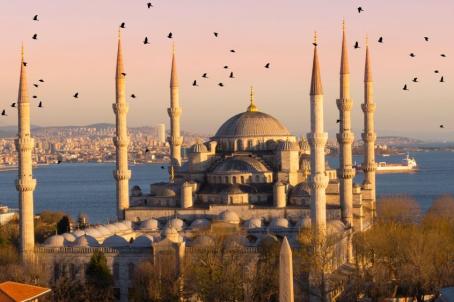
Heilige Vitus

Naarden, NL

Large and very important historical city church with a tower of 71 metres. This church is listed as a National Monument of the Netherlands.
Heilige Vitus

Hilversum, NL

Important, unique monumental neo-baroque church with dome. Replaced a nearby clandestine church. Restored after a fire in 1958. The interior has its current appearance since then.

Heilige Vitus

Hilversum, NL

Neo-Gothic church with cathedral allure, and with a high tower. The Sint-Vitus was consecrated in 1892. This neo-Gothic cruciform basilica was designed by PJH Cuypers. The tower is 98 metres high and is one of the 4 highest church towers in the Netherlands *. The church stands on the site of the former clandestine church from 1786. Important elements in the interior are the wooden vault, the stained glass windows and the colourful brick patterns in the masonry. The Van den Brink organ from 1859 and the painted Stations of the Cross are also valuable.

Heilige Vitus

Dedemsvaart, NL

Replaced a church from 1819. Three-aisled neo-Gothic hall church with a sober square west tower, crowned by a constricted spire. Characteristic early work from the oeuvre of WVA Tepe (1840-1920). The side aisle bays are provided with hipped roofs, which betrays the influence of the late Lower Rhine and Westphalian Gothic. In 1929 the church was extended with a new transept and choir, designed by HCM van Beers.

Be inspired

Stupkalnis.lt

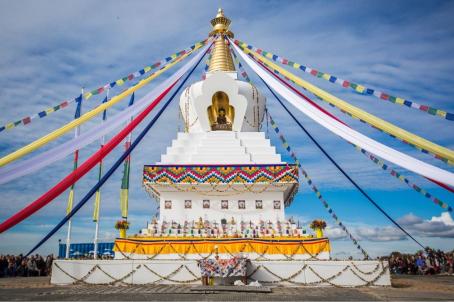
10 Buddhist stupas to discover in Europe

Stupas are symbols of enlightenment and peace that commemorate different stages of Buddha's life. Since the mid-20th century, thousands of stupas have begun to populate Europe. We have compiled some of the most impressive ones in this list.