Heilige Willibrordus
Beilen, NL
Church without tower. Built as Reformed Church . As such out of use in 1957. After renovation and extension with transept and choir in 1958 in use as Roman Catholic St. Willibrordus Church.

Here you can search for a building to visit. You can use the map find destinations, or you can use the filters to search for a building based upon what different criteria.
Beilen, NL
Church without tower. Built as Reformed Church . As such out of use in 1957. After renovation and extension with transept and choir in 1958 in use as Roman Catholic St. Willibrordus Church.
Boskamp, NL
The current church dates from 1860 and is a typical work in the oeuvre of HJ Wennekers, built under the influence of the so-called stucco Gothic style.
Oegstgeest, NL
Iconic neo-Gothic church with a tower placed sideways, next to the choir. Around 1900, the church from 1772 became too small and it was decided to build a new church and parsonage. The architectural firm Cuypers/Stuyt was commissioned to do this. Father Cuypers was the builder of the Central Station and the Rijksmuseum in Amsterdam. Son Cuypers built the new St. Bavo Cathedral in Haarlem. The Holy Willibrord Church was therefore not built by just anyone. The church is a fine example of neo-Gothic church architecture from that period.
Sappemeer, NL
St. Willibrordus, 1866-1873, Pierre Cuypers (1827 - 1921) . Three-aisled neo-Gothic hall church without transept. Pointed gables on the side aisle bays. Tower with two niches in each facade, frontals and four-sided spire. Articulated brick pillars with moulded capitals, cross-ribbed vaults. Polychrome interior with painted brick; furnishings and glazing from the construction period, from the Cuypers & Stolzenberg studio in Roermond. The windows in the nave partly come from the St. Martinus church in Foxham-Martenshoek, which closed in 1990. Early work from Cuypers' second period, influenced by the Westphalian hall church Gothic. Mechanical tower clock.
Liessel, NL
The Roman Catholic Church, built on the western side of the Hoofdstraat in the centre of Liessel and dedicated to St. Willibrordus, was built between 1899 and 1901 and was designed by C. Franssen. It is a non-oriented Neo-Gothic cross basilica with an eastern tower. The church was consecrated on 30 April 1901. In 1944 the church was severely damaged by war. Shortly after the war, as a result of this damage, part of the masonry, vaults and roof, as well as the spire, were renewed under the architecture of SJP van der Sluijs (Eindhoven). The repairs were generally carried out in a neo-Gothic style.
Oud-Vossemeer, NL
The brick hall church is built in neoclassical style and has a tower on top of a gable, arched windows and a front facade with blind niches . The main altar dates from the 18th century. In 1854 a second-hand church organ was delivered by organ builder CJ Rogier from Bergen op Zoom , the builder and the year of construction are unknown. In 1951 the organ was restored by the Verschueren company.
Milheeze, NL
This church is listed as a National Monument of the Netherlands.
Coevorden, NL
The Roman Catholic St. Willibrordus Church was built in 1913-1914 to a design by Wolter te Riele (1867 - 1937) from Deventer and executed by contractor A. de Boer from Coevorden. The building is constructed in a simple neo-Gothic style. The interior paintings applied in 1925 by Fa. Cuypers from Roermond have disappeared. The interior is not protected.
Berkel (NB), NL
A church was already mentioned in Berkel in 1214. It is known that the building was renovated in 1440. In 1983, large foundations of that church were exposed in, among other places, the garage of the rectory.
Eersel, NL
Historic village church with tower (tower circa 1480).
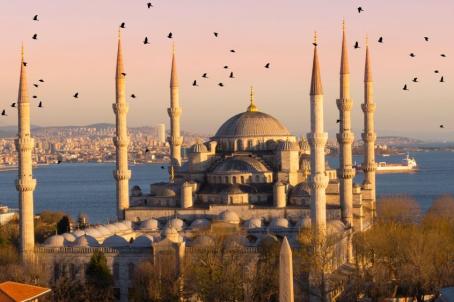
new
For a long time, Europe was ruled by powerful monarchies. Monarchy and religion have been connected since time immemorial. Here are 7 sites across Europe where royalty historically bent the knee to a higher power and received their crown.
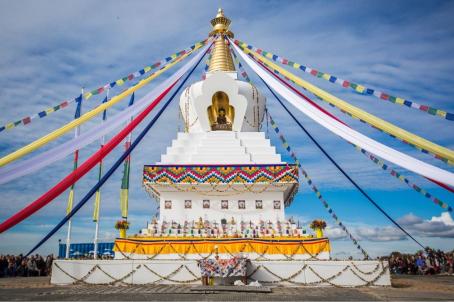
Stupas are symbols of enlightenment and peace that commemorate different stages of Buddha's life. Since the mid-20th century, thousands of stupas have begun to populate Europe. We have compiled some of the most impressive ones in this list.
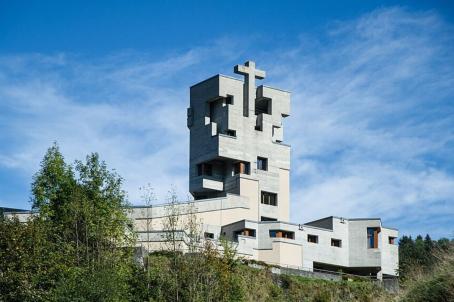
Walter Maria Förderer (1928–2006) was a Swiss architect and sculptor renowned for his neo-expressionist church designs in the 1960s. In this list we have compiled 6 of his church designs that seamlessly integrate religious and secular elements.

How is Religiana helping to conserve and promote Religious Heritage in Europe and why should you get involved?
Find out about Religiana
Are you a tourism organisation or religious heritage sites manager? Discover the advantages of becoming a partner.
See current partners
We can keep you up to date with the latest news from Religiana and religious heritage conservation across Europe.
Sign up to the FRH newsletter