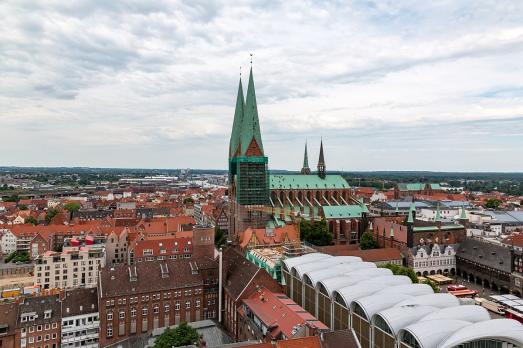
St. Peter's Church
Rīga, LV
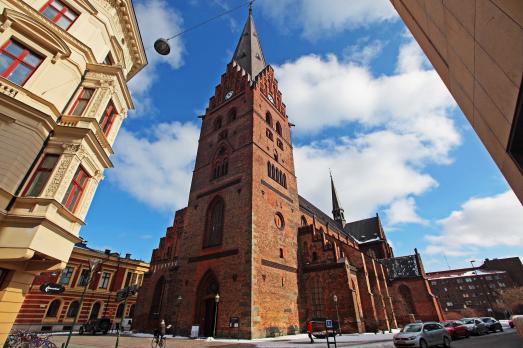
Riga St. Peter's Church is the tallest church in Riga, as well as a remarkable 13th century Gothic architectural monument of national importance. Former Roman Catholic church, it is made Lutheran in the sixteenth century.
Here you can search for a building to visit. You can use the map find destinations, or you can use the filters to search for a building based upon what different criteria.
Rīga, LV
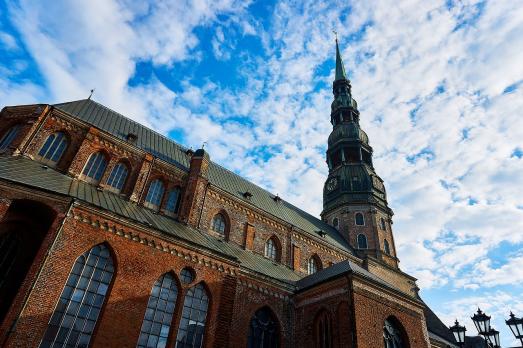
Riga St. Peter's Church is the tallest church in Riga, as well as a remarkable 13th century Gothic architectural monument of national importance. Former Roman Catholic church, it is made Lutheran in the sixteenth century.
Supetar, HR
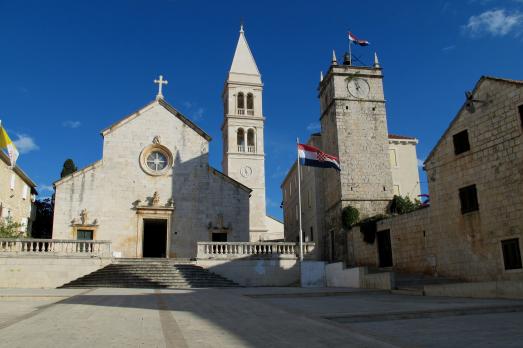
St. Peter's Church was probably in the 16th century, as mentioned in the construction in 1579. At the beginning of the 18th century, the church was destroyed by fire and rebuilt in 1733 in the Baroque style. The church was then enlarged until 1887.
Tartu, EE
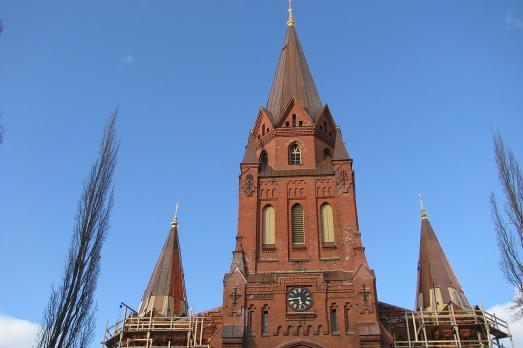
St. Peter's Church is a Lutheran church built in the neo-Gothic style between 1882 and 1884 according to the design of the architect Viktor Schröter. The church was finally completed in 1903 when the west tower and the spires of the towers were designed by the architect Georg Hellat. The interior of the church is also largely neo-Gothic, with an altar wall by Gustav Beermann (1900) and an altarpiece by Johann Köler (1897).
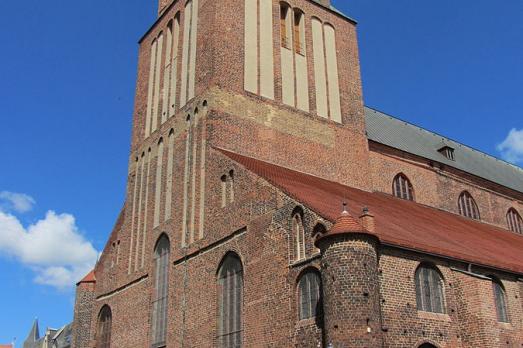
Wolgast, DE
Founded in the 13th century, St. Peter's Church burned down several times with the town in 1512, 1628 and 1713. It was during its reconstruction in the 18th century that the tower took on an octagonal shape. In 1920, a lightning strike caused a fire and the baroque dome of the tower collapsed. The lantern of the tower was replaced by a tent roof, which was intended as a temporary solution, but which still gives the church its typical appearance today.
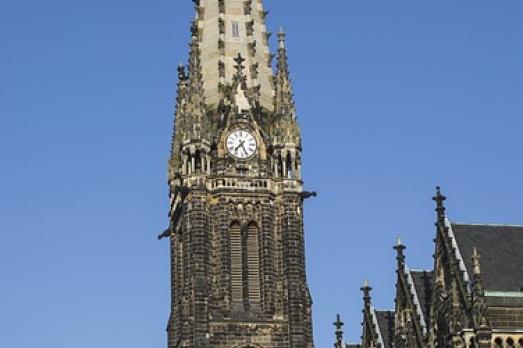
Leipzig, DE
The Peterskirche is an Evangelical Lutheran church built in 1882-1885 in neo-Gothic style. The nave is now used, in addition to worship services, for various concerts, theatrical performances, exhibitions and conferences.
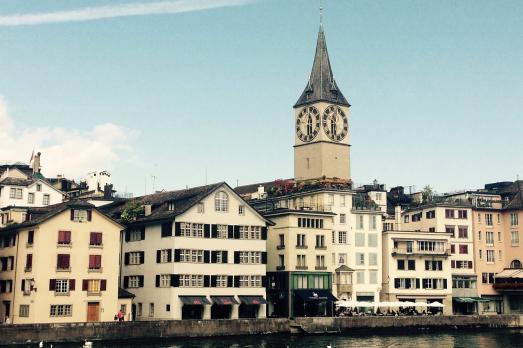
Zurich, CH
St. Peter in Zurich, built from the 13th century, is one of the three Old Town churches that characterize the silhouette of Zurich. It is located on a hill in the old town near the Lindenhof, where the Roman settlement of Turicum and the imperial Palatinate lay.
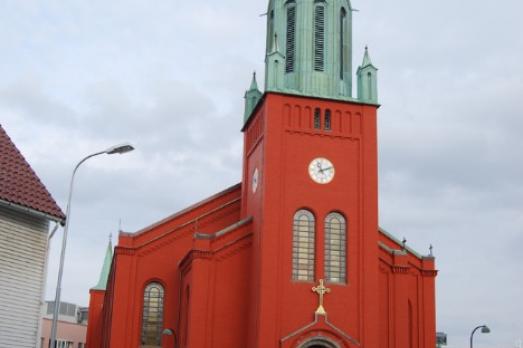
Stavanger, NO
St. Petri Church is a brick church built in 1866. The architect of the church was Conrad Fredrik von der Lippe (1833-1901). The church received the English architecture award Civic Trust Award for the major restoration and renewal work carried out in 2005-08.
Chemnitz, DE
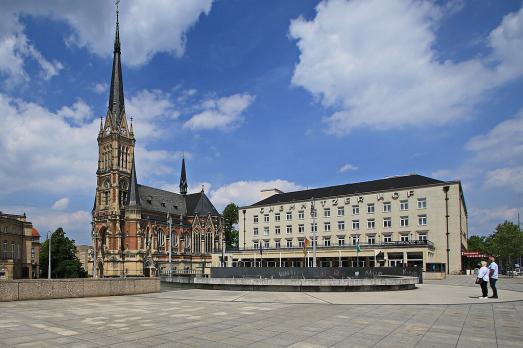
The St. Petrikirche (St Peter’s Church) is a 19th-century Neo-Gothic building in the Theaterplatz. It was designed by architect Hans Enger from Leipzig.
Maastricht, NL
The Church of Sint Pieter beneden (Saitn Peter below) was built between 1938 and 1939 in the neighbourhood of Villapark (formerly known as Saint Peter). This marlstone building was designed by the architect Frits Peutz in the style of an early-Christian basilica.
Sankt Pölten, AT
St. Pölten Church was built in the 12th century as an integral part of St. Pölten Abbey, founded in the 8th century. The building was transformed into a cathedral church in 1785, after the dissolution of the monastery by Leopold II.
new
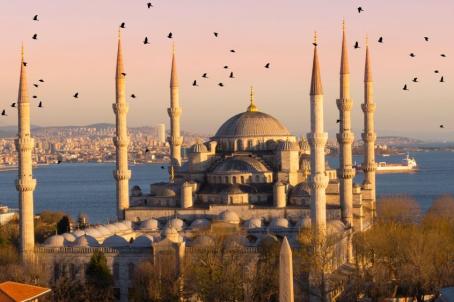
For a long time, Europe was ruled by powerful monarchies. Monarchy and religion have been connected since time immemorial. Here are 7 sites across Europe where royalty historically bent the knee to a higher power and received their crown.
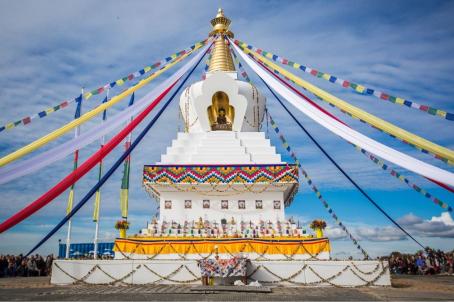
Stupas are symbols of enlightenment and peace that commemorate different stages of Buddha's life. Since the mid-20th century, thousands of stupas have begun to populate Europe. We have compiled some of the most impressive ones in this list.
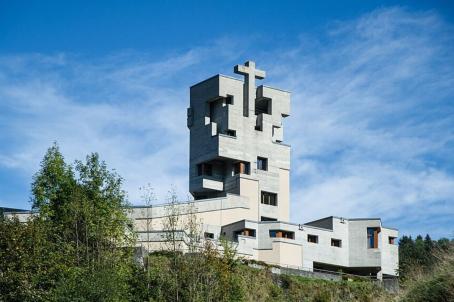
Walter Maria Förderer (1928–2006) was a Swiss architect and sculptor renowned for his neo-expressionist church designs in the 1960s. In this list we have compiled 6 of his church designs that seamlessly integrate religious and secular elements.