Explore Religious Heritage Across Europe

Here you can search for a building to visit. You can use the map find destinations, or you can use the filters to search for a building based upon what different criteria.

Refine search

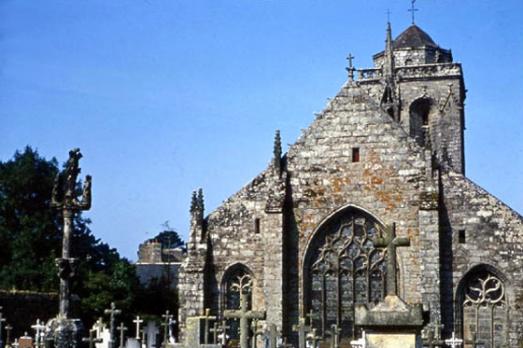
Church of Saint-Ronan

Church of Saint-Ronan

Locronan, FR

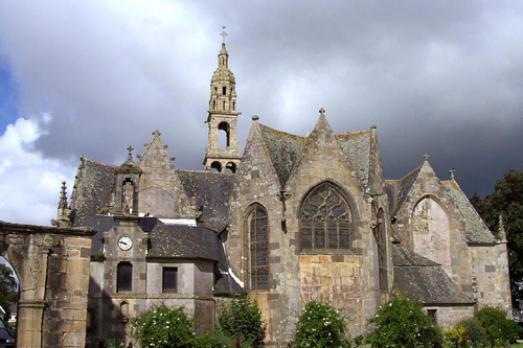
A parish belonging to the bishopric of Quimper and to the country of Cornwall, Locronan is very ancient linked to the history of the duchy of Brittany. This important centre of pilgrimage known for its Troménie (or procession), will benefit from the donations of the Dukes of Brittany, in particular for the construction of the church erected in the form of a cathedral by the will of Anne of Brittany from 1424 to 1480. The Penitentiary Chapel adjoining the listed church in 1845 houses the bed of St Ronan. In addition to the magnificent 15th-century glass masterpiece and the pulpit for preaching, the church contains a beautiful piece that needs to be restored to ward off the ravages of time: the Altarpiece of the Rosary.
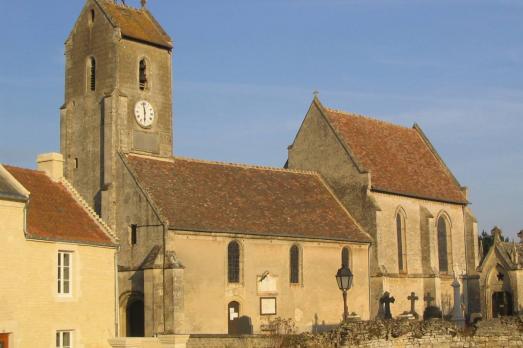
Church of Saint-Samson

Church of Saint-Samson

Plumetot, FR

The small parish church of Saint-Samson Plumetot in Normandy was built between the twelfth and eighteenth century. In 1944 it suffered damage from the war. It has an enlarged nave on the aisle to the north, extended by a choir with a flat chevet. To the west, a square bell tower, leans against the church. The church has a beautiful stone altarpiece from the end of the reign of Louis XIV.

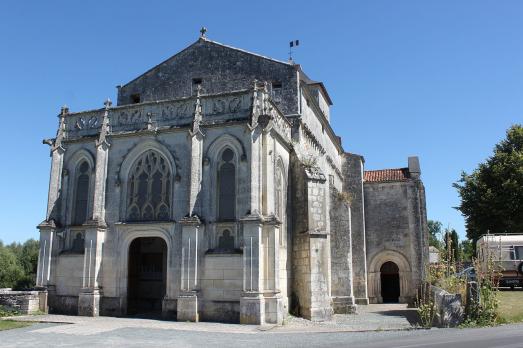
Church of Saint-Saturnin de Séchaud

Church of Saint-Saturnin de Séchaud

Port-d'Envaux, FR

The church of Saint-Saturnin de Séchaud was built in the 11th or 12th century, but only the apse, the side walls of the nave and the base and first floor of the bell tower remain from that period. The second floor of the nave was built in the 15th century. In the 16th century, the walls were raised and the church became a fortified place. During the 19th century, and more precisely in 1896, the construction of the flamboyant style façade was completed, which forms a porch on the west side and hides an older façade enlarged in the 15th century.

Church of Saint-Saturnin

Church of Saint-Saturnin

Montesquieu-des-Albères, FR

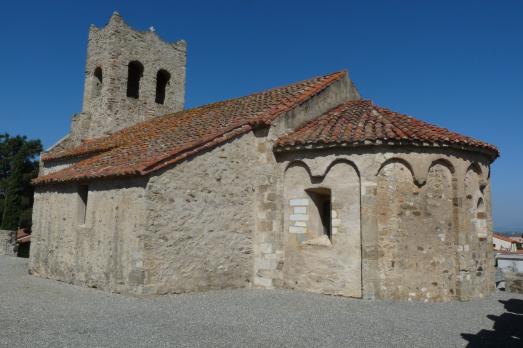
The parish church of Saint-Saturnin was built in Romanesque style in the twelfth century, on the outskirts of Montesquieu-des-Albères, in Occitania. This building is a typical example of the Romanesque architecture of Roussillon at the beginning of the 12th century: the balance of low volume and the sobriety of the architecture is enhanced by some ornamental details such as the Lombard decoration of the chevet or the portal, added later. The bell tower is massive, yet its openings give the building a spacious feeling.

Church of Saint-Saturnin

Church of Saint-Saturnin

Nogent-sur-Marne, FR

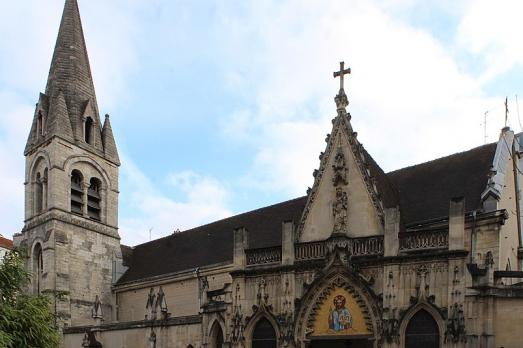
The Merovingian chapel built by Dagobert on the site of the present church was destroyed in 861. The church of Saint Saturnin was built and enlarged from the 11th to the 20th century. Classified as a historical monument in 1909, the 11th and 12th century bell tower has been restored several times. In 1794, in order to erase any vestige of religion, the horizontal arms of the cross which surmounted the bell-tower were sawn off: it is this strange metallic decoration that can be seen on the lawn in front of the church. With its 32.50m height, the bell tower would pass entirely under the nave of Notre-Dame de Paris! Beheaded by lightning in August 1942, its spire was only rebuilt identically after the war. The present porch was bought by Mrs Smith-Champion from the city of Paris and offered in 1914 after the church was enlarged. It probably comes from a Parisian convent. Flamboyant Gothic (late 14th century), it is decorated with a mosaic and surmounted by a Virgin and Child dating from 1914.

Church of Saint-Saturnin

Church of Saint-Saturnin

Pouillé, FR

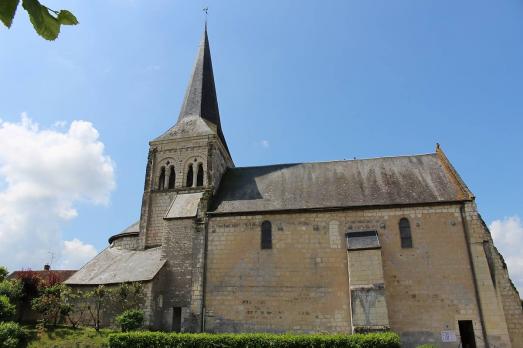
Saint-Saturnin church, listed in the Supplementary Inventory of Historical Monuments, is located in Pouillé. The church has a single nave that ends in a choir with a bell tower and a semicircular apse. The belfry has a perforated floor with twinned bays, whose columns are cushioned by carved capitals. A sacristy was added in the nineteenth century. There is a 16th century painting from the Italian school that depicts the martyrdom of San Sebastián.

Church of Saint-Sauveur, Coucy-le-Château-Auffrique

Church of Saint-Sauveur, Coucy-le-Château-Auffrique

Coucy-le-Château-Auffrique, FR

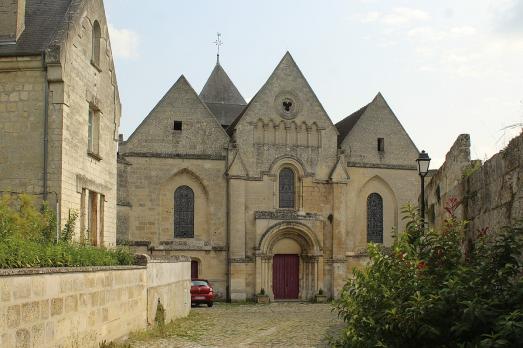
The origins of the Saint-Sauveur Church date back to the 12th century (central part of the façade, Romanesque style portal). Reworked several times, destroyed in 1917 and classified as a "Historic Monument", the Church of Saint Sauveur was rebuilt identically.

Church of Saint-Sauveur

Church of Saint-Sauveur

Bellême, FR

Classical style church rebuilt in 1648 on the foundations of a first Romanesque building of the 11th century built by the first lords of Bellême. The interior of the church was entirely restored and richly decorated during the 19th century. The nave, flanked by eight richly decorated chapels, is covered with an impressive wooden frame made of the hull of an inverted ship. Its clock is off-centre.

Church of Saint-Sauveur

Church of Saint-Sauveur

Le Faou, FR

The church of St Sauveur, anchored like a ship on the banks of the Faou river, was built in the 16th century. It is listed in the Inventory of Historic Monuments and its remarkable site, at the end of the harbour of Brest, is classified as a Historic Monument. Open every day, it welcomes a large number of visitors and remains a place of worship.

Church of Saint-Sauveur, Figeac

Figeac, FR

Initially founded in the 9th century by Pépin, the church was later replaced by a church that was largely rebuilt in the 12th century. The church was in a state of disrepair for several years, particularly after the Hundred Years War. A large part of the building was restored in the 18th century.

Be inspired

Stupkalnis.lt

10 Buddhist stupas to discover in Europe

Stupas are symbols of enlightenment and peace that commemorate different stages of Buddha's life. Since the mid-20th century, thousands of stupas have begun to populate Europe. We have compiled some of the most impressive ones in this list.