Explore Religious Heritage Across Europe

Here you can search for a building to visit. You can use the map find destinations, or you can use the filters to search for a building based upon what different criteria.

Refine search

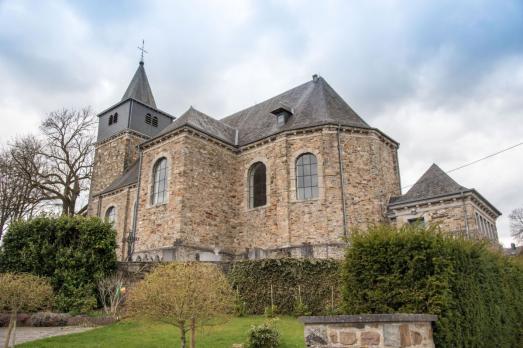
Church of Saints Pierre and Paul, Dochamps

Church of Saints Pierre and Paul, Dochamps

Dochamps (Manhay), BE

The building in the heart of the village, surrounded by a walled-in cemetery and vegetation, has a country charm. The church was reconstructed after the terrible destruction endured particularly during the battle of the Ardennes in 1944.
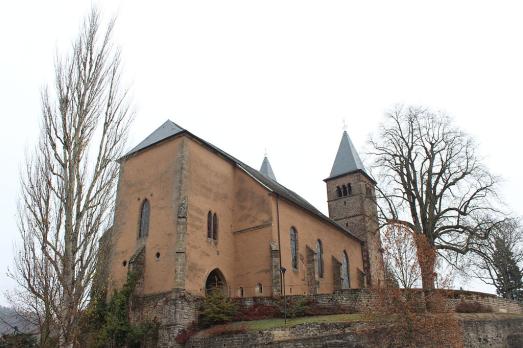
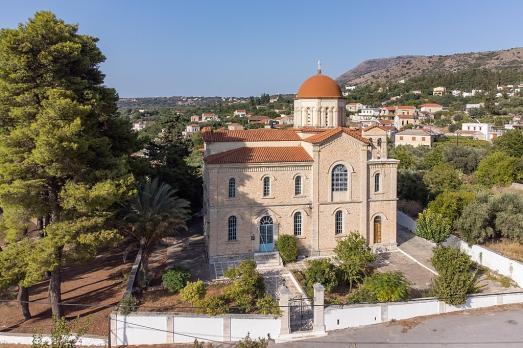
Church of Saints Pierre and Paul, Echternach

Church of Saints Pierre and Paul, Echternach

Echternach, LU

In the 4th century A.D., the hill on which the church stands was fortified with towers and a surrounding wall. Around the year 1000, a Romanesque building was erected in the form of a three-nave basilica. In the 15th century, the church was transformed and enlarged in the Gothic style. After the Second World War, archaeological excavations and restoration work gave the Sanctuary its present appearance.

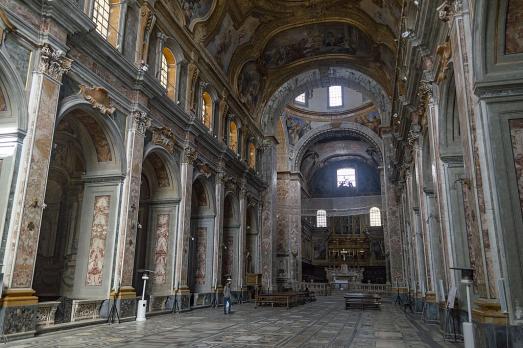
Church of Saints Severino and Sossio, Naples

Church of Saints Severino and Sossio, Naples

Naples, IT

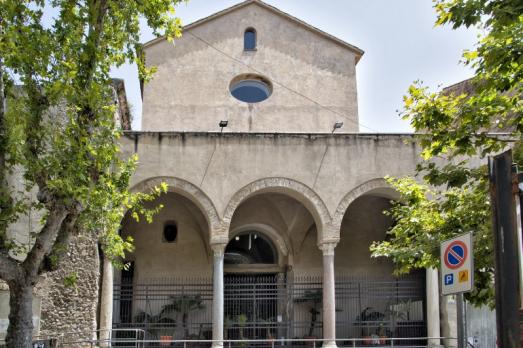
The "Chiesa dei Santi Severino e Sossio" is a 16th-century Benedictine church. It belonged to the convent of the same name, which today houses the State Archives of Naples.

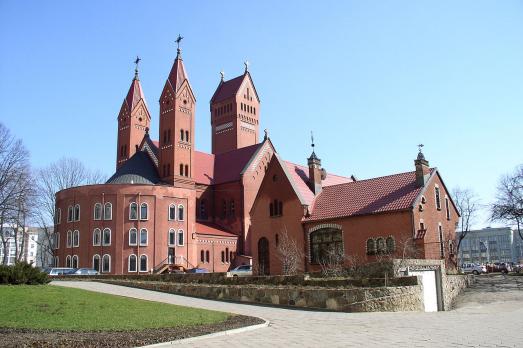
Church of Saints Simon and Helena

Church of Saints Simon and Helena

Minsk, BY

The church of Saints Simon and Helena, also known as the red church, was built between 1905 and 1910. In 1932 it was closed to worship by the Soviet authorities and donated to a Polish theatre company. Later it was converted into a film studio. The Germans returned the church to worship in 1941. After the Second World War, it was restored to become a film studio again, and in 1975 it became the House of Cinema. The church of Saint-Siméon-et-Sainte-Hélène was finally returned to Catholic worship in 1990.

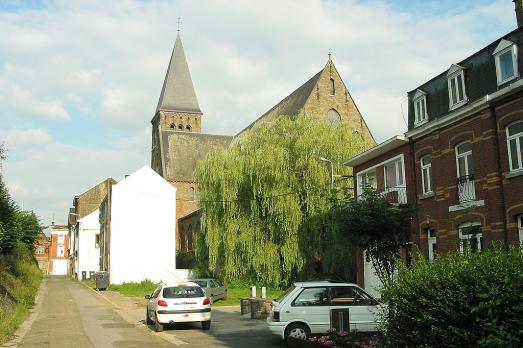
Church of Saints-Antoine-ermite-et-Apolline, Pepinster

Church of Saints-Antoine-ermite-et-Apolline, Pepinster

Pepinster, BE

Situated in the main street of the commune, the church’s exterior is unobtrusive and little noticed. The interior on the other hand holds a surprise. It is one of the most remarkable Neo-Gothic buildings in the country. The interior appointments are of a fine artistic richness. This is due to the initiative of Abbot Balau, vicar of Pepinster in 1891 who attracted the best artists and artisans of the period notably from Liege, Louvain and Gent. The result is impressive.

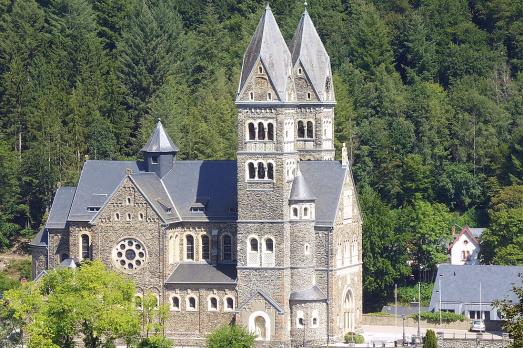
Church of Saints-Côme-et-Damien, Clervaux

Church of Saints-Côme-et-Damien, Clervaux

Clervaux, LU

Since 1803, Clervaux has been the seat of both a deanery (Dekanat) and a parish. The current Neo-Romanesque Church of Saints-Côme-et-Damien was built between 1910-1912. The veneration of the martyrs Cosmas and Damian probably reflects the influence of the Diocese of Liège, to which Clervaux belonged before the French Revolution. The relics of saints are preserved in this church.

Church of San Andrés

Church of San Andrés

Calatayud, ES

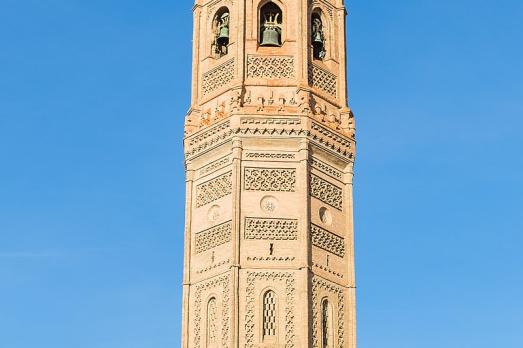
The church of San Andrés is a Catholic parish temple in Calatayud (province of Zaragoza, Aragon, Spain). It is one of the few Mudejar churches with three naves, which are separated by pointed arches slightly in a horseshoe shape.Originally it was a Gothic-Mudejar church from the 14th and 15th centuries with three naves, the central one the largest, and three sections each, covered with a ribbed vault and topped by a straight header. In the 16th century the nave was extended by one section, the straight apse was replaced by a polygonal apse, the transept was renovated and the tower that stands at its southwestern corner was built.

Church of San Benedetto

Church of San Benedetto

Brindisi, IT

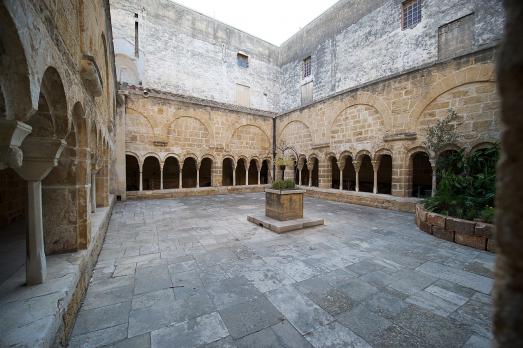
The church of San Benedetto is a sacred Romanesque building probably dating back to the 10th century. On the right stands the massive Romanesque bell tower from the 11th century. The interior, recently restored again, is presented in the 11th-12th century redefinition. The Romanesque cloister is also worth a visit.

Church of San Benedetto

Church of San Benedetto

Salerno, IT

The church of San Benedetto has its origins in the Benedictine Abbey of San Benedetto, the most important in Salerno. As the abbey was abolished by Napoleonic laws in 1807, the abbey church was transformed into a theatre. In 1845 the place was handed over to Archbishop Marino Paglia who entrusted the restoration work to the architect Giovanni Rosalba. The work was completed in 1857 and the church became the parish church of the Holy Crucifix. Ten years later, the anticlerical mayor of the time, Matteo Luciani, had the church transformed into a residence for military troops. It was only in 1963 that the church was returned to the clergy, while the monastery continues to be, even today, a military barracks.

Be inspired

Stupkalnis.lt

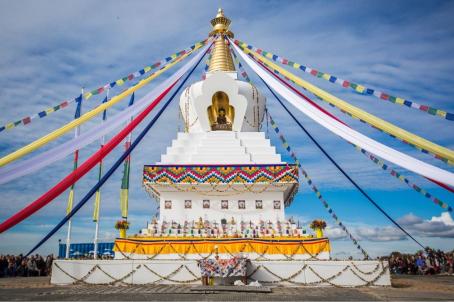
10 Buddhist stupas to discover in Europe

Stupas are symbols of enlightenment and peace that commemorate different stages of Buddha's life. Since the mid-20th century, thousands of stupas have begun to populate Europe. We have compiled some of the most impressive ones in this list.